400W solar panel is the “Golden Ratio” for off-grid power. In real-world scenarios, a 2x200W parallel setup (like the Sungold PA612) significantly outperforms a single large panel due to superior shading redundancy.
Key Takeaways
Spatial Logic: Standard 400W panels occupy ~1.7–1.95㎡. High-efficiency cells (TOPCon/BC) are essential for maximizing energy in tight spaces.
Shade Redundancy: A 2x200W parallel setup yields 30–50% more energy than a single 400W unit under partial shading, effectively mitigating “hot spot” risks.
System Architecture: 400W is the tipping point where switching to a 24V architecture becomes necessary to slash line loss and boost MPPT efficiency.
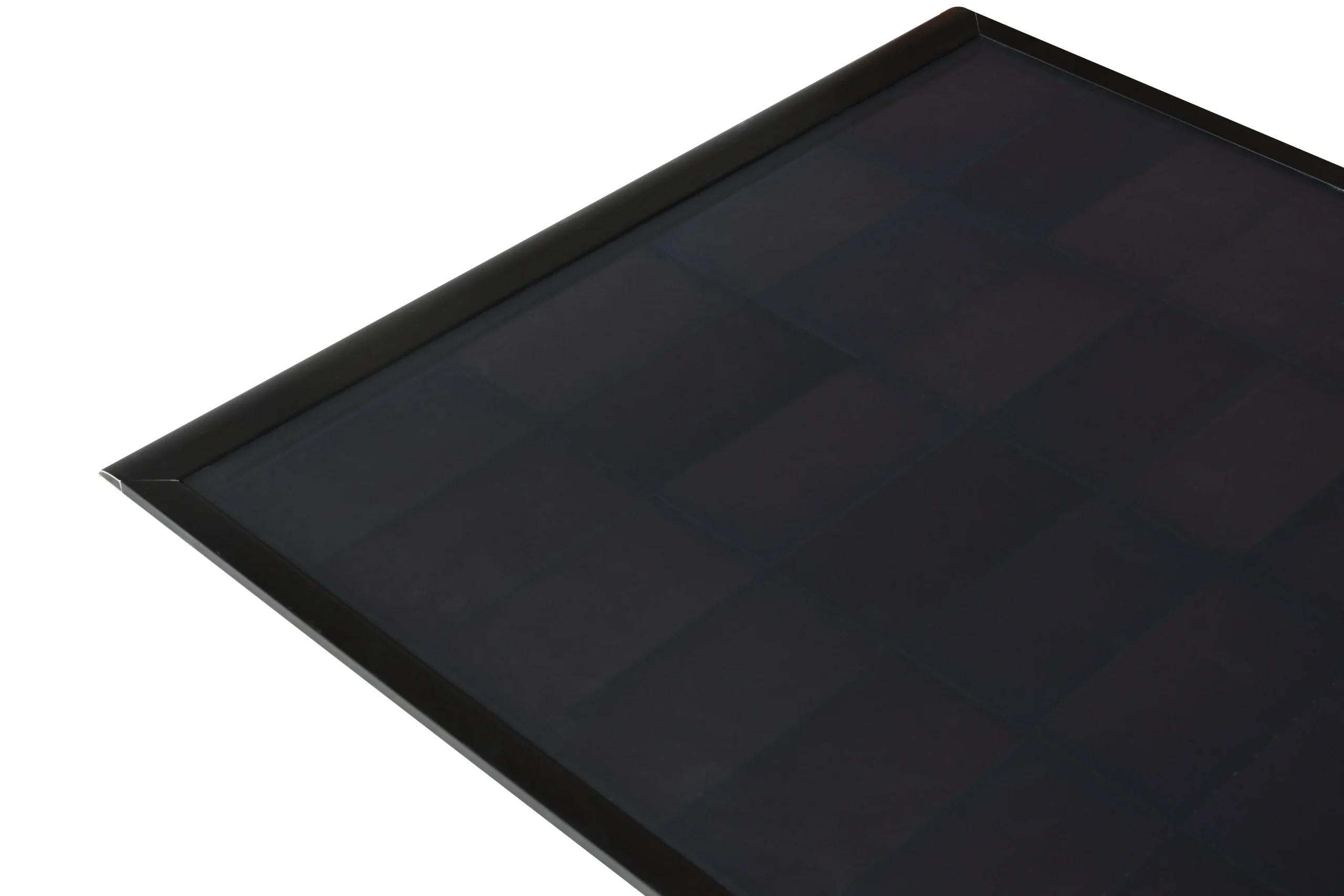
Material Durability: For mobile applications, ETFE encapsulation (like the PA612) is non-negotiable for its self-cleaning properties and long-term UV resistance.
Physical Limits: 400W Solar Panel Guide Size & Dimensions
I’ve seen too many novices focus purely on wattage, only to find their RV roof looks like a poorly fitted jigsaw puzzle. A standard 400W rigid panel measures roughly 1722mm x 1134mm (approx. 1.95㎡) and weighs 45–50 lbs.
Scenario Pain Point: Modern RV roofs are a “war zone” of AC shrouds, vents, and satellite domes. Finding a continuous 1.7m flat surface is rarer than you’d think.
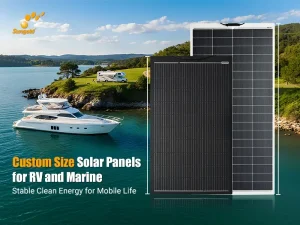
Technical Tip: Always allow a 25–40mm perimeter gap for thermal expansion and airflow. If your space is fragmented, lightweight flexible modules like the Sungold PA612 (200W)—weighing only 1.2kg/㎡—are the optimal solution, fitting curved surfaces while lowering the vehicle’s center of gravity.
Exclusive Insight: The Shading "Kiss of Death" & Parallel Salvation
Most generic guides tell you to “avoid shade,” but real life happens under trees. This is where the internal wiring logic of your panels determines whether you have power or a “dead” battery.
The Problem: In a standard 400W panel, a single shadow from a vent or a tree branch can crash the output by over 50%. This “Shading Decay” occurs because cells are wired in long series strings; one shaded cell chokes the flow for the rest.
The Solution: This is why I recommend the Sungold PA612 (2x200W) parallel setup. By splitting the 400W into two panels wired in parallel, if one panel is 50% shaded, the other maintains 100% output.
The Tech Edge: Look for Cell-level Shadow Management. Found in high-end BC (Back Contact) technology modules, it allows shaded cells to be bypassed individually, ensuring the rest of the string isn’t dragged down.
Scenario Selection: Sungold’s Tailored Solutions
Scenario A: The Permanent Road Warrior (Fixed RV/Marine)
Product: Sungold PA612 (200W x 2)
Pain Point Solved: For users needing weight reduction on uneven roofs. It utilizes TOPCon cells and premium ETFE coating. It’s salt-spray resistant—perfect for blue-water sailing or coastal RV trips.
Why it works: It combines the durability of a rigid install with the aerodynamics of a flexible module.
Scenario B: The Flexible Sun-Seeker (Portable Power)
Product: Sungold 4x100W Foldable Kit (BXF-PLUS Series)
Pain Point Solved: Parking in the shade to stay cool while needing maximum solar harvest.
The Insight: This IP67 waterproof kit lets you park your van in the cool shade of a tree while deploying the array 15 feet away in direct sunlight via an extension cable. This “Cool Human, Hot Panel” experience is a luxury fixed installs simply cannot offer.
400W Solar Panel Guide is the "Watershed" for 24V Systems
At 400W total power, a 12V system pushes nearly 33 Amps. This is where things get “hot”—literally.
The Hidden Killer: Voltage Drop. 33A requires massive, expensive 4 AWG cabling to prevent your energy from bleeding away as heat before it reaches the battery.
Best Practice: I strongly suggest wiring your 2x200W panels in series to create a 24V architecture. You halve the current (down to ~16A) and slash line loss by 75%. For those sticking with 12V batteries, a proper conversion is critical—see our technical deep-dive: Can a 400W Solar Panel Charge a 12V Battery Safely?
FAQ: Real-World Pitfalls Q&A
Ans: You need at least 3–4 panels (1.2kW–1.6kW). A single 400W unit only provides enough daily energy for about 1.5 hours of AC runtime. You’re building a system for the day, not just the hour.
Ans: Yes, but it's the most common place for system failure. You must use an MPPT controller to manage the voltage mismatch. For a step-by-step safety checklist, refer to our 12V Battery Charging Guide.
Ans: It depends entirely on the coating. ETFE (Sungold’s standard) resists UV and high heat for 15+ years; cheap PET modules from discount sites usually yellow and crack within 2 years. Pay for the material, not just the wattage.
Pre-Purchase Checklist
Dimension Check: Do you have a continuous 1.8m x 1.2m clear space? (If no, choose the PA612 split modules).
Controller Check: Is your MPPT rated for at least 40A?
Shading Assessment: Will roof clutter shade your panel? (If yes, go with a parallel wiring plan).
Material Verification: Did you confirm the use of self-cleaning ETFE encapsulation?