 EN
EN
 Deutsch
 Italiano
 Español
 Français
 日本語
日本語
If you’re searching rv solar panels series vs parallel, you probably don’t want a theory lesson—you want the wiring choice that stays stable at real campsites.
How to wire RV solar panels (quick answer):
Low shade + long cable runs + MPPT: series wiring is common (lower current helps control voltage drop).
Frequent shade (trees, rooftop equipment, dust/soiling): parallel or series-parallel combo wiring usually feels more stable day to day.
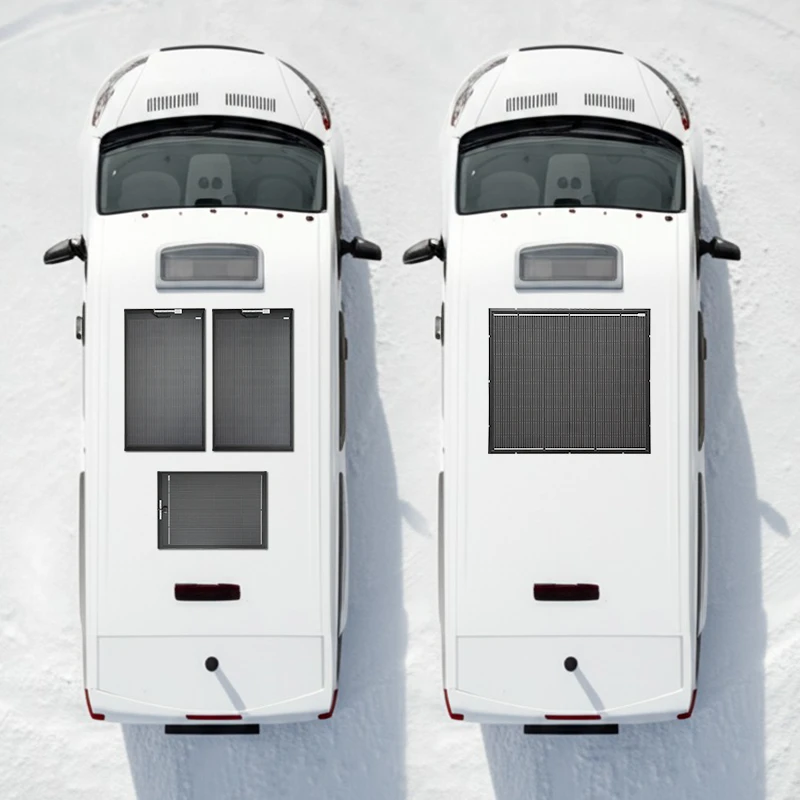
Front vs rear roof zones differ a lot: a series-parallel combo (or separate inputs/controllers) gives the best tolerance.
Why “shade-first” matters: even small shade can trigger bypass behavior and disproportionately reduce output—much larger than the shaded area suggests.
Internal links (topic cluster):
C2: RV Solar Panel Shading & Hotspots
Series vs Parallel basics: voltage vs current
Series wiring (Series): voltage adds, current stays the same
Think of it as “stacking voltage.”
Pros: lower current for the same power → often easier to manage cable losses on long runs (especially from roof to controller).
Cons: more sensitive to partial shade; one weak section can reduce the whole string’s performance.
Reality check (why small shade feels big): NREL tested single-cell shading and found that shading a portion of one cell can cause the bypass diode group to lose essentially all its power—meaning the effective “lost area” can be far larger than the shadow itself. docs.nrel.gov
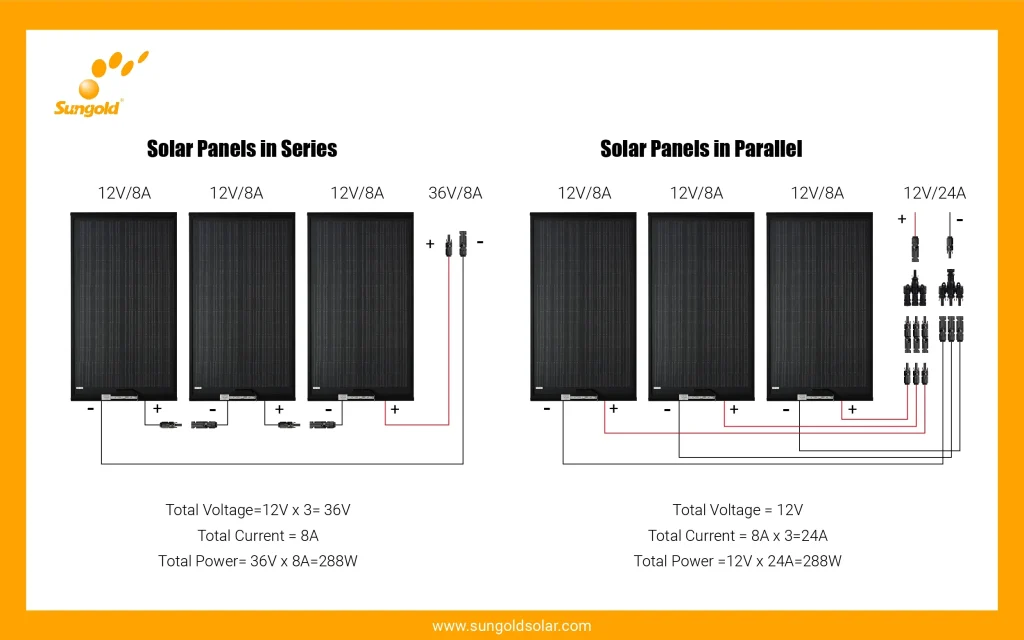
Parallel wiring (Parallel): current adds, voltage stays the same
Think of it as “stacking current.”
Pros: when wiring is grouped well, shade on one branch is less likely to drag down every other branch—often better for “tree shade camping.”
Cons: higher current means bigger demands on wire gauge, combining method, protection, and connection quality (vibration makes this even more important).
Series-parallel combo wiring: the RV-friendly middle path
Most RV roofs are not uniform. Combo wiring is basically:
“Zone the roof first, then wire each zone in series, and parallel the zones.”
It balances:
series benefits (manageable current on long runs)
parallel benefits (shade loss contained to one zone)
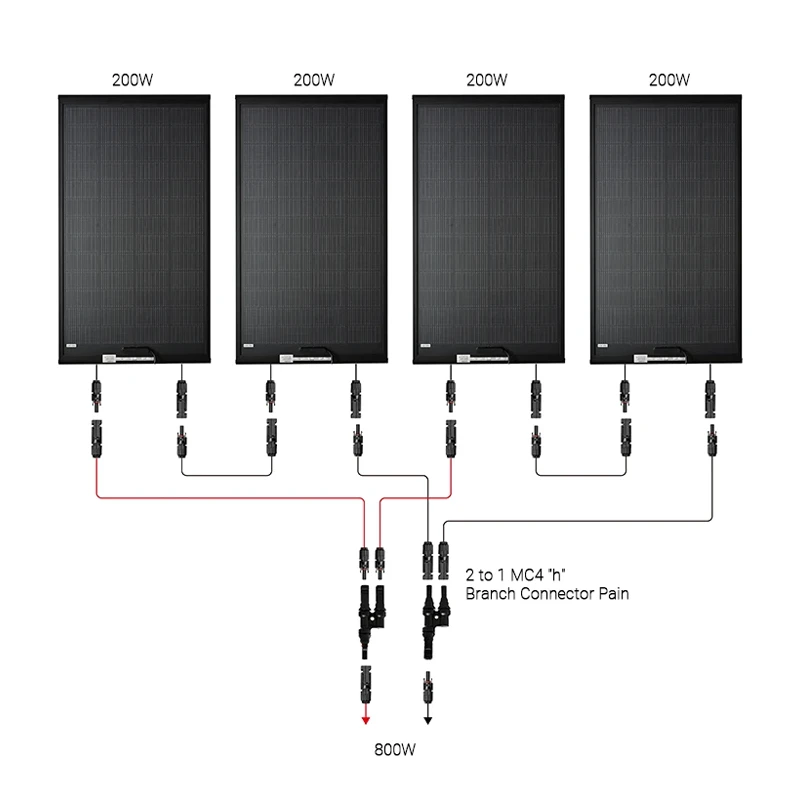
Best wiring for shaded campsites: a shade-first decision tree
If you camp under trees, park beside buildings, or have roof equipment casting shadows, treat shade as normal—not “rare.”
Decision tree (copy-paste logic):
Do you park in shade often (trees / rooftop shadows / soiling)?
Yes → start with parallel or series-parallel combo.
No → series can work well (especially with long cable runs and MPPT).
Is your roof clearly split into different sun zones (front vs rear / around AC units)?
Yes → series-parallel combo wiring (zone first).
No → series or parallel based on cable length + shade frequency.
Are you planning to expand later?
Yes → design wiring around zones + spare inputs/headroom, so adding panels doesn’t break your original logic.
Why MPPT matters in partial shade: partial shading can create two or more maximum power points on the power-voltage curve; some MPPT strategies can lock onto a local MPP instead of the best one. Victron documents this behavior and the need for algorithms that seek the optimum MPP under shading.
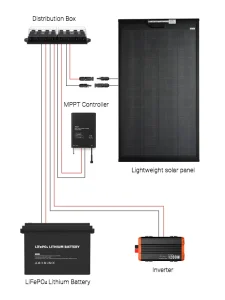
RV solar wiring diagram examples (2 panels / 3 panels)
Below are “text diagrams” you can convert into a simple illustration later.
RV solar wiring diagram for two panels
Option A — Two panels in series (2S):
Panel 1 (+) → Panel 2 (–)
Remaining Panel 1 (–) and Panel 2 (+) go to the controller input
When it fits: long cable run, low shade, MPPT controller.
Option B — Two panels in parallel (2P):
Both positives combine → controller (+)
Both negatives combine → controller (–)
When it fits: frequent shade, or you want more stable output when one panel is partially shaded.
RV solar wiring diagram for three panels
Option A — Three panels in series (3S):
Panel 1 (+) → Panel 2 (–) → Panel 3 (– chain)
End leads to controller
Use when: shade is rare, and you need voltage for long runs.
Option B — Three panels in parallel (3P):
Combine all positives / combine all negatives
Use when: shade is common, and your wiring/protection is designed for higher current.
Option C — Series-parallel combo (2S1P style):
Wire two panels in series as a “Zone A string”
Keep the third panel as “Zone B” (or a separate small string if matched)
Parallel Zone A and Zone B only if their operating behavior is compatible (better: use separate inputs if available)
Practical RV rule: combo wiring works best when each “zone” has similar sun exposure. If zones are very different, treat them separately.
Series-parallel combo for roof zones
If you want one method that consistently reduces surprises, do this:
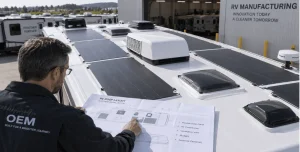
Step 1 — Map roof shade zones
Mark AC units, vents, racks, antennas
Mark the edge that tends to get swept by tree shade
Identify a “main sun zone” (most consistent exposure)
Step 2 — Build electrical groups by zone
Each zone becomes its own electrical group
Your goal: shade affects one group, not the whole array
NREL’s broader shading assessment across many systems also shows partial shading is a meaningful contributor to performance loss on average—another reason to design for it rather than ignore it. docs.nrel.gov
Step 3 — Wire within zone first, then combine zones
Within a zone: series helps reduce current
Between zones: parallel helps contain shade losses
[Image Placeholder – C1-6: series-parallel combo wiring RV roof zones]
ALT: series-parallel combo wiring RV roof zones
RV solar expansion wiring: how to add panels later without rewiring everything
Lorem ipsum dolor sit amet, consectetur adipiscing elit. Ut elit tellus, luctus nec ullamcorper mattis, pulvinar dapibus leo.
Most “regret stories” happen during expansion. Keep expansion clean by planning for it upfront.
Expansion rules that prevent headaches:
Leave wiring headroom: keep spare roof zones or spare controller inputs.
Don’t mix unlike zones into one string: if the new panel sits near a shaded area, don’t force it into a sunny string.
Match electrical behavior: adding panels “just because the connectors fit” can create mismatch losses.
Document the zone plan: treat it like part of the RV solar installation record.
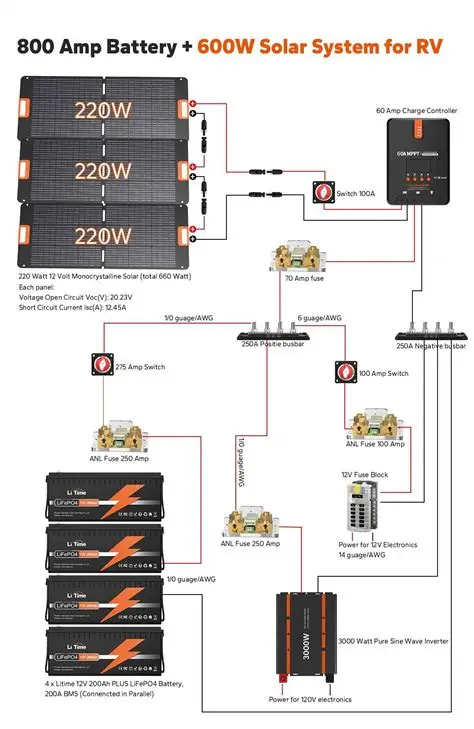
MC4 series parallel wiring RV: what to say
Most “regret stories” happen during expansion. Keep expansion clean by planning for it upfront.
Expansion rules that prevent headaches:
Leave wiring headroom: keep spare roof zones or spare controller inputs.
Don’t mix unlike zones into one string: if the new panel sits near a shaded area, don’t force it into a sunny string.
Match electrical behavior: adding panels “just because the connectors fit” can create mismatch losses.
Document the zone plan: treat it like part of the RV solar installation record.
[Image Placeholder – C1-7: RV solar expansion wiring layout (zones + reserved inputs)]
ALT: RV solar expansion wiring zones reserved inputs
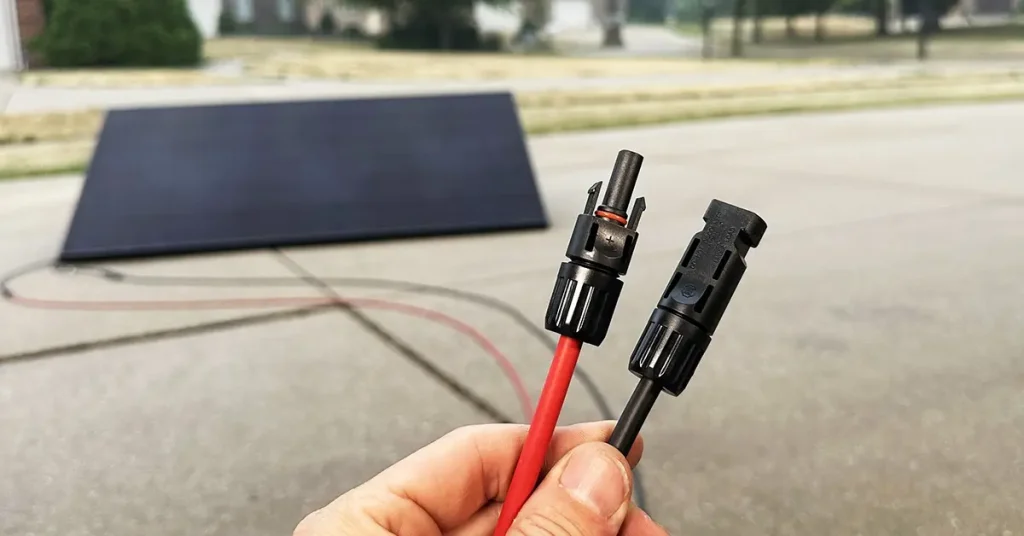
Common mistakes (and how to avoid after-sales headaches)
Choosing wiring based only on watts, not shade
If shade happens, your wiring choice should assume it.Assuming “parallel means no shade problems”
Parallel can contain shade loss if branches/zones are designed well.Ignoring vibration and maintenance access
On a moving vehicle, design for inspection: connectors, chafe points, and cable supports must be checkable.Expanding later and breaking the original zone logic
Expansion should follow the same zoning strategy, not override it.