




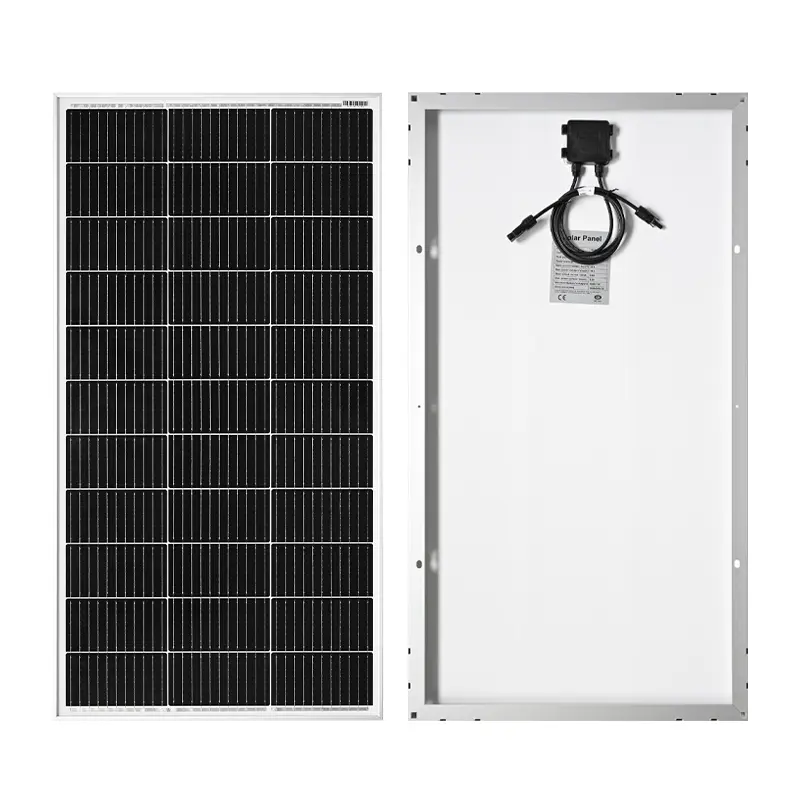
In the rapidly evolving solar photovoltaic industry, module dimensions play a crucial role in overall system economics and performance. As manufacturers transition from traditional 182mm (M10) wafers to advanced 210R cell technology with trisection and quad-section designs, a common question arises: Why has the 2382x1134mm solar module format emerged as the industry’s preferred choice over larger alternatives like 2382×1303mm?
The answer lies in a careful optimization across three critical dimensions: logistics efficiency, structural safety, and manufacturing compatibility. This article dives into the technical and economic drivers behind this “Golden Size.”
Maximum Container Utilization: Shipping More Power Per Container
The Container Constraint
Export-oriented solar modules are primarily transported via standardized shipping containers, whose fixed dimensions significantly influence optimal module sizing. The 40-foot High Cube (40HQ) container—the workhorse of international solar logistics—dictates the maximum efficiency limit.
Table 1: Standard 40HQ Container Constraints
Dimension | Specification | Critical Constraint |
|---|---|---|
Internal Height | 2.69 m | Limits stack height (module width + pallet) |
Internal Length | 12.03 m | Limits number of pallet rows |
Internal Width | 2.35 m | Limits pallet width |
Perfect Dimensional Match
The 2382×1134mm dimension achieves near-perfect container utilization, engineered specifically for these constraints:Width Optimization (1134mm): This width (inherited from the 182mm era) allows modules to be stacked vertically in landscape orientation. Two stacked pallets reach a total height of approximately 2.55m, leaving just enough clearance for forklifts to safely operate within the 2.69m door height.
Length Optimization (2382mm): When packaged, the pallet length extends slightly beyond the module’s 2382mm. Exactly 5 pallet groups fit within the 12m container length, leaving only ~2cm of clearance—virtually zero wasted space.
Quantifiable Benefits
Comparing 210R 66-cell (2382×1134mm) modules to the previous generation 182-cell (2278×1134mm) modules reveals significant gains:
Table 2: Logistics Efficiency Comparison
Metric | 182 Module (2278mm) | Golden Size (2382mm) | Improvement |
|---|---|---|---|
Container Utilization | 94.5% | 98.5% | High Efficiency |
Modules per Container | Baseline | +4.1% Power | Lower Freight/Wp |
Clearance Waste | High | ~2cm (Near Zero) | Optimized |
For large-scale international projects, these improvements translate to substantial savings in logistics costs—a critical factor in the highly competitive global solar market.
Enhanced Safety: Structural Integrity Under Real-World Loads
Mechanical Stress Analysis
Solar modules function as structural elements exposed to environmental loads (wind, snow, temperature cycling). Like a plank under load, modules experience bending, with deformation increasing exponentially as dimensions—particularly width—increase.
Critical Safety Concerns with Wider Modules (e.g., 1303mm):
Glass Stress Concentration: Excessive deformation causes stress concentration in the glass, significantly increasing the risk of module breakage (“glass cracking”) under 5400Pa snow loads.
Cell Microcracks: Cells near the edges experience higher bending stress, leading to invisible microcracks that degrade power output over time.
Glass Thickness Constraints
Current mainstream bifacial modules use 2.0mm + 2.0mm semi-tempered glass. As module width increases, the tempering performance decreases proportionally, and hail resistance degrades.
Industry Insight: This is a primary reason why top-tier manufacturers have hesitated to release 2382×1303mm modules—the width increase would compromise structural performance without expensive increases in glass thickness or frame weight.
The 2382×1134mm format strikes the optimal balance, maximizing power output while keeping mechanical stress within safe limits for standard dual-glass structures.
Manufacturing Efficiency: Seamless Production Line Transitions
Production Line Compatibility
The current market remains dominated by 182mm (1134mm width) modules. Keeping the width identical offers massive manufacturing advantages.
Key Manufacturing Advantages:
Material Compatibility: No need to repurchase or requalify auxiliary materials like EVA/POE encapsulation films, glass, or backsheets. Existing inventory remains usable.
Faster Line Changeover: Fewer equipment parameters require adjustment compared to changing both length and width.
Lower Transition Costs: Manufacturers can upgrade to 210R technology and higher power outputs without wholesale replacement of production infrastructure.
Economic Impact
In an industry with razor-thin margins, production line compatibility is economically essential. It allows for a faster time-to-market for new high-efficiency products while minimizing Capital Expenditure (CapEx).
The Optimal Equilibrium
The 2382×1134mm module dimension represents far more than an arbitrary measurement—it is the industry’s “Optimal Equilibrium Point”.
As cell technologies evolve towards larger wafers and higher efficiencies, the 2382×1134mm format stands as the current “Sweet Spot”—balancing power, safety, and practicality to deliver the lowest Levelized Cost of Energy (LCOE).
Frequently Asked Questions (FAQ)
Q1: Is the 2382×1134mm solar module compatible with existing 1P/2P trackers?
A: Yes. Since the width (1134mm) is identical to standard 182mm modules, the mounting clamps and torque tube spacing often require no modification. However, due to the increased length (2382mm), tracker lengths and row spacing may need minor adjustments to prevent shading.
Q2: Why is “Golden Size” better than simply making the biggest module possible?
A: “Biggest” often means higher BOS costs due to special handling requirements, lower container utilization (shipping air), and higher breakage risks. The “Golden Size” optimizes the entire value chain, not just the module power rating.
Q3: Can this size be handled by a two-person installation team?
A: Yes. The 1134mm width is within the ergonomic “arm span” of average installers. Wider modules (like 1303mm) often become unwieldy, increasing installation time and the risk of accidental drops or back injuries.
About the Author: [Your Name/Company Details] is a specialist in solar PV technology, focusing on supply chain optimization and LCOE reduction strategies for utility-scale projects.
Keywords: Solar modules, PV module size, 210R cells, Golden Size, container shipping, solar logistics, module safety, manufacturing efficiency, LCOE.
Related Topics:
Trisection vs. Quad-section cell layouts (210R technology)
Evolution from 182mm (M10) to 210mm (G12) wafers
Bifacial module glass technology (2.0mm+2.0mm)