 EN
EN
 Deutsch
 Italiano
 Español
 Français
 日本語
日本語
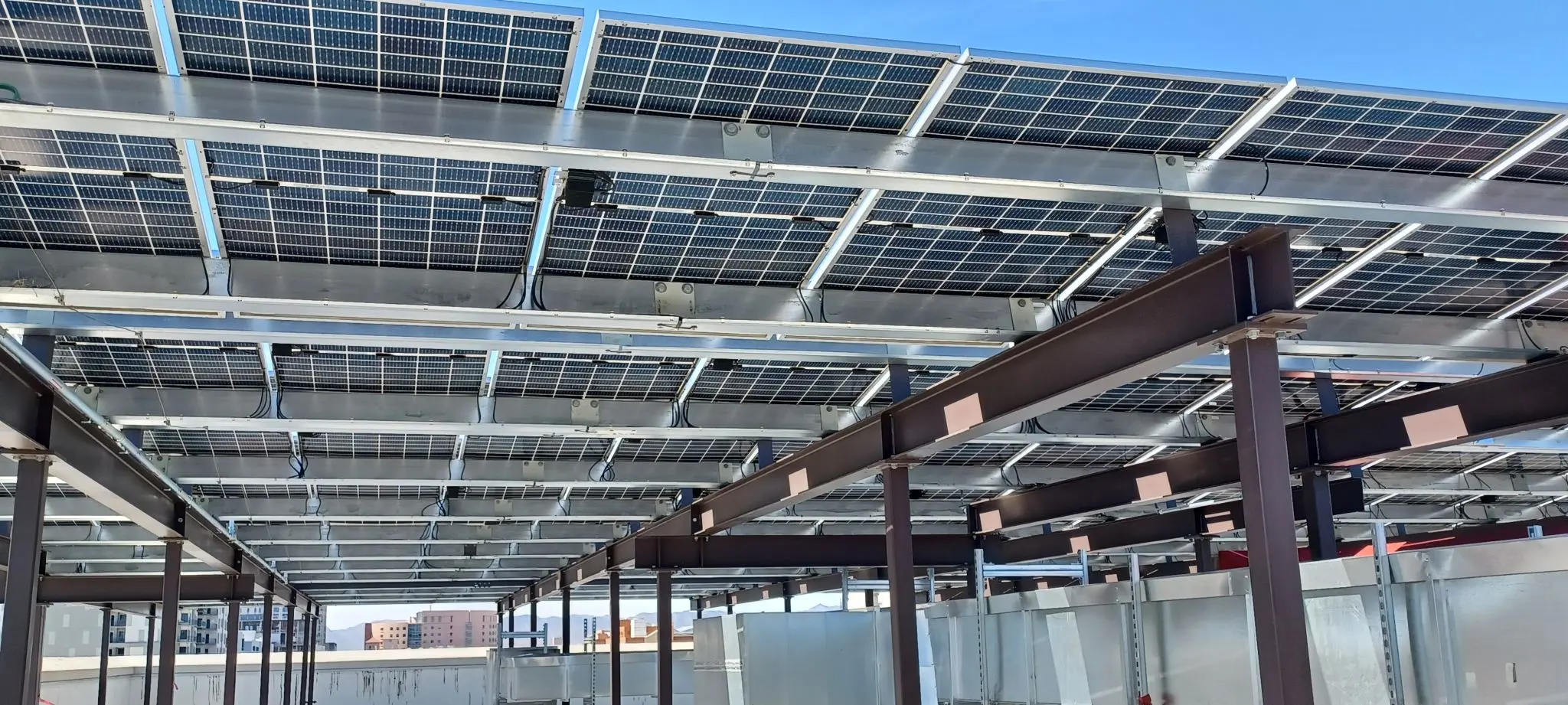
Bifacial Solar Panel ROI Summary: Typically, bifacial solar panels offer a 5% to 30% energy yield gain compared to monofacial panels. While the initial CAPEX is 3% to 8% higher, the LCOE (Levelized Cost of Energy) is often 2% to 7% lower in high-albedo environments. For ground-mounted systems with an albedo >0.3, the payback period is usually 6 to 12 months shorter than monofacial equivalents.
Why Do Most ROI Projections Overestimate Bifacial Gains?
In my experience, project managers often fall into the “25% rear-side gain” marketing trap set by manufacturers. While that number is theoretically possible in a laboratory or a salt flat, real-world yields for most ground-mounted systems stabilize between 8% and 12%.
The primary reason for ROI failure isn’t the module quality—it’s “Environmental Mismatch.” I once consulted on a project where bifacial modules were installed on dark brown soil with a clearance height of only 30cm. The result? The rear side received almost zero reflected light, yet the investor paid a $0.02/W premium. In that case, the Levelized Cost of Energy (LCOE) actually went up compared to a standard monofacial setup.
The counter-intuitive truth I’ve discovered: Height matters more than surface area. If your clearance is below 0.5 meters, cell mismatch can “eat” half of your projected Bifacial Solar Panel ROI Comparison benefits.
How Does Albedo Specifically Impact Your Payback Period?
Albedo is the single most important variable in a bifacial ROI comparison. If you aren’t measuring it at the site before procurement, you are essentially gambling with your IRR.
According to data from NREL (National Renewable Energy Laboratory), surface reflectivity creates a massive delta in financial performance. Based on my field observations, here is how different surfaces stack up:
Table 1: Surface Albedo and Estimated Financial Impact
Surface Type | Albedo (%) | Est. Yield Gain (%) | ROI Impact (Payback) |
|---|---|---|---|
Asphalt / Dark Soil | 5% – 10% | 2% – 5% | Extends Payback (Avoid) |
Dry Grass / Brown Dirt | 15% – 20% | 7% – 10% | Neutral / Marginal |
Light Sand | 25% – 35% | 11% – 15% | Shortens by 6-8 months |
White Gravel / Cool Roof | 60% – 80% | 18% – 25% | Shortens by 12-18 months |
Fresh Snow | 80% – 90% | 25% + | Massive Seasonal Boost |
Source: Adapted from NREL Bifacial PV System Performance Models.
The logic is linear: for every 10% increase in albedo, system yield generally increases by 2-3%. If you are on a “Cool Roof” with white TPO membrane, bifacial is a “no-brainer.”
What Are the Real-World Costs of Going Bifacial?
We cannot discuss gains without acknowledging the “Hidden CAPEX.” The premium for bifacial modules isn’t just the price per watt; it’s the structural and electrical ripple effect.
Racking Premium: To avoid shading the rear side, you need specialized racking. Traditional C-channel rails that sit directly behind the cells create “zebra-stripe” shading. Switching to offset rails or vertical mounting increases racking costs by 10-15%.
Inverter Clipping: Bifacial systems often peak higher than their DC nameplate suggests during high-albedo events (like after a snowfall). This requires either a higher DC/AC ratio or accepting more “clipping” losses.
The Weight Factor (O&M): Most high-quality bifacial modules use a glass-glass (dual-glass) structure. They are heavier (often 25kg+ vs 20kg), which increases labor costs during installation and puts more stress on the mounting structure.
Table 2: 1MW Project Cost Comparison (Estimated 2024 Pricing)
Cost Item | Monofacial (PERC/TOPCon) | Bifacial (TOPCon Dual-Glass) | Difference Notes |
|---|---|---|---|
Module Price ($/Wp) | $0.11 | $0.12 – $0.13 | Tech & Glass Premium |
Racking & Foundation | $0.05 | $0.055 | Anti-shading design |
Installation Labor | $0.03 | $0.035 | Weight & Handling |
LCOE (25-Year Avg) | $0.038/kWh | $0.034/kWh | Assumes Albedo >25% |
Can We Predict the "Sweet Spot" for Installation Height?
This is the most common technical question I receive. My field experience suggests that 0.8m to 1.1m is the “Golden Ratio” for ground-mounted ROI.
While IEC 61215 standards test module durability, they don’t provide a manual for financial optimization. When you raise a module from 0.2m to 0.5m, you see a vertical spike in yield. However, moving from 1.0m to 1.5m yields diminishing returns while the wind-load requirements (and thus steel costs) skyrocket.
Don’t be foolish enough to spend 20% more on structural steel just to capture that last 1% of reflected light. The math rarely works out in favor of the investor.
Can We Predict the "Sweet Spot" for Installation Height?
. The Commercial “Cool Roof” (The ROI Winner)
I handled a 500kW warehouse project where we applied a high-reflectivity white roof coating before installation. The albedo jumped from 15% to 70%, slashing the payback period by 1.5 years.
2. Agri-PV (The “Free Win”)
In Agri-PV, modules are mounted 2+ meters high. Since you’ve already paid for the high racking to accommodate machinery, you’ve cleared the biggest cost barrier to bifacial gain.
3. The “Albedo Decay” Trap (What to Watch Out For)
Albedo is not permanent. Dust and vegetation can reduce reflectivity from 60% to 40% in three years. Always include an “Albedo Degradation Factor” of 1-2% per year in your financial model.
The "Albedo Decay" Trap: What Most Calculators Ignore
Here is a piece of advice you won’t find in a manufacturer’s brochure: Albedo is not permanent.
If you base your 25-year ROI on a brand-new white gravel surface, your model is flawed. In reality, dust, vegetation growth, and gravel compaction can reduce your albedo from 60% to 40% within the first three years. When building your financial model, always include an “Albedo Degradation Factor” of at least 1-2% per year, or account for periodic ground maintenance costs.
FAQ: High-Frequency Questions From Field Experts
Q1: Will Bifacial Panels Work On A Standard Black Shingle Roof?
A: Generally, No. Black Shingles Have An Albedo Below 10%, Resulting In A Rear-Side Gain Of Less Than 3%. This Is Rarely Enough To Offset The Module Premium And The Added Structural Stress Of Dual-Glass Weight. For Residential Dark Roofs, A High-Efficiency Monofacial TOPCon Panel Offers Much Better ROI. (65 Words)
Q2: How Much Height Is Needed For Bifacial Panels To Be Worth It?
A: The Critical Threshold Is 0.5 Meters. Below This Height, The Rear-Side Light Is So Localized That It Can Cause "Hot Spots" Or Trigger Bypass Diodes, Leading To Power Loss. For The Best ROI Balance, I Recommend A Clearance Of 0.8m To 1.1m To Maximize Gain Without Causing Structural Cost Overruns. (68 Words)
Q3: Are Bifacial Solar Panels More Durable Than Monofacial?
A: Yes, Typically. Most Bifacial Modules Use A Dual-Glass Structure, Which Is Superior In Resisting PID (Potential Induced Degradation) And Moisture Ingress. While The Upfront Cost Is Higher, The 30-Year Degradation Rate Is Usually 20% Lower Than Single-Glass Monofacial Panels, Making Them A Stronger Long-Term Asset. (64 Words)
Final Verdict
Don’t buy bifacial because it’s “trending.” Buy it because your site’s albedo and mounting height make it the mathematically superior choice for lowering your LCOE.
For professional-grade projects, explore high-efficiency options like the Sungold Bifacial Solar Panel SG-DG Series to ensure your ROI projections become reality.