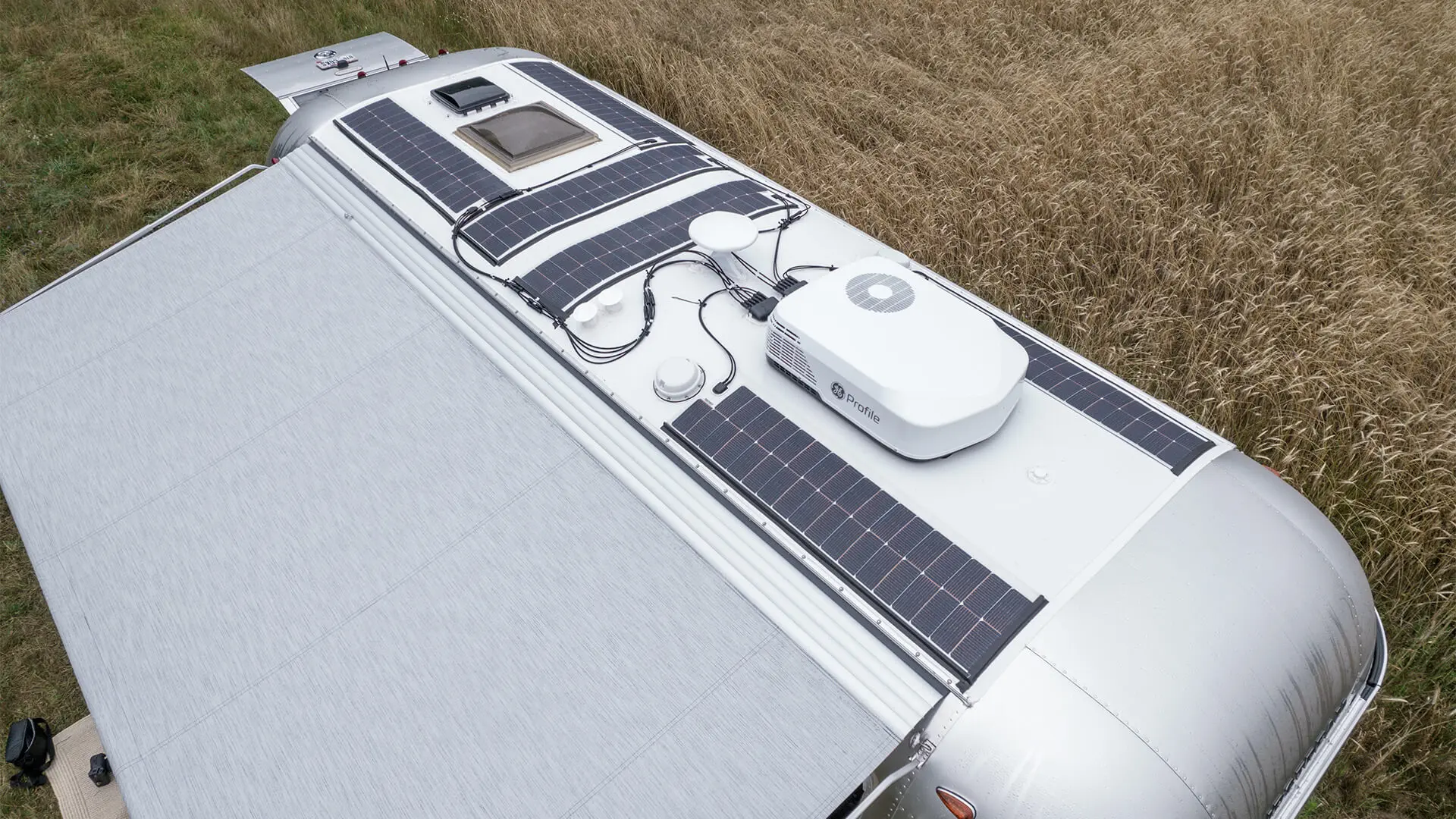
As the RV lifestyle evolves toward all-weather and all-terrain autonomy, especially for vehicles with curved RV roofs, rooftop photovoltaic (PV) systems have transcended simple battery charging. They are now sophisticated engineering projects involving aerodynamics, material science, and regional environmental adaptation.
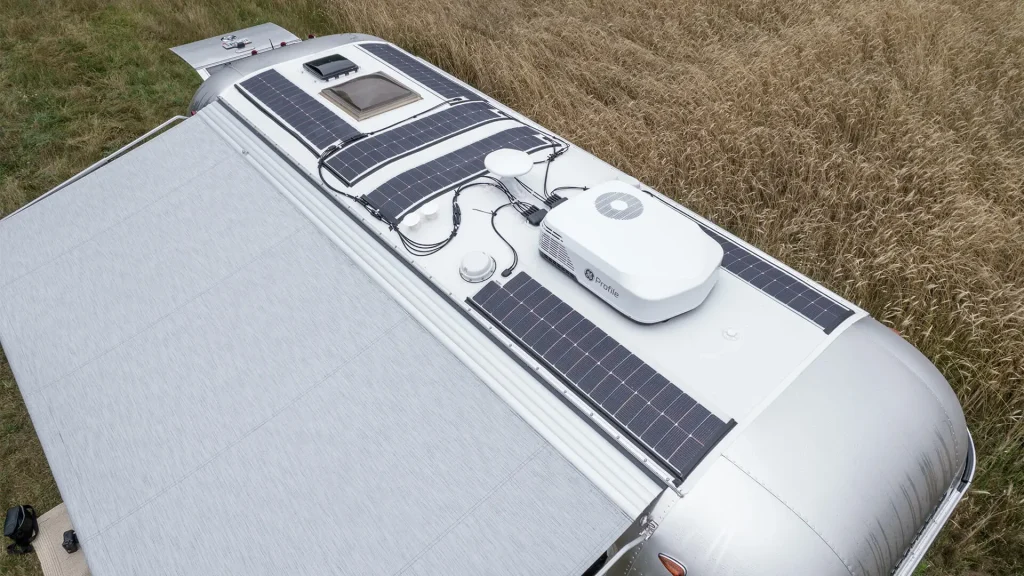
Why Flexible Panels are Essential for Curved RV Roofs
Aerodynamics & Wind Resistance
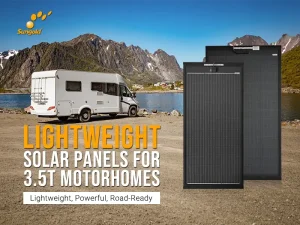
For the curved front caps of Class C motorhomes or the iconic rounded hulls of Airstreams, high-performance flexible panels (utilizing HPC/CPC composite materials) offer unparalleled advantages.
Drag Reduction: Flush mounting follows the vehicle’s lines, significantly reducing air turbulence and wind noise at highway speeds, which translates to better fuel/energy economy.
Structural Integrity: Unlike rigid panels that act as “sails,” flexible modules like the Sungold PA 219 series utilize high-flexural modulus materials to ensure cells remain intact even under high wind pressure or vibration.
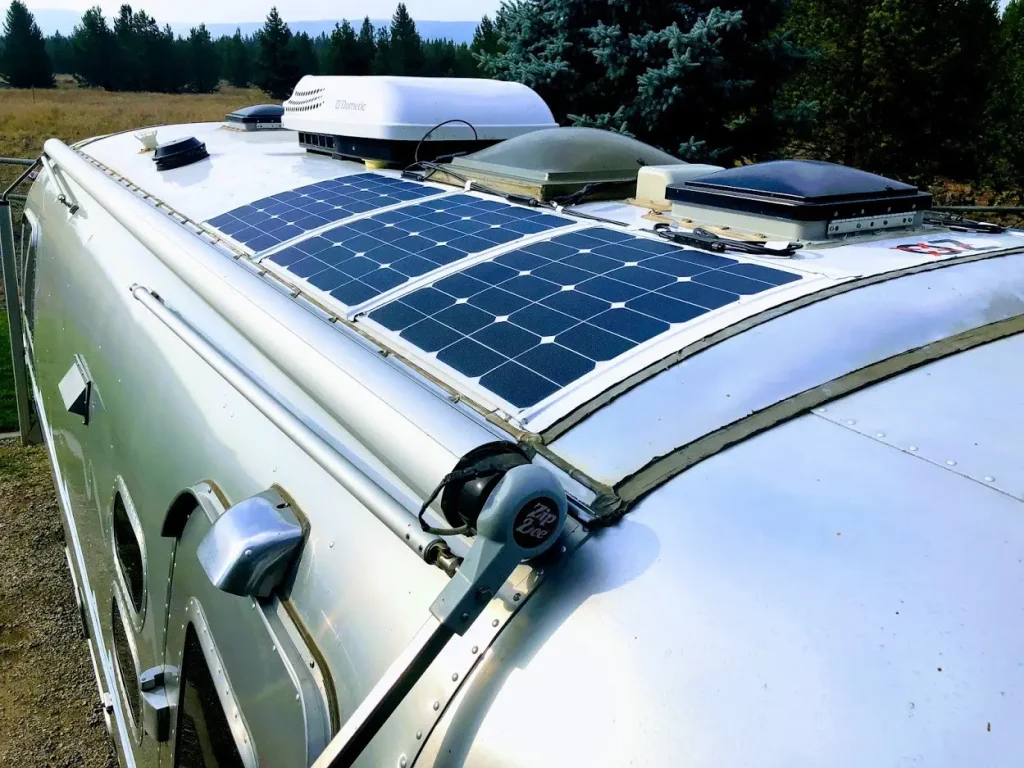
Lightweight "No-Drill" Integration
Modern flexible modules weigh only $3.3\text{kg}/\text{m}^2$ (about $35\%$ of rigid counterparts). Furthermore, industry leaders like Sungold emphasize “plug-and-play” installation—using high-strength adhesives rather than screws, preserving the roof’s waterproofing.
The Science of No-Drill Installation: Protecting Your Roof
One of the primary concerns for RV owners is rooftop leakage. Traditional solar mounts require drilling into the chassis, creating potential water ingress points over time.
Mechanical Logic: By using structural adhesives like 3M VHB or Sika 552, the load is distributed across the entire surface of the panel rather than concentrated on four or six bolt points. This reduces localized stress on the RV’s roof membrane.
Vibration Dampening: Adhesive mounting provides a layer of dampening that traditional rigid mounts lack. For off-road enthusiasts, this means fewer loosened fasteners and a significantly lower risk of the panels detaching during high-frequency road vibrations.
Global Selection Strategy: Data-Driven Regional Adaptation
Professional selection must be backed by laboratory stress tests. The following data points justify the regional deployment strategies for the Australian and Euro-American markets.
Australia & Outback: Validated Anti-Vibration Performance
The Australian Outback is characterized by intense UV radiation and “corrugation roads” that subject solar systems to high-frequency vibrations (10-60 Hz).
The Evidence: The Sungold PA621 Series has been officially tested to resist vibrations in the 10-60 Hz range. This frequency spectrum specifically simulates long-distance transport and off-road road vibrations.
Mechanical Resilience: With a reinforced composite backsheet, the PA621 demonstrated a power attenuation of only $0.12\%$ during mechanical stress tests, ensuring the system survives the physical toll of the Outback.
USA & Europe: Compliance with Advanced Safety & Shading Standards
The Evidence: The Sungold PA219 Series is one of the industry’s first flexible panels to earn TÜV NORD Certification (as of Jan 2025), alongside UL 61730-1/2 compliance.
Safety & Fireproof Standards: It has passed Class C Fire Spread tests, utilizing flame-retardant polymer composites. This addresses the strict fire safety regulations found in European campsites.
Shadow Management: Equipped with cell-level shadow management technology, it mitigates the “Hotspot Effect” common in forested areas, preventing long-term degradation of the cell strings.
Structural Resilience: "Walk-on" Capability & Space Optimization
In compact campervans, rooftop space is a premium. Often, users need to access roof racks or maintain HVAC units.
TF Series Walk-on Performance: Specialized modules like the Sungold TF series utilize a symmetrical structural design with a high flexural modulus. This is the designated series for scenarios requiring “walk-on” capability (when mounted on a solid substrate).
Hidden Crack Resistance: The combination of transparent HPC on the front and a flame-retardant composite backsheet protects the fragile monocrystalline cells from foot traffic or heavy snow loads ($2400\text{ Pa}$ snow load resistance), maximizing the utility of your roof.
Rigorous Certification Standards for Extreme Environments
To ensure long-term ROI, technical buyers should look for specific certifications that simulate decades of wear in just a few weeks.
Hail Resistance: Sungold panels have passed the IEC 61730 Hail Test with ice balls of 25/35/45 mm, proving they can withstand severe storms without cell fracture.
Corrosion Resistance: For coastal RVers, the 168-hour Salt Spray Test and Ammonia Resistance Test (IEC 62716) are non-negotiable. These certifications ensure that the polymer encapsulation will not yellow or delaminate (Yellowing Index $\Delta b \le 3$ after 2000h exposure).
The "Hybrid Layout" Strategy: The Golden Rule
For maximum ROI (usually achieved within 12-18 months), we recommend a “Zoned Integration” approach:
Front/Curved Sections / : Use flexible modules (e.g., Sungold PA219/PA621). Their flexibility covers the aerodynamic “dead zones” where rigid panels cannot be mounted.
Flat Central Roof : Install rigid or semi-rigid lightweight modules. These have a natural air gap for cooling, which is vital for long-term efficiency during peak noon sun.
Professional Installation & Maintenance Tips
Nanoscale Surface Preparation
A common failure point is adhesive delamination.
Execution: Use Isopropyl Alcohol (IPA) to remove oxidation and old wax. Seal the edges with Dicor Self-Leveling Sealant to prevent water ingress at high speeds.
Maintenance & Monitoring
Thermal Imaging: Conduct a yearly check using an infrared camera. “Hot spots” visible in the image usually indicate micro-cracks or poor soldering.
Self-Cleaning Surfaces: While ETFE is naturally non-stick, a simple rinse with fresh water is required in dusty regions to maintain anti-glare properties.
Frequently Asked Questions (FAQ)
Q1: Can I really walk on flexible solar panels for roof maintenance?
Yes, but with caveats. Specialized modules like the Sungold TF series allow for “walk-on” capability when mounted flush to a solid substrate. Avoid concentrated point pressure (like knees or tools) to maintain the $2400\text{ Pa}$ integrity.
Q2: Will the high-strength adhesive damage my RV roof if I need to remove the panels?
No structural damage should occur if removed correctly. Structural adhesives can be sliced through using an oscillating multi-tool. Any residual adhesive can be removed with specialized solvents. This preserves your RV’s resale value by avoiding hole-related leak risks
Q3: Do flexible panels lose more efficiency due to heat compared to rigid ones?
While flush-mounted panels lack an air gap, the Sungold PA621 series utilizes composite layers with lower thermal conductivity to slow heat transfer. To maximize output, use a 4mm-6mm polycarbonate spacer (the “Hollow Core Hack”) to keep cells up to $15^\circ\text{C}$ cooler.