Quick Answer: Heat is the Invisible Power Thief
Summer is peak travel season, but it’s also the toughest season for your power system. RV roof solar temperatures can easily soar to 140–158°F (60–70°C). Under these scorching conditions, RV solar panels overheating can cause a power output drop of approximately 10–20%.
To keep your system efficient, you need a design rooted in Thermal Management:
- Low Temperature Coefficient Materials
- Heat-Dissipating Insulating Backsheets
- Aerodynamic & Passive Airflow Structure
- Internal Bypass Technology
For a complete dealer-ready RV system plan (layout, delivery checklist, and real-world reliability factors), see our RV Solar Panels Mobile Vehicle Solution Guide.
The Heat Effect: Data Visualization
Figure 1: Theoretical output efficiency based on a standard -0.4%/°C temperature coefficient.
| Surface Temp (°F / °C) | Efficiency Output | Power Loss | Note |
|---|---|---|---|
| 77°F (25°C) | 100% | 0% | Standard Test Conditions (STC) |
| 95°F (35°C) | 96% | -4% | Mild Warmth |
| 131°F (55°C) | 88% | -12% | Direct Sun |
| 149°F (65°C) | 84% | -16% | Typical RV Roof (Summer) |
| 167°F (75°C) | 80% | -20% | Extreme Heat / Heat Island |
Why RV Roof Temps Spike: The Perfect Storm
Dealers and RVers often ask: “Why does the solar performance on my roof fluctuate so much more than on a ground mount?”
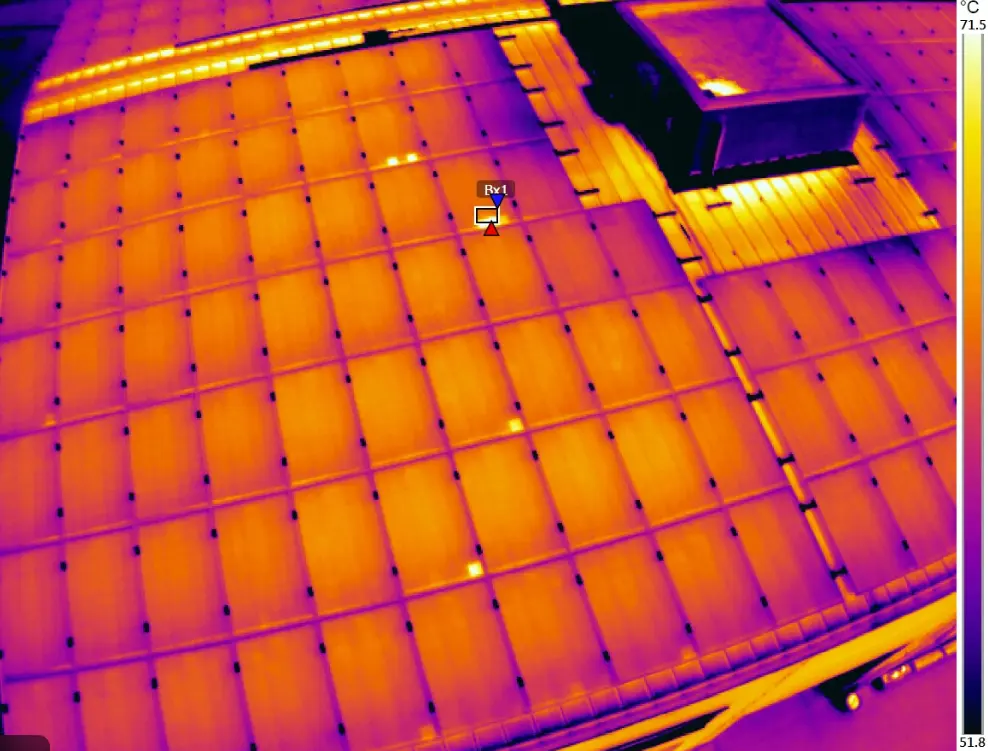
It’s not bad luck; it’s physics. Several factors combine to create extreme RV roof solar temperatures:
Heat Absorption: RV roofs (especially metal or dark composite materials) act as giant heat sinks.
Lack of Airflow: Flush mount vs raised mount cooling RV solar comparisons show that panels mounted directly to the roof without gaps trap heat, suffocating the cells.
Thermal Cycling: Driving (cooling wind) vs. Parking (stagnant heat) creates stress cycles far more intense than stationary systems.
Heat Islands: Rooftop A/C units and skylights create localized zones of intense heat.
Shading & Hotspots: Heat + hotspots shading interaction is critical—a shaded cell resists current, creating localized heat that exacerbates the overall temperature problem.
The Reality of Solar Panel Temperature Coefficient
Let’s turn “it feels hot” into verifiable data. Use this evidence card to explain how temperature affects solar panel output to your customers. It proves that summer power loss is physics, not a product failure.
Sungold Summer Static Soak Test Data
We compared Standard Test Conditions (STC) against real-world scenarios at an ambient temperature of 95°F (35°C).
- The Physics: Crystalline silicon panels typically have a Pmax temperature coefficient of -0.35%/°C to -0.45%/°C.
- The Reality: Due to heat islands and restricted airflow, panel surface temps hit 149°F+ (65°C+).
- The Math:
(65°C Actual - 25°C STC) × -0.4%/°C ≈ -16% Power Loss
Engineering Tactics: How to Keep Solar Panels Cool on RV Roof
We can’t change the sun, but we can change how your panels react to it. Here is Sungold’s comprehensive approach to minimizing temperature derating solar panels.
Tactic 1: Low Temperature Coefficient Materials
The Tech: Not all cells react to heat equally. We utilize premium cells (like N-type or optimized PERC) with a superior solar panel temperature coefficient. The Benefit: When the temperature spikes, these materials degrade less power per degree compared to standard panels. It’s built-in resistance to the summer slump.
Actionable Tip: Check the datasheet for the “Pmax Temperature Coefficient.” The closer to zero (e.g., -0.30% vs -0.45%), the better.
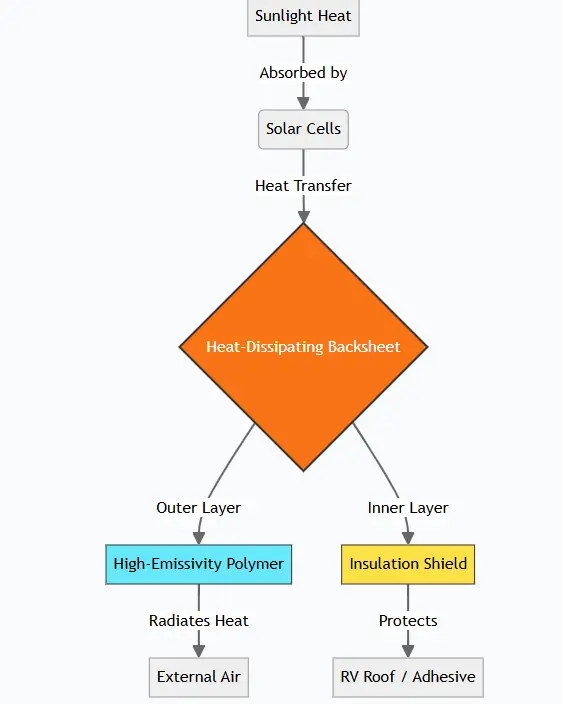
Tactic 2: Heat-Dissipating Insulating Backsheets
The Pain Point: “Will my panels crack or delaminate after years of baking on the roof?” The Solution: Traditional backsheets trap heat. We use specialized insulating, low-conductivity backsheets that act like breathable performance wear for your solar cells. They actively help dissipate heat buildup, preventing the long-term brittleness and insulation failures common in RV solar panels overheating.
Tactic 3: Aerodynamic & Passive Airflow Design
The Pain Point: “Will wind drag rip my panels off? And how do I cool them down while driving?” The Solution: Passive airflow cooling solar panels is the most effective way to manage heat. Our designs focus on:
Airflow Gap: Ensuring an airflow gap under solar panels RV installations allows hot air to escape rather than build up.
Aerodynamic Flow: Our specialized backsheet texture and frame designs allow air to pass through or flow over smoothly. This reduces lift force (drag) for safety while utilizing the “driving wind” to actively cool the system.
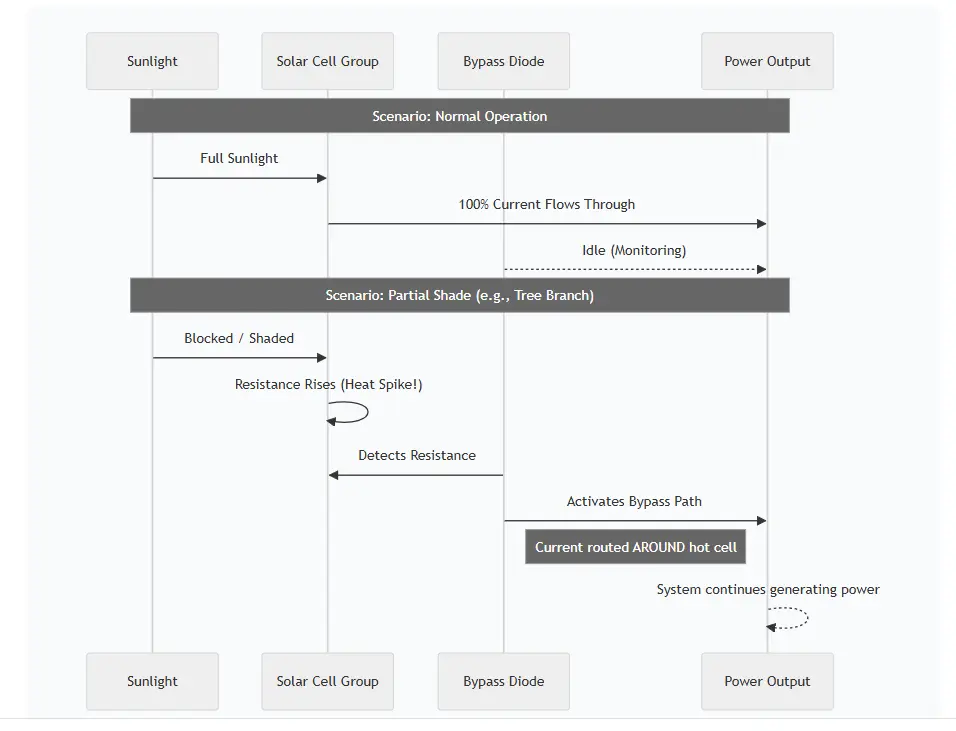
Tactic 4: Internal Bypass Technology (Shade & Heat Management)
The Pain Point: “If I park under a tree to keep the RV cool, will my solar stop working?” The Solution: Shading causes resistance, and resistance causes heat. Sungold integrates Internal Bypass Diode Lamination. Think of these as intelligent traffic controllers. The Benefit: When shade hits, the diodes route current around the blocked cells. This ensures shade tolerance (you keep generating power) and prevents hotspots
Spotlight: Why PA621 is Best for Heat-Sensitive Installs
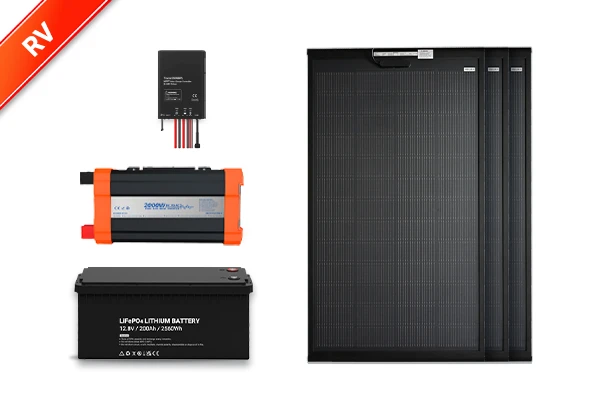
The Sungold PA621 is engineered specifically for the harsh thermal environment of mobile applications.
Structural Cooling: Features a dedicated heat-dissipation channel design.
Proven Delta: Lab tests show a lower temperature rise compared to standard flexible panels under identical loads.
Durability: High retention rates in High-Temperature High-Humidity (HTHH) cycling tests.
Managing "Summer Power Drop" Expectations
Summer heat brings customer questions. Use this checklist to provide professional RV solar solutions and build trust.
[ ] Set Expectations: Explicitly mention the 10–20% output drop at 60–70°C in your quote. Frame it as physics, not a defect.
[ ] Highlight Tech: Explain why you chose this system—point out the low temperature coefficient and passive airflow cooling features.
[ ] Check Installation: Ensure you aren’t mounting next to heat sources (A/C units). Verify the best mounting for cooling RV solar panels is used (appropriate gaps).
[ ] Maintenance Advice: Remind owners to check mounts for vibration looseness, which can affect heat transfer and safety.
FAQ: Keeping Your Cool
Q: How to keep solar panels cool on RV roof effectively?
A: Design is key. Ensure you have an airflow gap under solar panels, choose panels with a low solar panel temperature coefficient, and avoid mounting directly next to heat-generating A/C units.
Q: Is the power drop in summer a quality issue?
A: No, it is solar panel heat derating. All semiconductors lose efficiency as they heat up. Our technology minimizes this loss, but physics dictates some drop is inevitable.
Q: Why does my RV roof reach 70°C? A: It’s a combination of direct solar radiation, dark roof materials absorbing heat, lack of ground cooling, and the heat island effect from onboard appliances.
Q: Flush mount vs. raised mount cooling RV solar: Which is better?
A: Raised mounts are superior for cooling because they allow passive airflow underneath. If flush mounting (flexible panels), ensure the specific panel (like our PA621) has heat-dissipating backsheets designed for zero-gap installs.
Q: Can shading cause panels to overheat?
A: Yes. This is the heat + hotspots shading interaction. Shaded cells resist current and heat up. Our internal bypass diodes prevent this by routing power around the shaded area.
Q: What is the best mounting for cooling RV solar panels?
A: Rigid panels on Z-brackets or tilt mounts offer the best airflow. For flexible panels, use designs that integrate heat-conductive or breathable backsheets.
Q: Does the PA621 really handle heat better?
A: Yes. Evidence shows its optimized structure and materials result in a lower operating temperature and better output in RV solar panels in hot weather performance drop scenarios.
Q: How do I explain summer output loss to customers?
A: Use the “Evidence Card.” Show them the math: High Temp + Temperature Coefficient = Natural 10-20% Drop. Then show them how your system mitigates this better than cheap alternatives.