Building rv solar panels for RVs, vans, and trucks isn’t about “can it generate power,” but whether it can keep generating under vibration, partial shade, and summer heat. A reliable RV solar system comes down to three field realities: road vibration that loosens connections over time, real-world shading from trees and rooftop equipment, and heat derating when rooftop temperatures climb. This guide turns those realities into a deliverable mobile vehicle solar solution—roof zoning, wiring decision logic, installation checks, and a handover checklist your dealer network can repeat.
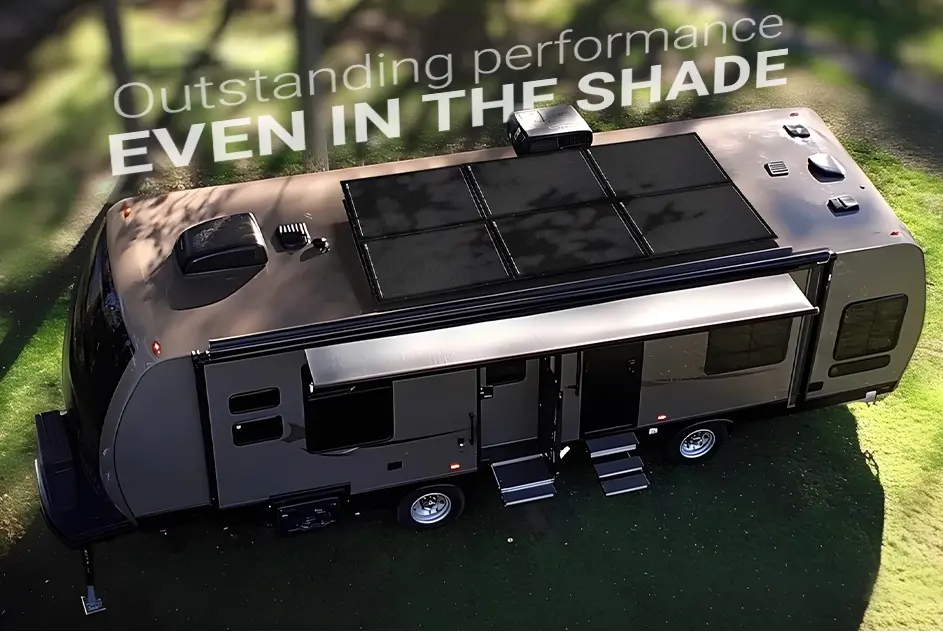
What makes a mobile RV solar setup reliably deliverable
For mobile use, stable delivery of rv solar panels usually depends on three things: (1) vibration durability (connections and routing that stay tight over mileage), (2) real shading tolerance (trees, roof equipment, bird droppings, dust), and (3) heat derating control (roof temperature + airflow). If you design around these, you reduce “unstable output” complaints and after-sales callbacks.
This guide is written for dealer and installer delivery in real road conditions, focusing on steps that can be verified at acceptance.
Who this guide is for
Dealers: explain it clearly, sell confidently, reduce complaints
Customers rarely ask only about watts. They ask if solar panels for RV use still work when parked under trees, whether summer output drops mean something is broken, and whether long-distance driving makes performance fade. To sell confidently, you need proof points: a shading plan, a heat explanation, and a handover checklist.
Installers / upfitters: an SOP that lowers rework
Your job is repeatability: survey → design → zoning → wiring → install → acceptance → inspection plan. Mobile PV is not a static plant; vibration, thermal cycling, wash exposure, salt air, and abrasion are daily realities. The goal is fewer callbacks and predictable charging behavior.
Retailers: sell a solution package, not just hardware
If you sell only a panel, returns will sound like “power isn’t enough” or “not stable.” If you sell a packaged RV rooftop solar solution—zoning logic, wiring rules, and realistic expectations—customers get what they expected.
Why mobile PV reliability is different
In a stationary system, conditions are relatively consistent. In a vehicle, vibration and heat cycles happen continuously, and partial shade is common. That’s why rv solar panels fail commercially more often by degrading stability (loose connections, unpredictable yield) than by “not generating at all.”
RV solar panels wiring: series vs parallel vs hybrid
A practical RV solar installation guide starts with parking reality and roof layout, then picks wiring. For rv solar panels, the goal is not “perfect lab output,” but predictable daily charging in imperfect conditions.
Wiring decision rule (fast on-site logic)
Low shade + long cable runs + MPPT → often series (higher voltage, lower current, controlled line loss).
Frequent shade (trees, rooftop equipment, soiling) → parallel or zoned series-parallel to contain losses.
Clear roof zones (front/back exposure differences) → hybrid to improve tolerance and stability.
RV solar panels shading: why small shade can cause big losses
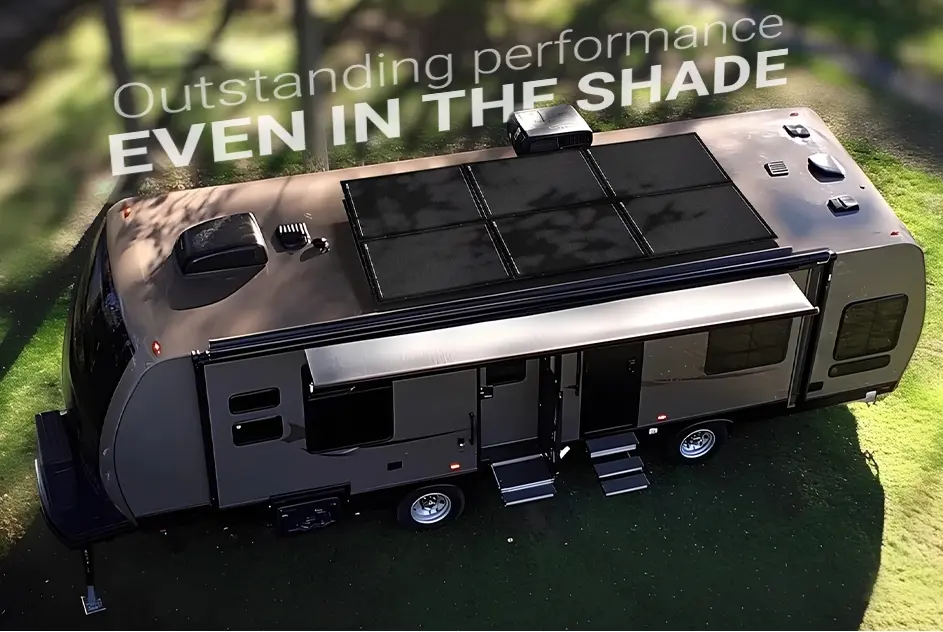
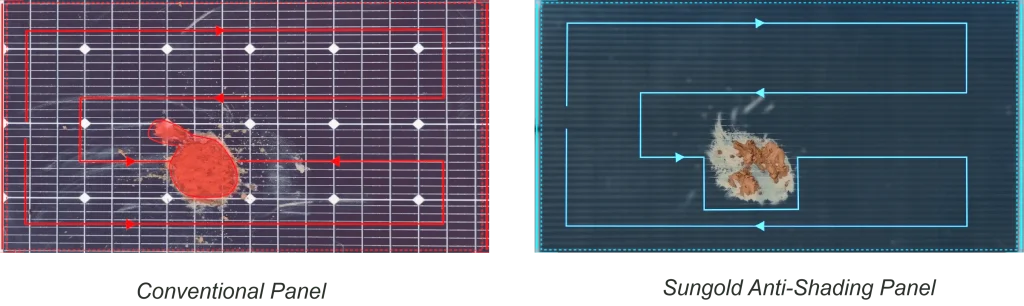
Real-world shading is predictable and frequent: tree shade at campgrounds, roof AC units and vents, racks and antennas, plus bird droppings and dust. Even small shaded areas can reduce total output far more than expected—especially when one shaded section drags down the rest of the roof group.
Field shading sources checklist
Tree shade (common for boondocking and campground parking)
Rooftop blockers (AC units, vents, racks, antennas)
Soiling (bird droppings & dust that create micro-shading)
- RV Solar Panel Shading & Hotspots
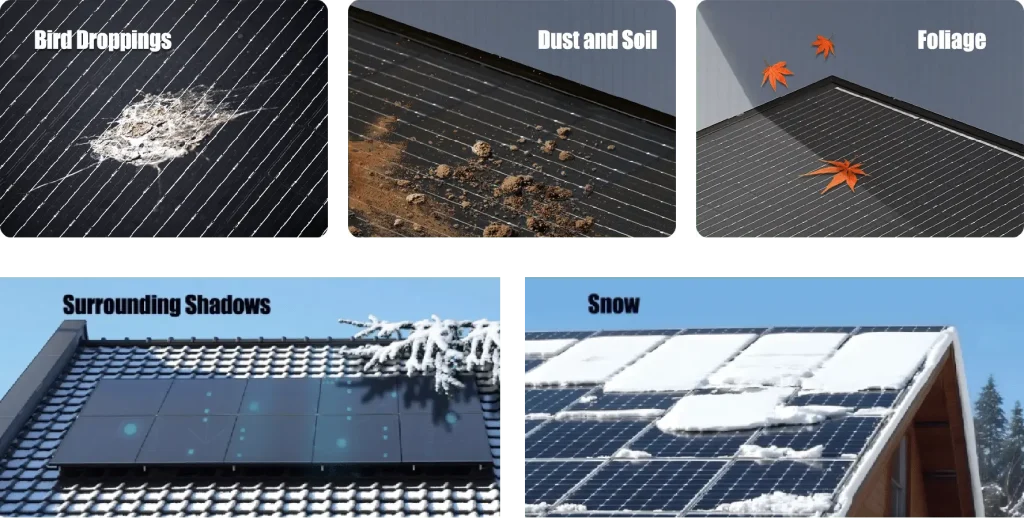
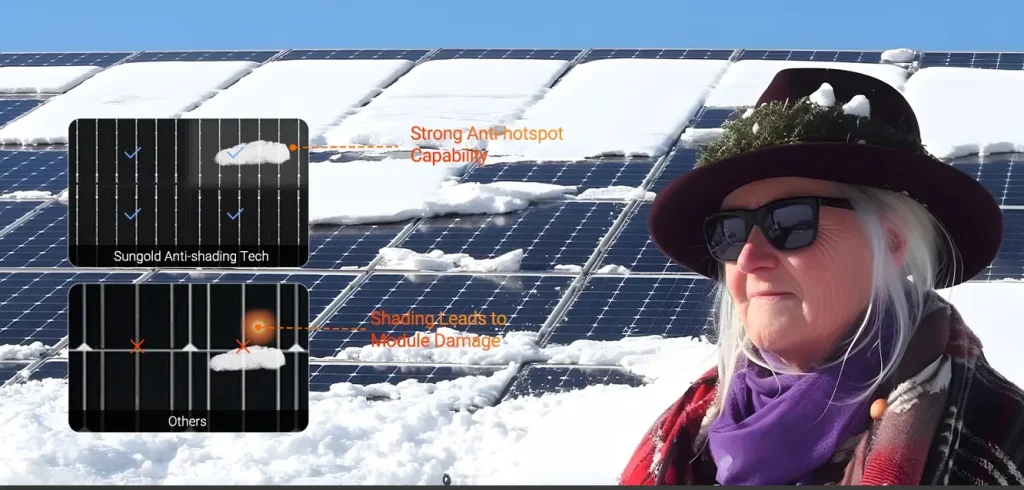
RV solar shading hotspots: roof zoning and bypass strategy
When partial shade persists, hotspot risk increases and customer-perceived stability drops. The most practical fix is roof zoning: separate high-shade areas from primary sun zones and design wiring so shade is contained. This is where “more panels” is not the answer—better layout is.
A simple roof zoning method (repeatable for installers)
Sketch the roof: mark AC units, vents, racks, antennas, and common tree-side parking direction.
Define zones: “primary sun zones” vs “high-shade zones.”
Group electrically by zone, then choose series/parallel/hybrid to contain losses.
If you need a one-line explainer for customers: zoning is how you prevent “one shaded corner” from pulling down the whole roof. This is also a clean way to explain bypass diode hotspot prevention without overcomplicating the sales conversation.
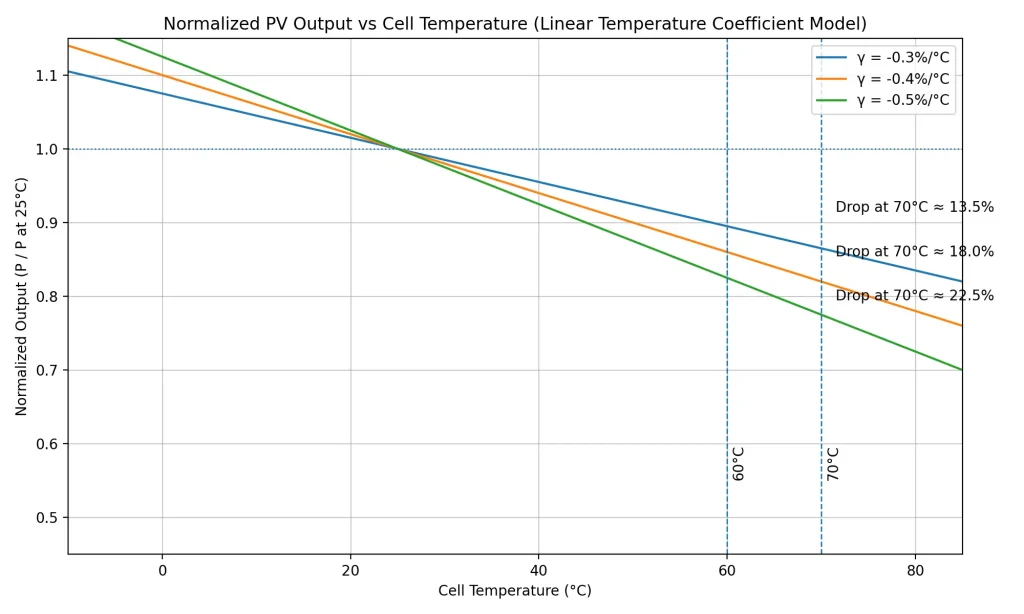
RV solar heat derating: temperature coefficient & summer output
On a vehicle roof, module temperature can rise well above ambient air temperature. As temperature increases, voltage drops and real output decreases. This is why customers see summer output changes and assume something is wrong. Heat derating is expected physics—especially if airflow is restricted under the module area.
Evidence card: Heat derating proof (60–70°C rooftop reality)
RV roofs can run extremely hot under direct sun. Heat derating is expected: real output can drop in summer, especially when airflow is restricted. Preserve passive airflow and document it as a handover photo item.
Explain “nameplate vs field output” in one sentence
Include a temperature vs output curve image
Document airflow preservation during acceptance
From product to deliverable solution: PA219 / PA621 rollout logic
To reduce callbacks, don’t sell “a panel.” Sell a deliverable RV solar system with a documented zoning plan, wiring rule, and acceptance checklist. PA219 / PA621 are positioned as part of a repeatable delivery approach: stable output under vibration, better tolerance to real shading, and clearer heat expectations for summer.
Delivery table (copyable for dealers and installers)
Field condition: Vibration
Main risk: Loose connectors, cable fatigue, gradual instability
Deliverable action: Strain relief + protected routing + inspection points
Proof to show: Install photos + handover checklist
Field condition: Shading
Main risk: Unstable yield, zone-wide losses
Deliverable action: Roof zoning + containment wiring
Proof to show: Zoning map + shading checklist
Field condition: High heat
Main risk: Predictable derating, heat islands
Deliverable action: Preserve airflow + set expectations
Proof to show: Derating card + airflow photo item
Use this table in dealer training, installer SOPs, and quote attachments. It turns “features” into a delivery standard.
RV solar installation guide: 6 delivery rules that reduce rework
Lorem ipsum dolor sit amet, consectetur adipiscing elit. Ut elit tellus, luctus nec ullamcorper mattis, pulvinar dapibus leo.
Survey before quoting
Collect loads (daily Wh), available roof area, battery space, cable routes, typical routes, and frequent parking conditions. This is essential for sizing solar panels for RV applications realistically—especially for RV solar panels for boondocking and RV solar panels for full-time RV use.Route and secure for vibration
Protect against abrasion at chafe points (loom/grommets), add strain relief at vibration points, and secure connectors. Vibration is one of the fastest ways to create “intermittent charging” complaints.Zone before wiring
Use the roof zoning map to drive grouping and wiring choices. Shade tolerance is designed—not hoped for.Control bonding and sealing
Clean → dry → seal → cure. Many “mystery” field failures come from installation process gaps, not panel capability.Preserve airflow for heat management
Avoid blocking ventilation paths that trap heat. A small airflow mistake can amplify heat derating and reduce real output.Use a handover checklist (sign-off + photos)
Installer handover checklist (reduce callbacks)
Sealing/bonding edges inspected and documented
Connectors secured; strain relief applied at vibration points
Cables protected at chafe points (loom / grommets / routing)
Airflow paths preserved (photo item)
Charging behavior verified in sun
RV rooftop solar safety: proof pack that helps channels sell with confidence
Channels sell faster when safety claims are backed by a clear proof pack. Don’t hide certificates and structure notes in a PDF nobody sees. Put the essentials on-page, then offer a downloadable pack that dealers and installers can share.
What to include in a “proof pack”
Test summary / certificate snapshot (page preview)
Structure diagram (where protective materials apply)
Installation boundaries (what could compromise safety)
Lorem ipsum dolor sit amet, consectetur adipiscing elit. Ut elit tellus, luctus nec ullamcorper mattis, pulvinar dapibus leo.
FAQ (20 quick answers)
Quick, field-ready answers for RV solar panels wiring, shading, heat derating, and long-term stability.
- Are rv solar panels better wired in series or parallel?
- If shading is low and cable runs are long, series wiring is often preferred with an MPPT controller. If shading is frequent, parallel or zoned series-parallel usually delivers more stable real-world output.
- Do rv solar panels work well for boondocking?
- Yes—boondocking performance depends on sizing your RV solar system for daily loads, battery capacity, and real parking shade conditions, plus accounting for summer heat derating.
- How many solar panels do I need for my RV?
- Estimate daily watt-hours (Wh) from appliances and charging needs, then size panels based on sun hours for your routes and seasons. Include allowance for partial shade and heat derating.
- What’s the best RV solar system setup for full-time RV living?
- Prioritize stable charging, adequate battery capacity, MPPT control, roof zoning for shade tolerance, and protected wiring to prevent vibration-related issues over long mileage.
- Why can solar panels for RV lose so much output from small shade?
- Partial shading can constrain current in a connected section and disproportionately reduce total output. Roof zoning and containment wiring prevent one shaded area from dragging down the whole roof.
- How do I reduce RV solar shading hotspots?
- Use roof zoning and a layout that contains shading losses. Avoid persistent partial shading where possible and document the zoning strategy as part of delivery.
- What is heat derating on RV rooftop solar?
- Heat derating is the predictable power drop as module temperature rises. Real output can be lower than nameplate ratings—especially when airflow is restricted.
- What does temperature coefficient mean for an RV solar system?
- Temperature coefficient describes how power/voltage changes with temperature. A better coefficient helps maintain more stable output in hot roof conditions.
- Is it normal for a solar setup to feel weaker in summer?
- Yes. High roof temperature reduces real output. Preserve passive airflow and set expectations for summer performance.
- How do I plan wiring if my camping spots are often shaded?
- Favor parallel or zoned series-parallel wiring so one shaded zone doesn’t collapse total output. Combine wiring choices with a roof zoning map.
- What causes RV solar system instability over time?
- Loose connectors from vibration, cable abrasion at chafe points, thermal cycling stress, and persistent partial shading/soiling are common causes. Protected routing and inspection points reduce risk.
- What’s a practical roof zoning method?
- List and map shade sources (AC units, vents, racks, antennas, common parking shade direction). Define zones so high-shade areas are wired separately from primary sun zones.
- Do flexible solar panels for RV roof work on curved roofs?
- They can be a strong option for curved or weight-sensitive roofs when installed with proper bonding/sealing and protected cable routing as part of a zoned layout.
- What are lightweight solar panels for RV roof used for?
- They’re often selected when roof load limits matter or when easier integration is needed, helping reduce structural stress and simplify installation.
- How do I reduce after-sales complaints for an RV solar system?
- Pre-explain shading and heat derating, document zoning and wiring logic, and use a handover checklist that verifies sealing, connector security, cable protection, airflow preservation, and charging behavior.
- What’s the best way to prevent wiring-related problems?
- Use strain relief, abrasion protection, secure connectors against vibration, and route cables away from sharp edges and heat hotspots. Add inspection points for periodic checks.
- Can cleaning solve shade problems?
- Cleaning improves soiling-related losses, but it won’t fix tree or building shade. For unavoidable shade, roof zoning and containment wiring are still required.
- What’s the simplest installer handover test?
- Verify charging behavior in sun, confirm connector tightness, check sealing/bonding edges, confirm cable protection at chafe points, and ensure airflow paths are not blocked.
- How should I expand later without redesigning everything?
- Reserve space and electrical headroom: pre-plan roof zones, leave controller capacity where appropriate, and reserve protected cable routes and protection components for future inputs.
- What’s the most important buying question for solar panels for RV?
- Beyond nameplate watts, ask how the system handles real-world shade, heat derating, and vibration over time—and whether the installer provides a zoning plan and handover checklist.
Authored by: Sungold Solar Technical Content Team
Reviewed by: Grace Hu
Last updated: 2025-12-16
This page is updated when delivery checklists, product documentation, or field feedback indicates a clearer acceptance standard for mobile vehicle rooftop PV.