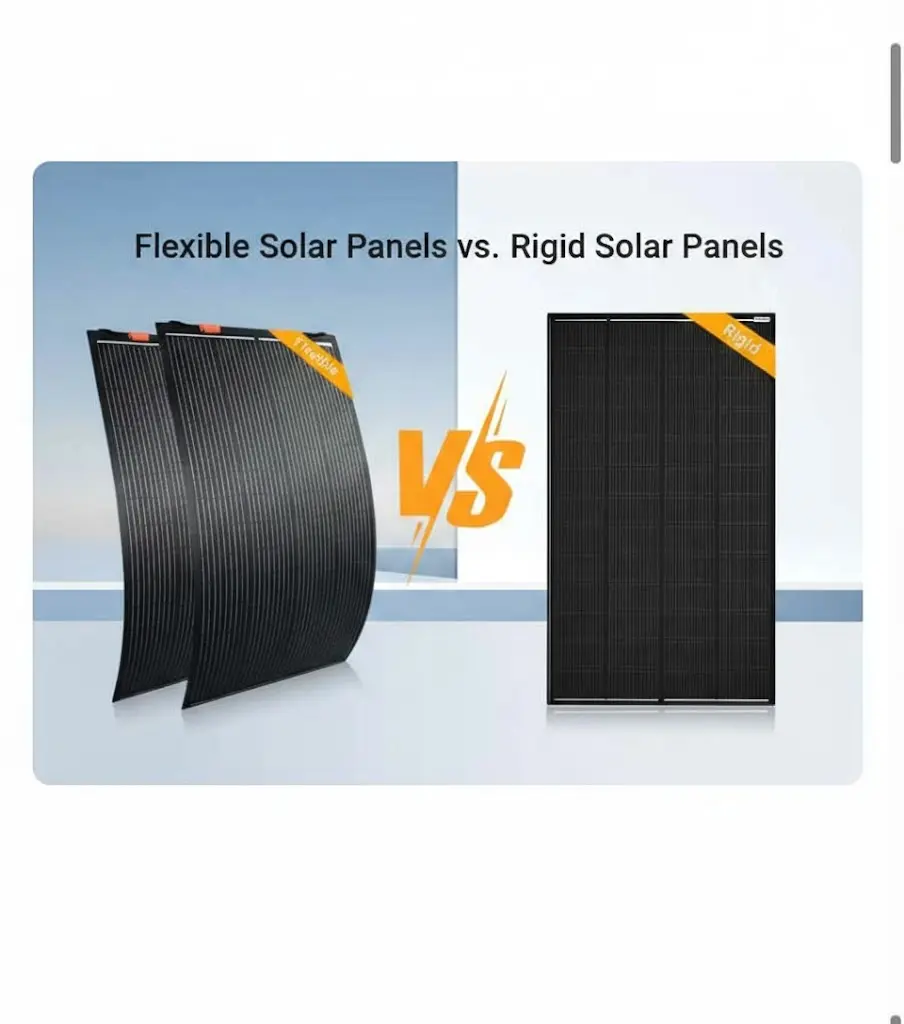
The pros and cons of flexible solar panels vs. rigid solar panels center on weight and durability: rigid panels offer 25+ years of life and high efficiency for flat roofs, while Sungold Solar’s flexible panels provide a lightweight, 10-year warranted solution for curved surfaces and mobile off-grid applications. Choosing between them depends on whether your installation priority is long-term stationary power or versatile, aerodynamic portability for marine or RV use.
Key Takeaways
Technological Leap: High-end flexible modules have moved past the “disposable” era. Modern ETFE encapsulation offers durability comparable to glass in specific mobile environments.
Off-Grid Superiority: In scenarios where weight limits or structural integrity (no-drill) are priorities, flexible panels are the only viable engineering solution.
TCO Evolution: While the initial cost of flexible panels is higher, the “Total Cost of Ownership” is balanced by zero structural modifications, reduced fuel consumption (weight), and faster installation.
Understanding the Pros and Cons of Flexible Solar Panels vs. Rigid Solar Panels
Featured Snippet Optimization: When evaluating the pros and cons of flexible solar panels vs. rigid solar panels, rigid panels offer the highest static durability (25+ years) and the best cost-per-watt for flat, heavy-duty surfaces. Conversely, professional-grade flexible panels utilize high-performance polymers (ETFE) to reduce weight by 80% and allow for aerodynamic, non-penetrative mounting. By 2026 standards, professional flexible modules now provide a 10-year product warranty, making them a reliable strategic choice for marine and off-grid mobile power.
What are the structural differences between rigid and flexible panels?
Rigid Panels: The Standard for Stability
Rigid panels use tempered glass and aluminum frames to create a “fortress” for silicon cells. They are unmatched in stationary environments. However, their weight (10-15kg per panel) and rigidity can be a liability on vibrating RV roofs or thin-shell structures where stress fractures are common.
Flexible Panels: The Evolution of “Toughness”
Early flexible panels (PET-based) gave the industry a bad name due to yellowing and 2-year lifespans. The 2026 standard has changed the game:
ETFE Encapsulation: Non-aging, self-cleaning, and highly UV-resistant.
Composite Backsheets: Aerospace-grade layers prevent moisture ingress and provide the structural “memory” needed for 10-year reliability.
Marine Grade: Professional flexible modules are naturally immune to the electrochemical corrosion that often plagues aluminum-framed rigid panels in salt-spray environments.
Can professional-grade flexible panels withstand harsh environments?
In off-grid scenarios, the “heavy and brittle” nature of rigid panels is often a dealbreaker.
Rapid Deployment: For remote monitoring stations or emergency relief, flexible panels can be “unrolled” like a carpet. At less than 3kg/㎡, a single person can deploy a kilowatt-scale system in minutes without cranes or heavy mounting hardware.
Non-Invasive Mounting: On leased containers or temporary shelters, drilling holes for rigid racks is often prohibited. Flexible modules use industrial-grade adhesives or zip-ties, protecting the underlying asset while providing immediate power.
Extreme Terrain: Flexible panels conform to uneven surfaces or rocky terrain where rigid panels simply cannot find a stable mounting point.
How does weight and portability impact off-grid deployment?
Modern architectural and vehicle designs often have razor-thin structural margins.
The Savior of Light Roofs: Many off-grid warehouses or prefab cabins have roof load limits of 15-20kg/㎡. A rigid system (panels + racking + ballast) can exceed this, risking structural collapse. Flexible panels (2-4kg/㎡) utilize the existing structural margin without compromise.
Aerodynamic Stability: Rigid panels create a “sail effect” when raised on brackets. In high-wind areas or on moving vehicles, this creates massive uplift forces. Flexible panels feature a flush-mount profile, eliminating wind drag and the risk of panels being ripped off in gale-force winds.
Why is thermal management critical for long-term solar output?
The most common criticism of flexible panels is heat. Here is the 2026 manufacturer’s perspective:
Rigid Panels: Natural convection behind the panel keeps cells cool.
Flexible Panels: Direct mounting can lead to heat buildup.
The 2026 Fix: Modern modules utilize High-Thermal-Conductivity (HTC) backsheets. When installed with a micro-air-gap (using mesh spacers), the power drop is limited to a negligible 5-8%.
Stress Relief: Rigid panels transfer vehicle vibration directly to the cells, causing micro-cracks. Flexible panels “float” with the structure, absorbing vibrations and maintaining electrical continuity longer in high-vibration mobile environments.
Is the 10-year TCO for flexible panels better than rigid?
The 10-year Total Cost of Ownership (TCO) for flexible panels is becoming increasingly competitive when accounting for installation labor, structural integrity, and asset preservation. While rigid panels have a lower cost-per-watt initially, the cost of adding structural reinforcement to a light roof or the potential damage from drilling holes can exceed the premium paid for flexible technology.
Metric | Rigid Panel System | Pro Flexible Module (10-Year Warranty) |
|---|---|---|
Initial Component Cost | ~$0.70 – $0.90 / Watt | ~$1.20 – $1.80 / Watt |
Installation Hardware | Brackets, waterproof glands, heavy labor | Industrial VHB, zero-drilling, low labor |
Replacement Cycle | 0 times in 10 years | 0 times (Due to tech maturity) |
10-Year Total Spend | Baseline | +25% to 40% |
Intangible Benefits | Lowest LCOE | Asset preservation, fuel savings, safety |
Expert Insight: While the initial price is higher, when you factor in the lack of structural reinforcement needed for weak roofs and the fuel efficiency gains from weight reduction, the professional flexible panel often becomes the more economical choice by year six.
Final Insights: Navigating Your Decision
To conclude our technical analysis, it is essential to revisit the specific trade-offs involved in your energy strategy. Navigating the pros and cons of flexible solar panels vs. rigid solar panels is no longer just about choosing between “cheap” and “expensive”—it is about matching material science to your environment’s physical constraints. Whether you are balancing the structural load of a vintage roof or the salt-spray resilience of a blue-water cruiser, the following FAQs address the most critical concerns for modern installers.
FAQ: Answers Based on 2026 Standards
Q1: Are flexible panels still “disposable” 2-year products?
No. That is an outdated stigma from the PET era. Modern ETFE modules from reputable manufacturers carry 10-year warranties and are designed for extreme weather.
Q2: Can flexible panels handle hail?
Yes. Professional-grade flexible panels pass the same IEC 61215 impact tests as rigid panels. Their polymer surface actually absorbs some impact energy that would shatter glass.
Q3: Which is better for salt-spray (marine) environments?
Flexible wins. The lack of an aluminum frame eliminates the primary site for galvanic corrosion, making them the superior choice for yachts and coastal off-grid sites.