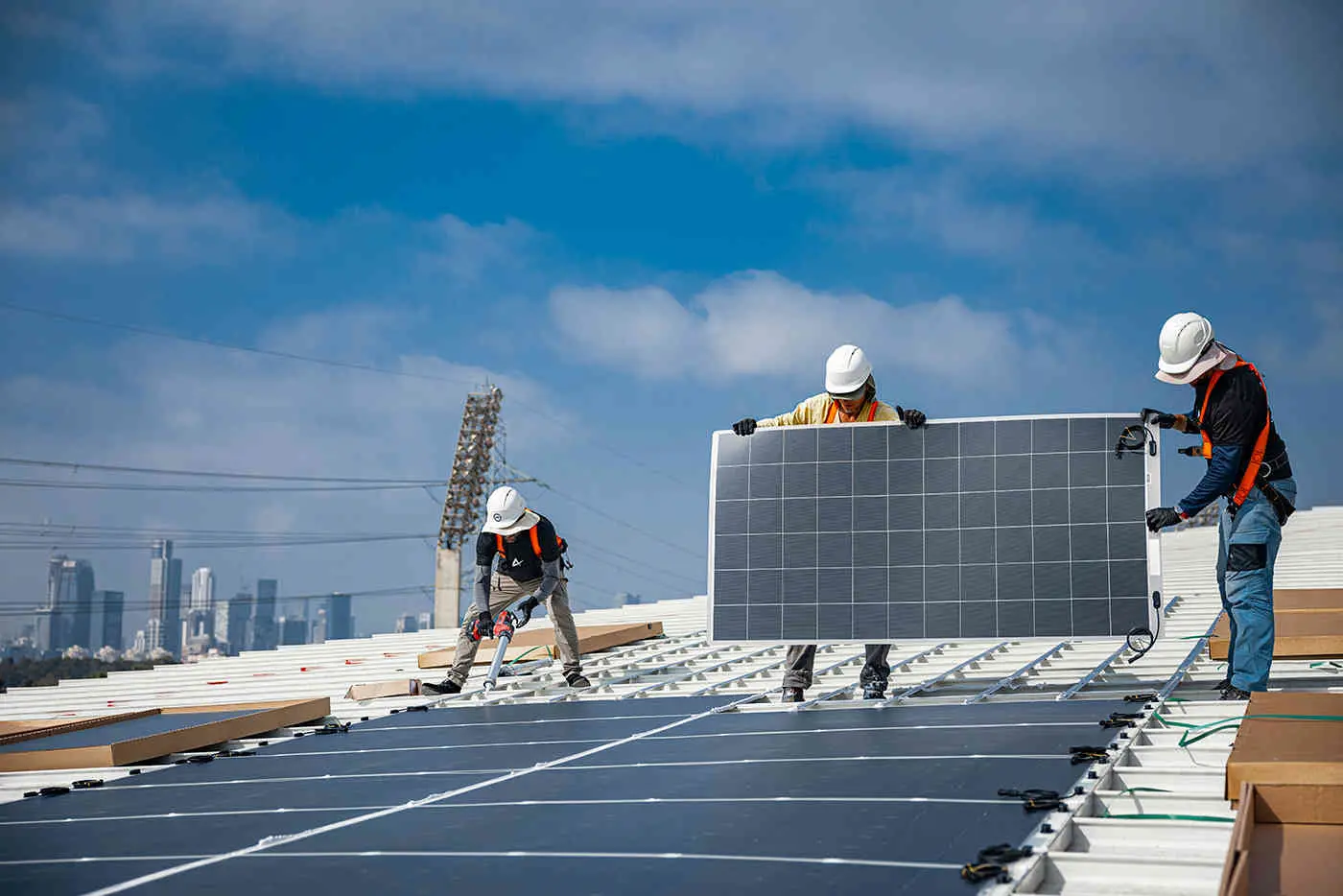
Installing Solar on Lightweight Roofs are everywhere—logistics warehouses, insulated metal buildings, sports facilities, commercial centers, transportation hubs, and even temporary or modular structures. They reduce construction cost and speed up deployment, but they also introduce one unavoidable reality:
Most lightweight roofs were never designed to carry traditional glass solar panels.
Data from engineering assessments shows that 30–50% of lightweight roofs fall below the load thresholds required for standard PV systems, especially once rails, clamps, and ballast are included.
Beyond load, these roofs also differ in:
Surface material behavior (TPO/PVC, FRP, metal sheets)
Thermal expansion
Waterproofing methods
Rigidity and deflection
Curved or uneven geometry
Aging and membrane warranty restrictions
This means lightweight roofs require a different solar design logic, not a simplified version of standard PV engineering.
Know Your Load Limit — The Roof Structure Dictates Everything
Why it matters
Roof load capacity is the single biggest constraint on lightweight roofs. Traditional glass modules weigh approximately 18–22 kg/m², and full systems—including rails and clamps—often exceed 23–28 kg/m².
Most lightweight roofs allow only 10–25 kg/m².
➡️ This already disqualifies many glass PV systems.
The more accurate metric: W/kg (Watts per kilogram)
Most designers think in W/m², but lightweight roofs require a different approach.
A better metric is W/kg, because it shows how much power you get per kilogram of roof load.
| Panel Type | Weight (kg/m²) | Power (W/m²) | W/kg |
|---|---|---|---|
| Glass panel | 20 | 200 | 10 |
| PA219 lightweight flexible panel | ≈3.2 | 190 | 59 |
Practical Example — Same Roof Load, Different Capacity
If a roof supports 15 kg/m² total:
Glass modules: roughly 150–160 W/m²
PA219 lightweight modules: potentially 550–750 W equivalent (based on load budget)
This ratio explains why lightweight modules are not simply an alternative—they are often the only feasible solution.
What to do next
Request the building’s as-built structural drawings
Confirm the load limit with an engineer (dead load + live load separation)
Compare W/kg instead of W/m² for module selection
Evaluate whether structural reinforcement is avoidable
Takeaway:
Load limitations eliminate most glass PV options. Lightweight flexible modules drastically expand what is possible on constrained roofs.
Understand the Roof Material — Compatibility Determines System Reliability
Why it matters
Roof material isn’t just “the surface”—it controls installation method, adhesion, thermal movement, waterproofing, and long-term reliability.
Lightweight roofs often use:
Metal sheets (corrugated, trapezoidal, standing seam)
PVC/TPO membranes
Bitumen surfaces
FRP/composite panels
Curved or arched roofs
Insulated sandwich panels
Each surface reacts differently to heat, load, adhesives, and vibration.
Misalignment between panel type and roof material often causes:
Membrane blistering
Adhesion failure
Water ingress
Structural deformation
Warranty voiding
PA219 Surface Compatibility Matrix
| Roof Type | Adhesive Installation | Mechanical Fixing | Suitability | Notes |
|---|---|---|---|---|
| Metal roof | ✔ | ✔ | ★★★★★ | Clean surface; avoid insulation penetration |
| TPO/PVC membrane | ✔ | ✖ | ★★★★ | Use membrane-safe adhesives |
| Bitumen | ✔ | ✖ | ★★★ | Choose high-temp adhesives |
| FRP/composite | ✔ | ✔ | ★★★★★ | Excellent adhesion; ideal for curved roofs |
| Curved/arched roof | ✔ | ✖ | ★★★★★ | Flexible structure fits naturally |
Real Examples
Stadium dome (curved surface + low load)
Old commercial roof needing non-penetrating installation
EV charging canopies with thin composite roofing
What to do next
Identify the exact roof type (material + insulation + membrane)
Confirm allowable installation methods (adhesive vs mechanical)
Check membrane warranty restrictions
Match panel flexibility and weight to roof behavior
Takeaway:
Correct pairing of panel technology and roof material determines whether the system lasts 20 years or fails in 2.
Check Certified PV Technologies — Lightweight Roofs Need Proven Safety & Reliability
Why it matters
Lightweight roofs often move more—thermally and mechanically—than rigid concrete roofs.
This amplifies risks such as:
Micro-cracks
Lamination stress
Frame warping
Mounting point fatigue
Choosing certified, flexible technology is essential.
Key certifications to confirm
IEC 61215 (performance)
IEC 61730 (safety)
UL 61730
Fire classification
Wind load rating
Mechanical load tests
Hail impact test
Why flexible modules like PA219 perform better here
Rigid glass modules can develop micro-cracks from:
Roof vibration
Wind uplift
Thermal expansion
Uneven surfaces
Slight installation misalignment
PA219 avoids these issues with a:
Glass-free structure
Shock-absorbing lamination
Flexible encapsulation
Lightweight design that reduces roof stress
Long-Term Performance Stability
Many reports show glass modules suffer 5–20% additional lifetime losses from micro-cracks.
Flexible modules do not exhibit this failure mode.
What to do next
Request test reports, not only product sheets
Check mechanical load and hail test ratings
Confirm compatibility with local building codes
Avoid untested lightweight PV products
Ensure Design Compatibility — Orientation, Drainage & Shading Matter More Than You Think
Why it matters
Lightweight roofs typically have 0–5° tilt, large drain paths, ventilation equipment, skylights, and dynamic thermal expansion. These reduce the “usable area” and impact performance.
Four design factors that matter the most
1. Orientation
Even slight azimuth deviation can affect annual output by 10–25%.
2. Tilt Angle
Tilted frames are often not allowed due to wind load or weight.
Flexible modules operate efficiently at low angles.
3. Drainage
Standing water reduces output and accelerates degradation.
Flush-mounted flexible modules do not trap water and maintain the roof’s natural drainage.
4. Shading
Skylights, AC units, vents, and beams create micro-shading.
Flexible modules allow custom layout to bypass problematic zones.
PA219 Structural Advantages in Lightweight Roof Design
Works efficiently at 0° tilt
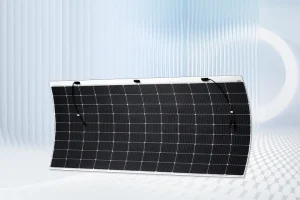
Can follow curved surfaces (3–5 m radius)
Does not alter drainage design
No rails → lower wind load
Lower risk of membrane damage
Easy to design around roof obstacles
What to do next
Map shading with drone or digital models
Check drainage paths visually and with slope measurement
Avoid placing panels near skylight frames
Compute generation estimates with low-tilt data
Takeaway:
Lightweight roofs demand environmental-aware PV design. The panel must adapt to the roof—not the other way around.
Evaluate Financial Models — Lightweight Roof Solar Has Its Own ROI Logic
Why it matters
Lightweight roof projects often face additional costs if using traditional PV:
Structural reinforcement
Roof membrane modification
Additional engineering
Longer installation time
These factors can dramatically change ROI.
CAPEX vs PPA — Which Works Better?
CAPEX
Best return long-term
Payback: 3–6 years depending on region
Works well for owner-occupied buildings
PPA
No upfront cost
Good for leased buildings or large roofs
Provider handles design + installation + maintenance
Economic Impact of Lightweight PV (PA219 Example)
| Category | rigid solar panel System | PA219 System |
|---|---|---|
| Structural reinforcement | Often required | Not required |
| Additional cost | +30–60% | 0% |
| Installation time | Long | 30–50% faster |
| Weight impact | High | Ultra-low |
| Total installed capacity | Limited | 4–6× higher (W/kg) |
| ROI | 6–8 years | 3–5 years |
What to do next
Request a load-based capacity estimate (kWp per kg/m²)
Ask for a lightweight roof ROI model
Compare scenarios: reinforcement vs no reinforcement
Assess business downtime costs
Takeaway:
Lightweight flexible PV systems unlock higher capacity, lower installation cost, and shorter payback periods compared to traditional systems.
Lightweight Roofs Need Lightweight Thinking
Lightweight roofs offer enormous solar potential—but only if engineered correctly. The five factors above determine whether a project becomes a long-term energy asset or a structural liability.
Key insights to remember:
Structural load limits eliminate many traditional glass PV systems
Roof material compatibility is essential for reliability
Certified, flexible PV technology avoids micro-cracks and failure
Proper design must consider orientation, drainage, and shading
Lightweight modules such as PA219 deliver higher capacity and better ROI
For buildings previously considered “unsuitable for solar,” lightweight flexible PV technology changes the equation.