BLUF · Quick Answer
For EU motorhome solar, the core is CE: who signs the Declaration of Conformity, what test evidence sits in the technical file, and whether the nameplate matches the shipped unit. Don’t treat a TÜV report as “CE certification.”
In practice, “TÜV” often appears as the lab/brand on IEC 61215 / IEC 61730 test evidence. It’s part of your proof chain—not a replacement for CE obligations.
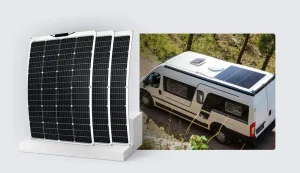
If you want a ready-to-quote solution pack, start from our Custom RV Solar Kits page, then drill into PA219 (TÜV/CSA, flexible) and PA621 (lightweight, vibration/thermal focus).
What do CE marking and TÜV evidence each cover in a motorhome solar context?
[TL;DR] CE is the legal conformity pathway (declaration + technical documentation). TÜV is often the lab/brand on test evidence (e.g., IEC 61215/61730). A TÜV report can support CE, but it doesn’t “do CE for you.”
The EU frames CE as a market-access system centered on who takes responsibility and what documentation is retained—not a single “certificate from a lab.” I’ve seen buyers accept “we’re TÜV tested” as a shortcut, then get stuck when the DoC lacked a clear standard edition and the report model didn’t match the nameplate suffix. It’s an avoidable mess.
My experience is: split the query TÜV solar panel motorhome CE certification into parts. Panel might mean only the PV module, while motorhome usually implies MPPT, wiring, and sometimes an inverter. Each extra component adds one more “Does this evidence cover this exact item?” question. Quick thought exercise: what are the top 3 SKUs on your purchasing list today?
Scenario A: you’re buying only PV modules for the roof
I’ve found the highest-ROI question in an RFQ is simple: which IEC edition is referenced, and does the report scope explicitly include your factory and model ID? Don’t treat “same wattage” as “same evidence.”
| Dimension | CE (regulatory pathway) | TÜV / IEC test evidence |
|---|---|---|
| What it is | A conformity declaration pathway supported by technical documentation (see the EU’s CE marking overview). | Third-party test reports/certificates against standards (e.g., IEC 61215/61730) showing something was tested. |
| What you check | DoC fields, how directives/standards are referenced, traceability identifiers. | Model ID, factory identity, standard + edition, scope coverage, summary conclusions. |
| Common pitfalls | Missing technical file, vague standards reference, unclear responsible party. | Scope mismatch, expired coverage, design/material changes without updated evidence. |
Why do IEC 61215 and IEC 61730 keep showing up in PV module discussions?
[TL;DR] When buyers ask “was it tested?”, IEC 61215 and IEC 61730 are the two names they expect to see in evidence. One is largely about design qualification/type approval, the other about safety qualification—your lab report defines the actual test matrix.
IEC 61215 and IEC 61730 are not marketing slogans—they’re specific publications. I treat them like coffee basics: you can’t argue “best beans” if you can’t name your roast, and you can’t argue “tested PV module” if you can’t identify the referenced standard edition in the report.
Data & sources (traceable)
- IEC 61215 (PV module design qualification / type approval): use the IEC official listing to confirm title and current editions before you accept any “tested to IEC 61215” claim. IEC — IEC 61215
- IEC 61730 (PV module safety qualification): same rule—verify by the IEC official listing, then cross-check the exact edition cited in the lab report. IEC — IEC 61730
- EU CE marking framework: use the European Commission overview to align your language on “what CE is” and “who is responsible.” European Commission — CE marking
- IEA Renewables (context only): helpful for market context and why buyers have become more documentation-sensitive; always verify the latest report tables before quoting numbers. IEA — Renewables 2024
Note: full standard texts are often paid publications. For blog use, rely on official listings + the exact edition stated in your test report. This page is informational and not legal advice.
How do you break down a motorhome solar BOM so compliance questions become answerable?
[TL;DR] Split into four rows: PV module, charge controller, inverter/charger, wiring & protection. For each row, ask: what category is it, what evidence applies, and could installation choices change EMC behavior?
A motorhome isn’t a lab bench. My experience is: change the wiring route or swap the controller brand, and your “system-level assumptions” can collapse. The table below is not a legal conclusion table—it’s a shared vocabulary table so procurement and engineering stop arguing past each other.
| BOM line | Real-world risk | Evidence mindset (what to prepare) |
|---|---|---|
| PV module | Roof vibration, thermal cycling, salt air (coastal sites). | IEC 61215/61730 evidence + nameplate match; ask whether material changes trigger re-evaluation. |
| MPPT / charge controller | Port protection, cable-length voltage drop and heating. | Power electronics often raise EMC questions depending on category—don’t blanket-assume exemptions. |
| Inverter / inverter-charger | AC grounding, leakage current, interference with other devices. | Model-specific documentation and labeling; clear boundaries between device docs and system install manual. |
| Wiring, fuses, disconnects | “Installer intuition” wiring changes that become impossible to trace later. | Installation manual, recommended wire gauge, protection coordination—this is the blind spot OEMs and insurers care about. |
Scenario B: an installer outfitting a fleet
I’ve found the cheapest “compliance insurance” in fleet work is a BOM freeze + a serial-number rule + an outgoing QC sampling note in your technical-file appendix. You think you’re selling panels; you’re really selling traceability. Otherwise, the first fleet warranty loop will expose every mismatch between documents and shipped units. Yes, I learned that the hard way.
Scenario C: a first-time EU importer buying “TÜV tested” stock
My experience is: ask for three items first—report cover, scope page, and a clear nameplate photo. That saves more pain than negotiating 2% off. Quick self-check: the last DoC you received—did it clearly show the responsible party and signature role?
How to verify TÜV motorhome solar CE certification in 5 minutes?
[TL;DR] Yes—run a 5‑minute scope pass: match model ID to the nameplate, match factory to your contract, confirm IEC edition in scope, and check validity/coverage. A certificate number alone is never enough.
You can sanity-check TÜV motorhome solar CE certification claims in about five minutes by walking four scope checks: (1) Does the report’s model ID match the nameplate character-for-character? (2) Is the factory name/address consistent with your supply agreement? (3) Are IEC numbers and editions explicitly stated? (4) If there’s an official lookup, use it—don’t rely on chat screenshots.
Honest question: if a supplier refuses to share a scope page and only sends a blurry image, would you still put your OEM customer’s name in your proposal?
Why is “more certificates” often the wrong obsession in EU motorhome solar compliance?
[TL;DR] The bottleneck is usually change control and evidence continuity, not the thickness of a PDF folder. One material swap or wiring change can make old evidence meaningless overnight.
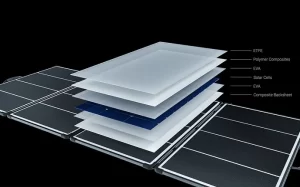
This is the part many competitor posts skip because it’s not glamorous: a wall of lab logos is weaker than a clean change log. If you swap backsheets, junction boxes, adhesive, or even a connector batch, your evidence chain can diverge. What buyers and market surveillance fear is simple: the report describes one product, while the line ships another. If your documentation includes a BOM freeze + traceability + change triggers, you immediately sound like someone worth buying from.
FAQ (People Also Ask style)
Is the CE mark issued by TÜV?
No. CE is the manufacturer’s declaration that a product meets applicable EU rules. TÜV may provide test reports as evidence, but CE responsibility typically remains with the manufacturer.
How can I quickly verify a TÜV/IEC test claim?
Check four things: model ID matches the nameplate, factory matches, standard + edition are within scope (e.g., IEC 61215/61730), and validity/coverage makes sense. If one is off, ask.
Does a 12V/24V setup automatically avoid LVD or EMC?
Not necessarily. Controllers, inverters, and devices with radio modules may still have EMC/LVD-relevant obligations depending on product category. Evaluate by component.
What should an RV upfitter request when buying a complete kit?
At minimum: draft DoC fields for the panel and key power electronics, evidence summaries, nameplate/manual samples, plus a BOM freeze version and traceability method. Missing one increases change risk.