




Finding the best RV solar setup for running AC unit off-grid is the ultimate goal for modern boondockers seeking true independence. Imagine this: It’s a 95°F summer afternoon. You’re parked in the silent wilderness, miles from the nearest power grid. Instead of the deafening roar of a gas generator, your RV is filled with nothing but the quiet hum of cool air.
A few years ago, this was a “tech fantasy.” Today, with high-performance LiFePO4 batteries, efficient inverters, and custom-engineered non-standard solar modules, off-grid AC is not just possible—it’s the new standard for luxury boondocking.
In this guide, we won’t just tell you how many watts you need. We will reveal how to break through rooftop space limitations with custom solar designs to achieve true energy independence and build the most reliable power system for your needs.
The Core Challenge: Why RV Air Conditioning is the "Final Boss" of Off-Grid Living
Starting vs. Running Watts
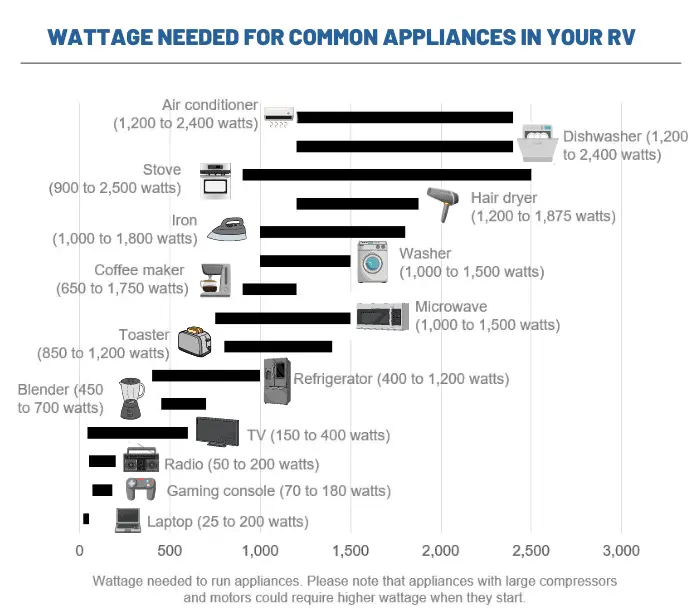
Most standard 13,500 BTU RV air conditioners require about $1200W – 1500W$ of continuous power. However, traditional compressors demand a massive surge—up to $3500W+$—during the split second they start up. If your inverter or battery discharge rate is insufficient, the system will instantly shut down.
The Efficiency Gap & Heat Loss
Converting DC to AC power usually involves a $10\% – 15\%$ loss. Furthermore, in high-heat environments, wire resistance increases. While we recommend high-voltage systems (24V or 48V) to reduce heat loss, we also recognize that 12V systems remain the industry standard for their universal compatibility. For 12V loyalists, our custom solutions utilize oversized cabling and enhanced circuit protection to handle the high current safely.
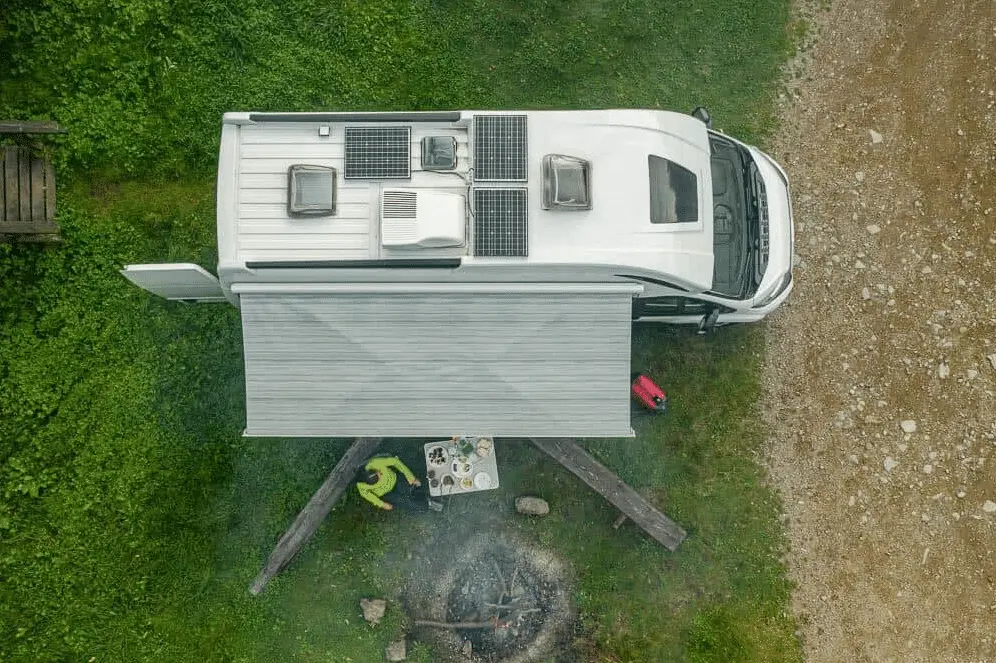
The Fatal "AC Shade" Effect
The Pain Point: The AC unit is usually the highest point on the roof. Even if a shadow covers only $10\%$ of a standard series-connected solar array, the power output can drop by $50\% – 90\%$. This is why “off-the-shelf” panels often fail in real-world AC applications.
EEAT in Action: Your Off-Grid Energy Audit
Step 1: AC Energy Consumption (EER)
For a $1200W$ inverter-rated AC unit:
1 Hour of Continuous Run: Consumes $1.2kWh$ (approx. $100Ah @ 12V$).
Cycling Mode: Once the cabin reaches temperature, the compressor runs $50\% – 70\%$ of the time.
Daily Goal: Running for 6 hours requires roughly $7.2kWh$ of storage and replenishment.
Step 2: Calculating "Real-World" Solar Surface Area
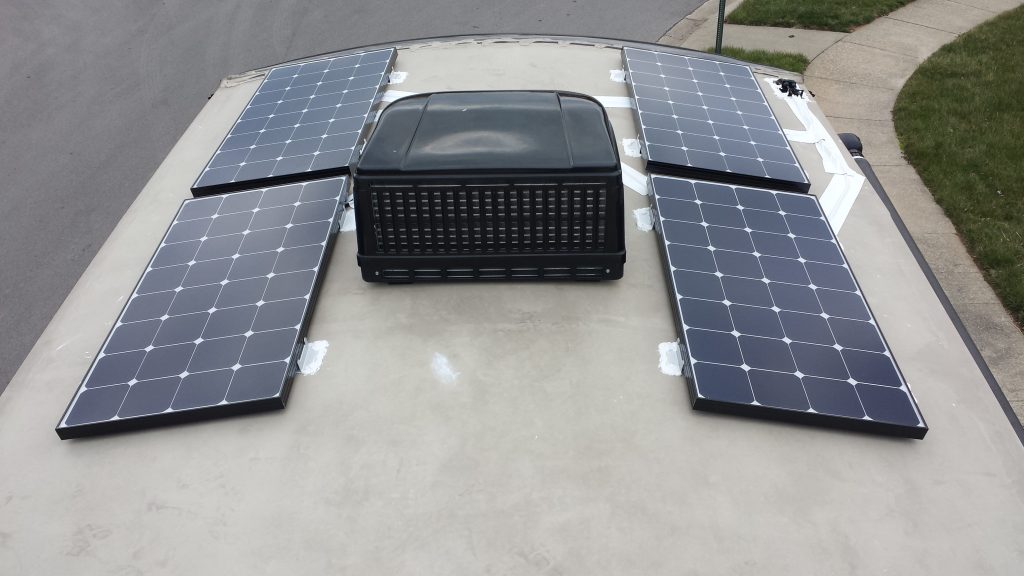
Standard $200W$ panels are bulky ($approx. 59 \times 27$ inches). Once you account for the AC unit, vents, and antennas, the remaining roof space is often fragmented. Traditional panels usually waste $40\%$ of your roof’s potential. To run an AC, you need to utilize every square inch.
Why Custom Solar Modules are the Key to "AC Freedom"
As a specialized manufacturer of non-standard solar components, we empower users with technology that big-box retailers can’t provide:
Custom Shapes & Sungold PA219: Space, Weight, and Aesthetics
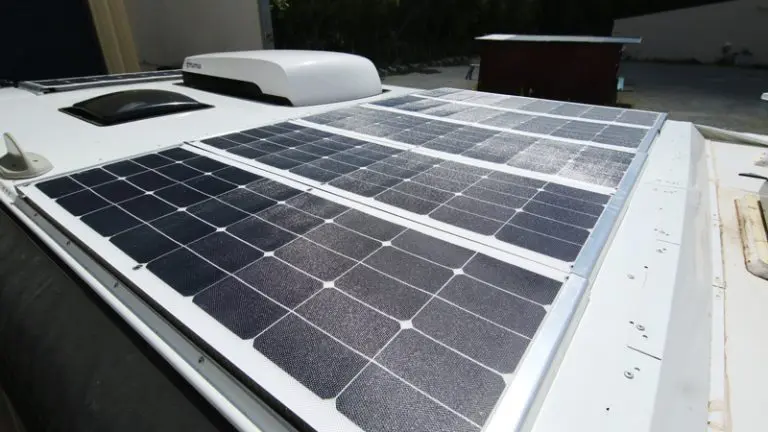
We produce L-shaped, U-shaped, and ultra-slim modules tailored to your roof. By using the “dead space” around the AC base, we can increase your total wattage from a standard $600W$ to over $1100W$.
Our Sungold PA219 series is specifically optimized for this:
Extreme Lightweight: Reduces roof stress, critical for B-class vans or lightweight trailers.
Seamless Adhesive Mounting: No heavy brackets needed; the panels follow the natural curve of your RV.
Aesthetic Integration: A low-profile, dark finish that turns your RV into a sleek, mobile power station.
Advanced Circuitry: Laminated Diodes & Zone Management
To fight the AC shadow, we integrate Laminated Diodes directly into the module. This allows for Fine-grained Zone Management:
Independent Cells: Unlike standard panels with 2-3 bypass diodes, our custom service allows for more diodes to partition the panel into smaller independent zones.
Power Optimization: If a shadow falls on one corner of the panel, our system shuts off only that specific zone, allowing the rest to output full power. This increases power gain under shade by $30\% – 40\%$.
Installation Options: Balancing Airflow and Maintenance
How you mount your panels determines their lifespan under the high-load demands of an AC unit:
Seamless Adhesive Mount (Best for Aesthetics)
Perfect for the Sungold PA219. It offers zero wind noise and a factory-integrated look. We recommend pre-designed micro-air channels to prevent heat buildup.
Embedded/Recessed Design (Best for Integration)
The custom panel sits within a low-profile frame or roof groove. This protects the edges while allowing side-venting for airflow, making it the top choice for premium custom builds.
Bracket/Tilt Mount (Best for Thermal Management)
Creates a “chimney effect” to dissipate heat. This is the most service-friendly option, allowing for the quick replacement of individual modules if necessary.
Recommended Configurations for Off-Grid AC
Tier | Solar Power (Custom) | Battery (LiFePO4) | Inverter | AC Performance |
|---|---|---|---|---|
A: Weekend Warrior | 450W Custom Flexible | 300Ah / 12V | 2000W | 2-3 hours evening cooling |
B: Full-Timer Balance | 850W Shaped Modules | 600Ah / 12V or 24V | 3000W | 6-8 hours daily AC freedom |
C: Extreme Off-Grid | 1200W+ Multi-Zone | 800Ah+ / 48V | 5000W | 24/7 Climate Control |
Real-World Case Study: 22ft Travel Trailer Transformation
The User: A traveler with a 22ft Travel Trailer. Between the Dometic AC and the bathroom vents, they could only fit $400W$ of standard panels—not enough to run the AC off-grid.
The Solution: We designed a U-shaped custom solar array that wrapped around the AC unit. We used the Sungold PA219 technology for the curved front section and integrated laminated diodes to manage the midday AC shadow.
The Result: Total capacity reached 850W. Combined with a $600Ah$ lithium bank, the user now enjoys 5+ hours of off-grid AC during the peak desert heat without ever touching a generator.
Frequently Asked Questions (FAQ)
Q1: How many solar panels do I need to run an RV AC?
To run a high-efficiency AC for 5-6 hours daily, you typically need between 800W and 1200W of solar power, depending on your location and battery capacity. Custom-shaped panels are usually required to reach these numbers on smaller roofs.
Q2: Do I need a Soft Start Kit?
Yes. A soft start kit is essential for running a traditional AC unit off an inverter. it reduces the startup current by up to $70\%$, preventing system trips and extending battery life.
Q3: Can I run my AC on a 12V system?
Yes, you can. While 24V or 48V is more efficient for high power, the 12V system is the most compatible with existing RV components. Our custom panels can be wired to support high-current 12V setups safely.
Q4: Is it hard to replace custom panels if one gets damaged?
Our modular design allows for individual zone replacement. If you choose an embedded or bracket mount, replacing a specific custom panel is as easy as replacing a standard one.
(Standards Compliance: Built to ABYC E-11 Electrical Standards. Data based on STC 25°C and real-world rooftop thermal simulations.)