

Plug-In Solar Systems for Apartments & Renters

No Electrician  ·  No Roof Drilling  ·  Plug & Save

Plug-In Solar Systems for Apartments & Renters

Clean energy without the contractor. Plug-in solar works in apartments, balconies, garages, and backyards — worldwide. Choose your region to find the right system.

Select Your Location

Choose Your Region

Regulations, plugs, certifications, and wattage limits differ by region. We've built dedicated pages so you get exactly the right information.

Europe Balcony Solar

Purpose-built for European apartments. CE & TÜV certified panels, Schuko plug connection, and full compliance with Germany’s 800w Balkonkraftwerk law. Simple registration via Marktstammdatenregister.

Up to 800W

Schuko Plug

CE/TÜV

No Electrician

Renters OK

√ Legal in:  Germany- Austria – Netherlands – Switzerland – BelgiumFrance

USA Plug-In Solar

Designed for US homes, apartments, and renters. UL 1741 listed inverters,
NEMA 5-15/5-20 plug compatibility, and state-by-state legality guide. No utility permit in many states.

300W-2000W

NEMA Plug

UL 1741

DIY Install

State Guide

√ Legal in: Virginia · Utah · California · Texas · Colorado + more — check your state

The Technology

What Is a Plug-In Solar System?

The simplest way to generate your own solar power — no roof, no contractor, no utility approval required in most regions.

Solar Panels

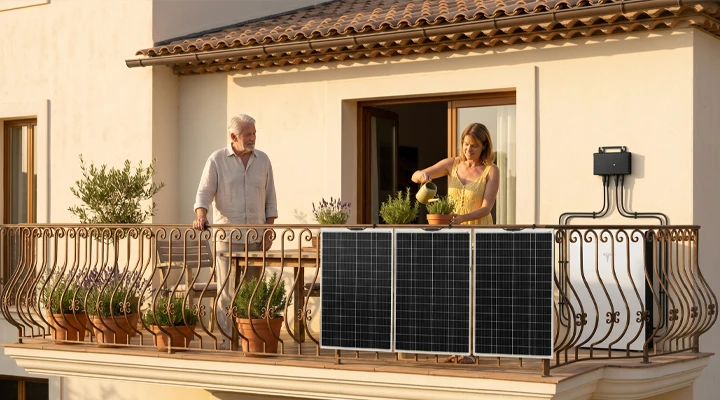
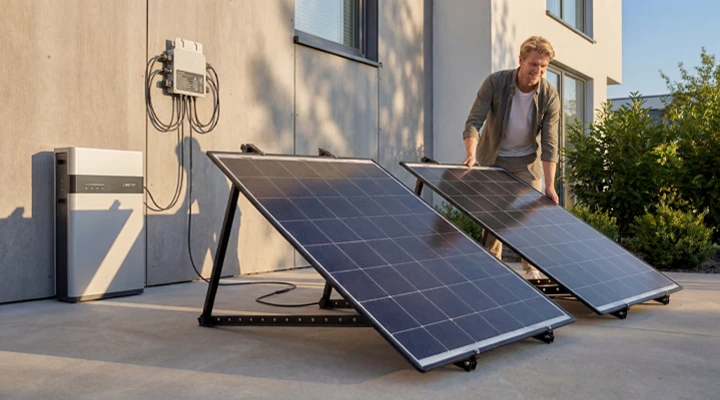
Monocrystalline panels (typically 1–4 panels) mount on a balcony railing, window, wall, or ground frame. No roof penetration needed.

Micro-Inverter

Converts DC solar power to AC household current. Plugs directly into a standard wall outlet (Schuko in EU, NEMA in USA). No wiring.

Your Grid Connection

Power flows directly to your home circuit, reducing what you draw from the utility. Excess power passes safely back to the grid.

Instant Savings

Typical ROI: 3–5 years in Europe, 4–7 years in the USA. Systems last 25+ years. Average savings: €150–300/yr EU, $200–500/yr USA.

Balcony Solar Vs Plug-In Solar: Key Differences

Same Core Technology — Different Standards, Plugs, And Regulations.

Feature Europe — Balcony Solar USA — Plug-In Solar
Common Names Balkonkraftwerk, Balcony Power Plant, Mini PV Plug-And-Play Solar, DIY Solar, Outlet Solar
Max Wattage (Legal) 800W (Germany) · Varies By Country No Federal Cap · 2000W+ Possible
Plug Standard Schuko (CEE 7/4) NEMA 5-15 / 5-20
Certifications CE, TÜV, VDE-AR-N 4105 UL 1741, UL 1741-SA, IEEE 1547
Registration Required Yes — Marktstammdatenregister (DE) Varies By Utility / State
Renter-Friendly Yes Yes (Most States)
Grid Subsidy / Incentive Germany Municipal Grants Up To €500 Federal ITC 30% · State Credits Vary
Typical Install Time Under 2 Hours (DIY) Under 3 Hours (DIY)
Plug-In Solar Questions FAQ
Frequently Asked

Plug-In Solar Questions

Understand the basics of plug-in solar systems, balcony solar applications, legal requirements, renter-friendly installation and expected energy savings.

What is a plug-in solar system?
A plug-in solar system, also called a balcony solar system or plug-and-play solar kit, is a compact solar installation that connects to your home's electricity via a standard wall outlet. It includes 1–4 solar panels and a micro-inverter. Output ranges from 300W to 800W in Europe and 300W–2000W+ in the USA. No roof work, no electrician, and no permit required in most regions.
What is the difference between Balcony Solar and Plug-In Solar?
They're the same core technology but sold under different names in different markets. Balcony Solar, or Balkonkraftwerk, is the European term. Systems use Schuko plugs, CE/TÜV certification, and must comply with EU grid standards. Plug-In Solar or Plug-and-Play Solar is the North American term. Systems use NEMA plugs and UL 1741 listing.
Is plug-in solar legal in the USA?
Yes. Plug-in solar is legal in many US states. Virginia, Utah, California, Colorado, and others have specific provisions allowing plug-in solar without a full utility interconnection permit. Requirements vary: some states require utility notification only, while others require a simple form.
Is balcony solar (Balkonkraftwerk) legal in Germany?
Yes. Germany legalized balcony power plants up to 800W effective 2024. You simply register your system in the Marktstammdatenregister, also called MaStR. Austria allows up to 800W with similar simple rules. The Netherlands, Belgium, Switzerland, and France each have their own rules.
Can renters tenants use plug-in solar?
Yes, in most cases. Plug-in solar doesn't require roof modifications or permanent installation. In Germany, the law explicitly allows tenants to install balcony power plants. In the USA, most plug-in systems qualify as portable equipment. We recommend checking your lease and local rules first.
How much can I save with a plug-in solar system?
Savings depend on your electricity rate, sunlight hours, and system size. A typical 600W European balcony system saves approximately €150–300 per year. An 800W US system saves approximately $200–450 per year. Most systems pay for themselves in 3–6 years and last 25+ years.
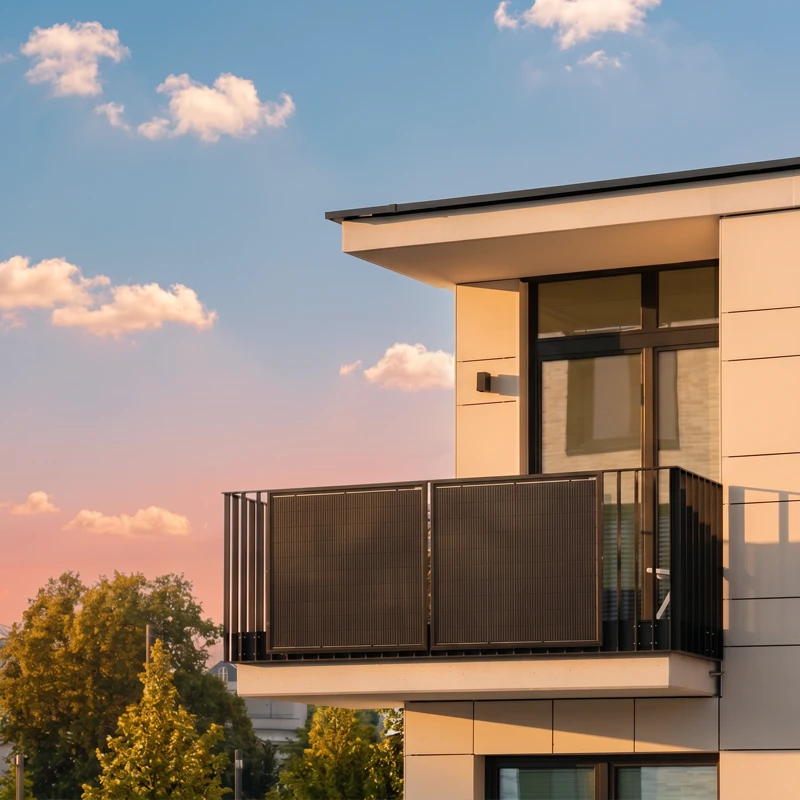
Balcony plug-in solar system

Explore More

Plug-In Solar Topic Guide

Everything you need to know about plug-in solar — by topic.

How It Works

Is It Legal?

Safety Guide

UL 1741 Explained

Schuko vs NEMA

Apartment Solar Guide

Balcony vs Rooftop Solar

Savings Calculator

Balkonkraftwerk Germany

Germany Buyer's Guide

USA State Guide

Custom Solar Panels

Ready to Start Saving?

Choose your region to see the right products, legal info, and pricing.

Leave a message

If you are interested in our products and want to know more details, please leave a message here and we will get back to you as soon as possible.


    Scroll to Top