





SUNGOLD SOLAR · BALCONY PV & OEM SOLUTIONS
Balcony Solar Solutions
for the UK & EU
Flexible, lightweight and rigid photovoltaic modules, configurable plug-in solar kits and optional micro-storage solutions—built around your product brief, target market and technical documentation needs.
Custom PV Modules
UK & EU Configurations
OEM & Bulk Supply
UK MCS / SEG Project Guidance
ONE PARTNER · TWO MARKETS
From Balcony Solar Components to Market-Focused Kits
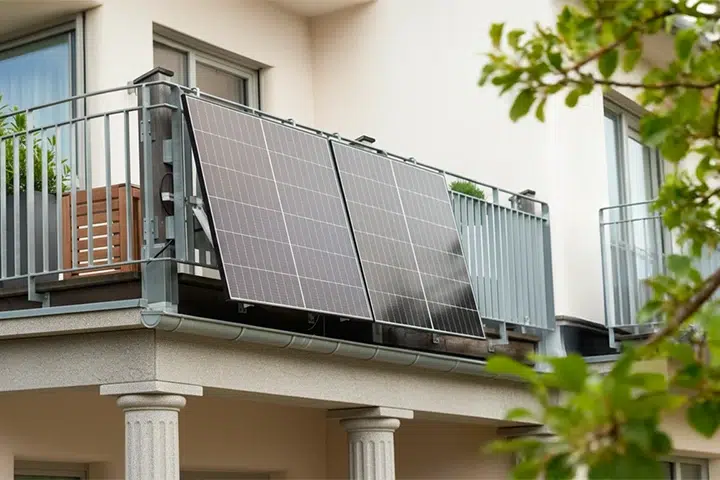
A balcony solar kit is more than a photovoltaic panel. Inverter selection, electrical interfaces, mounting systems and documentation all need to match the destination market. Sungold helps OEM brands, distributors and integrators build configurable product ranges for the EU and UK.
TESTING & DOCUMENTATION
Product Safety Starts with the Right Evidence
Separate module-level certification from inverter type testing and complete-kit assessment. Buyers should review the actual product models, certificate scopes and intended installation configuration.
IEC 61215
PV module design qualification and performance-related testing.
IEC 61730
PV module safety qualification and electrical safety considerations.
TÜV Documentation
Valid TÜV certificates are available for selected Sungold module models. Request the specific model scope.
Traceability
Model references, relevant reports, labels and technical documentation reviewed for each OEM configuration.
Recommended Module Platforms
Choose the Panel Around the Vehicle — Not the Other Way Around
Sungold can match lightweight, flexible and OEM module platforms to roof shape, available area, voltage and integration requirements. Final model selection should follow project assessment.
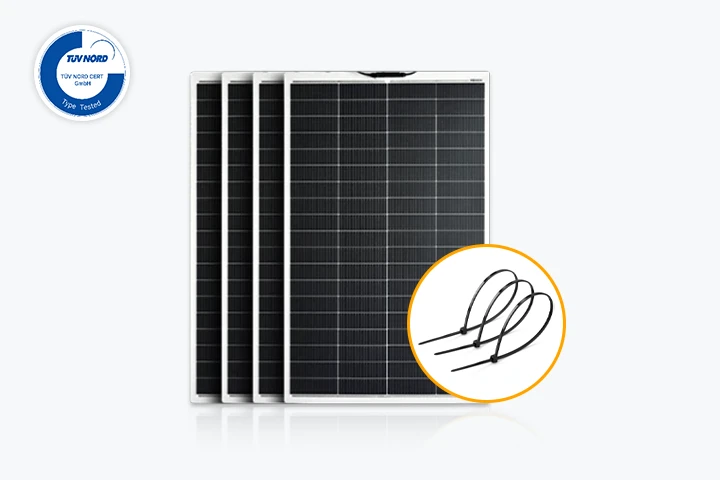
PA219 Flexible Kit
Flexible Solar Panel
Low-profile solar modules for curved or space-constrained balcony and wall applications.
- 3 mm thin selected models
- Approx. 3.3 kg/m² selected models
- Custom cable, connector and size options
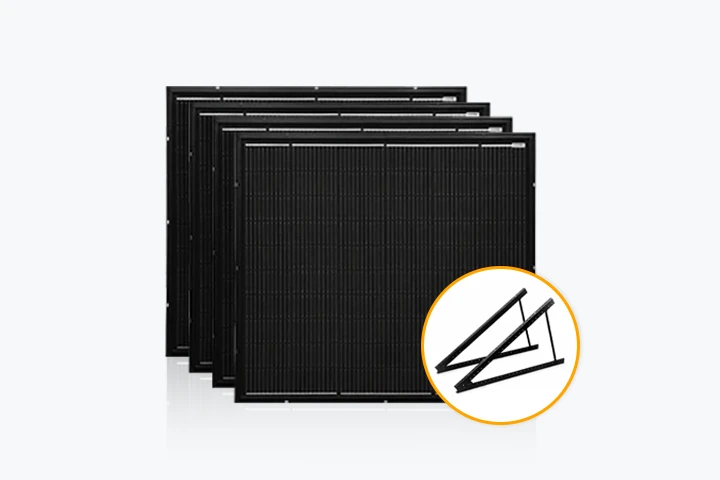
PA621 Lightweight Kit
Lightweight Solar Panel
Lightweight 220 W-class module options for weight-conscious balcony solar projects.
- Approx. 4.4 kg/m² reference weight
- 10–60 Hz vibration resistance reference
- OEM dimensions and configurations available
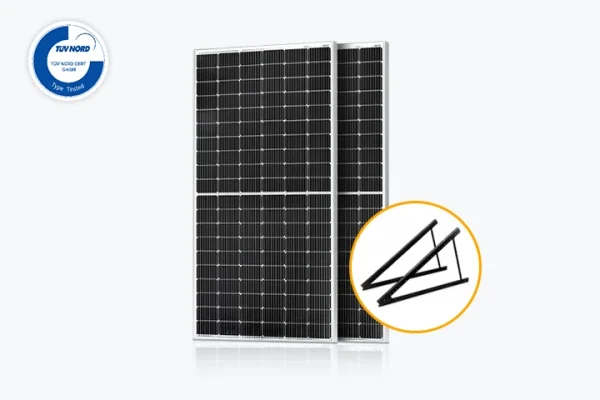
SGM Rigid Kit
Rigid Solar Panel
Standardized rigid PV modules for repeatable balcony, terrace and small-roof configurations.
- N-Type TOPCon high-efficiency cells
- Tempered glass & durable aluminum frame
- Up to 5400 Pa snow / 2400 Pa wind load
REAL APPLICATIONS
Solar That Fits Different Spaces
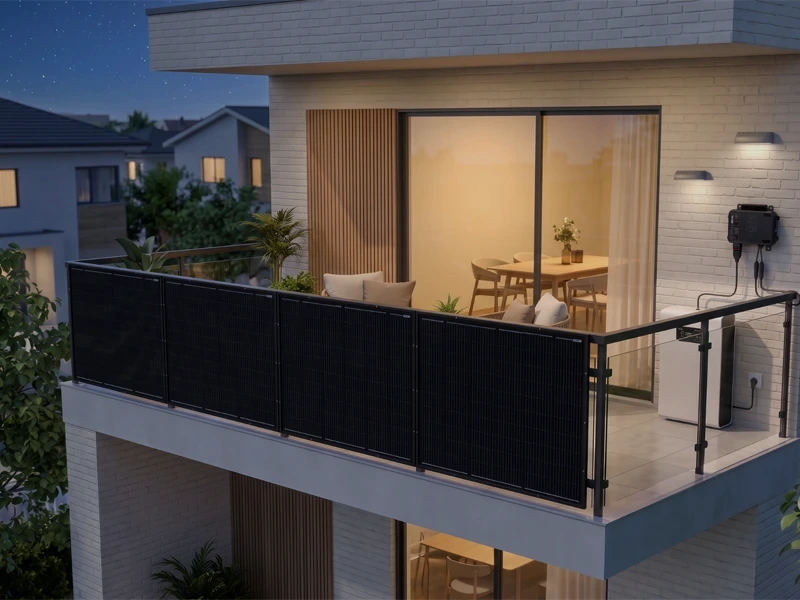
The original balcony, wall, terrace and garden application story remains central. Module choice and mounting details should follow the load, wind exposure and connection conditions of each site.
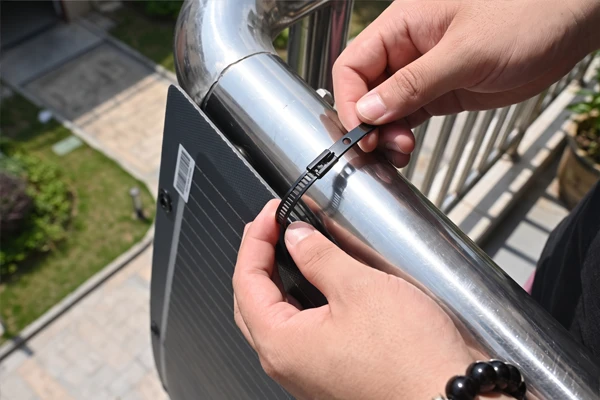
Balcony Railings
Fit modules and mounting hardware to limited space and exposed railings.
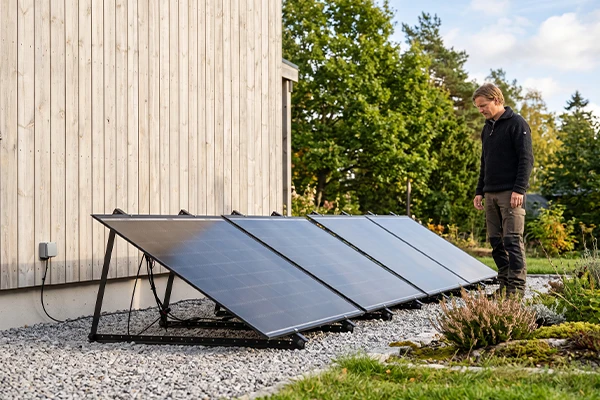
Walls & Terraces
Explore alternative solar positions where roof space is unavailable.
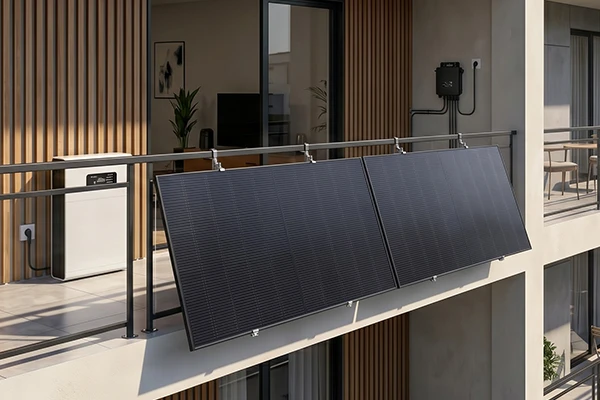
Mounting Systems
Bracket geometry, fixings, installation guidance and wind-load review.
TESTING & DOCUMENTATION
Why MCS Matters for UK Solar Buyers
MCS is a significant part of the UK installed-solar ecosystem. For distributors and OEM brands planning beyond a standalone plug-in device, understanding the installation certification route can help shape product documentation and partner requirements.
A Roof-First Solar Approach
Support the Right UK Route to Market
For eligible Smart Export Guarantee (SEG) arrangements, UK rules normally require both the installation and installer to be certified under MCS or an accredited equivalent scheme. MCS is not a universal legal prerequisite for every plug-in balcony solar product.
Ask early whether your project targets simple household self-consumption, a professionally installed solar system, or a SEG-eligible installation. These routes can have different requirements.
01 · SEG Export Payments
MCS or accredited-equivalent installer and installation certification is generally needed for SEG; export metering and supplier criteria also apply.
02 · Consumer Confidence
Certified installation schemes include defined standards and complaint or dispute processes. Applicable consumer protections depend on the installer and scheme arrangements.
03 · Documentation for Buyers
Align the selected product models, electrical diagrams, installation instructions and technical reports with the intended installer certification route.
MARKET-SPECIFIC REQUIREMENTS
One Solar Concept. Different Compliance Pathways.
The same PV module family can be configured for different markets, but the final kit, inverter, connection interface and product documentation must be assessed against local requirements.
EU
European Union · Balcony Solar
For balcony PV kits intended for distribution across EU member states. Common EU product requirements apply alongside country-specific grid connection and installation rules.
IEC / EN PV Module Standards
Review model-specific IEC/EN 61215 and IEC/EN 61730 testing and available TÜV certificates for selected module models.
CE Marking & Applicable EU Legislation
Assess applicable electrical safety, EMC, RoHS and other requirements for each component and final product, with the relevant EU Declaration of Conformity and technical file.
EN 50549 & Local Grid Codes
Check inverter grid-interface suitability and national requirements. Existing VDE-related documentation may support German configurations, but does not automatically establish acceptance across the EU.
National Plug-In & Installation Rules
Connection method, output limits, registration, mounting and installer obligations may vary between member states. Germany’s DIN VDE V 0126-95 is a national example, not an EU-wide approval.
A market-by-market compliance matrix is recommended before one OEM kit is released in multiple EU countries.
GB
United Kingdom · Plug-In Solar
For battery-free plug-in PV devices under the emerging UK framework.
UK Interim Product Specification (IPS)
Product design, safety, mounting, labeling and plug requirements for relevant devices.
Engineering Recommendation G98
Grid-connection and microgenerator type-testing requirements for Great Britain; Northern Ireland follows separate arrangements.
BS 1363 / BS 7671
Relevant UK plug and electrical-installation requirements, subject to applicable legislation.
MCS & Smart Export Guarantee (SEG)
For qualifying UK installations seeking SEG export payments, the installation and installer generally need MCS certification or an accredited equivalent. This is an important buyer consideration—not a blanket product certification requirement for every plug-in kit.
A market-by-market compliance matrix is recommended before one OEM kit is released in multiple EU countries.
Important: certified components ≠ certified complete kits.
We can review available inverter certificates, selected-module TÜV documentation and product specifications for OEM projects. Final system conformity and legal market access depend on the precise configuration and the rules in force at the time of sale and installation.
ONE PARTNER · TWO MARKETS
Solar by Day. More Flexible Energy Use Later.
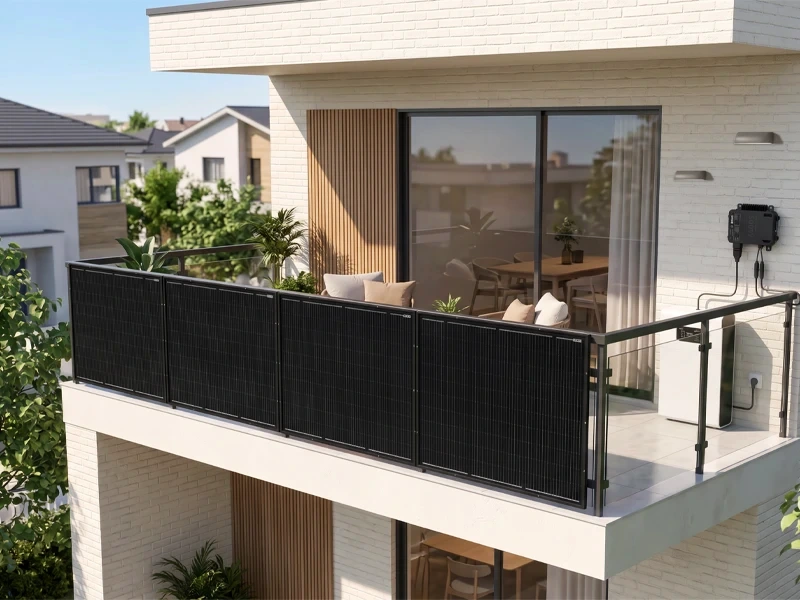
For buyers seeking storage-enabled product ranges, Sungold's existing balcony concepts include configurable LFP micro-storage and different AC/DC coupling architectures. These are separately reviewed product configurations, not automatically covered by battery-free plug-in solar approvals.
DC-Coupled Configuration
Integrate PV charging and storage around a defined system architecture.
AC-Coupled Upgrade
Explore storage expansion for existing installations where permitted.
OEM & REPEATABLE SUPPLY
Designed for Your Product Range—Not Just One Installation
Sungold supports brands, distributors and integrators as they move from a product specification to repeatable procurement and controlled manufacturing.
Module Customization
Power, dimensions, appearance, cable position and mechanical fit.
Electrical Matching
Module and inverter pairing with a target-market interface review.
Document Control
Applicable reports, artwork, labels, manuals and BOM revisions.
Pilot to Production
Samples, pilot orders, quality checkpoints and repeatable supply.
BUYER QUESTIONS
Balcony Solar Certification & OEM FAQ
Practical answers for importers, brands and system suppliers evaluating the UK and EU markets.
No. Valid TÜV certificates are available for selected module models. Please share your intended model and configuration so the relevant certificate scope and documents can be checked.
No. Inverter type-test evidence and EU conformity documents cover defined products and requirements. A complete kit also needs assessment of the selected modules, electrical interfaces, mounting, instructions and any country-specific rules.
A shared module platform may be practical, but final kits need country-specific review. EU product rules provide a common foundation while plug connections, national grid codes, registration and installation rules can vary by member state. UK product and grid requirements must be evaluated separately.
For a qualifying Smart Export Guarantee installation, the installer and installation generally must be MCS certified or certified under an accredited equivalent scheme. SEG also involves metering and supplier eligibility rules. MCS is separate from PV module TÜV testing and inverter G98 requirements.
Do not assume so. Product test reports, G98 inverter evidence, and MCS installation certification describe different scopes. Sungold can review available technical documents for an OEM project, while installer and installation certification must be confirmed with the relevant scheme and installation partner.
Not automatically. Storage-integrated architectures require a separate technical and regulatory review; the UK plug-in solar IPS specifically focuses on devices without batteries.
Target country, installation scenario, proposed module and inverter models, PV input power, required quantity, storage requirements and any mandatory customer documentation.
Leave a message
If you are interested in our products and want to know more details, please leave a message here and we will get back to you as soon as possible.