




This apartment solar installation guide explains what renters, apartment dwellers, retailers, and solar kit brands should check before choosing a balcony solar kit, portable solar panel, plug-in solar system, or apartment battery setup. The first decision is not only panel wattage. It is whether the apartment has useful sunlight, safe mounting space, a practical system type, and a clear permission boundary.
Apartment solar can work for renters and small-space users when the system is removable, safely mounted, correctly matched, and allowed by local rules, lease terms, HOA requirements, or building management.
For solar kit brands, this is a product-readiness question. Panel size, mounting hardware, inverter or power station compatibility, safety instructions, packaging, manuals, and after-sales FAQ should be prepared before selling.
What This Apartment Solar Installation Guide Covers
Apartment solar is not one single product. It can mean several different system types, and each one has a different risk level.
| Type | How It Works | Best For |
|---|---|---|
| Portable solar panel + power station | A panel charges an independent battery or power station | Renters, temporary use, no building wiring connection |
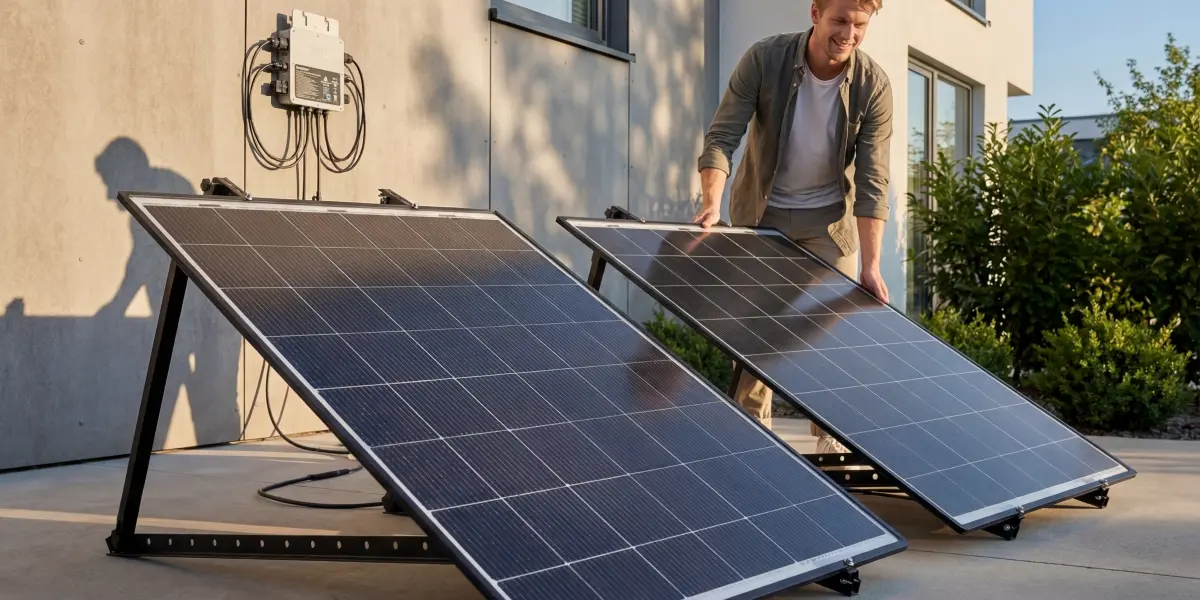
| Balcony solar panel kit | Panels are mounted on balcony railings, patio areas, or small outdoor spaces | Apartments with sun-facing outdoor space |
| Plug-in solar system | Solar panel and inverter connect to a building outlet where local rules allow | Markets with clear plug-in solar rules |
| Balcony solar + battery storage | Panels charge storage for evening use or light backup | Users with high rates or outage concerns |
| Community solar | User subscribes to shared solar generation without installing equipment | Renters without suitable sunlight or mounting space |
This distinction matters. A renter asking whether solar can work in an apartment may need a portable solar panel, a balcony solar kit, a plug-in system, or no physical equipment at all.
Who This Guide Is For
This guide is for two groups that often meet around the same problem.
Renters and apartment dwellers want to know whether they can use solar without owning a roof. Their questions are practical. Can I mount it? Will my landlord allow it? Can I move with it? Will it help during outages? Will it reduce bills enough to be worth the trouble?
Solar kit brands, retailers, and distributors have a different problem. They need to know whether apartment solar can become a repeatable product package. That means the panel, mounting method, cable route, inverter or battery interface, user manual, packaging, and after-sales support must all be clear.
Why Apartment Solar Is Different from Rooftop Solar
Apartment solar should not be treated as a smaller version of rooftop solar. The user, installation space, and product responsibility are different.
| Factor | Rooftop Solar | Apartment Solar |
|---|---|---|
| Ownership | Homeowner usually controls the roof | Renter usually does not control the building |
| Installation | Fixed, professional installation | Removable or semi-portable setup |
| System size | Larger | Smaller |
| Permission | Permit, roof access, utility process | Lease, landlord, HOA, building rules, local rules |
| Mounting | Roof rack or structural mount | Balcony, railing, patio, wall, portable stand |
| Product design | Long-term building system | Lightweight, compact, user-friendly kit |
| User education | Installer explains the system | Packaging and manual must explain more |
This is why apartment solar content needs to answer more than energy output. It must answer permission, safety, mounting, product fit, and user behavior.
First Check: Is the Apartment Suitable for Solar?
Before choosing a product, the user should check whether the apartment can realistically support solar.
| Check | Why It Matters |
|---|---|
| Sun-facing balcony, patio, or window area | Determines whether the panel can receive useful sunlight |
| Several hours of practical sunlight | Helps avoid unrealistic output expectations |
| Limited shading | Railings, nearby buildings, trees, and overhangs can reduce production |
| Safe mounting surface | Prevents wind, vibration, and falling-object risk |
| Permission boundary | Lease, HOA, landlord, or building rules may apply |
| Electrical pathway | Plug-in systems need correct outlet and circuit review |
| Storage space | Battery or power station needs safe indoor placement |
| Moving plan | Renters may need a system that can be removed and reused |
A balcony that receives little direct sunlight may not be a good solar location. A sunny balcony may still be unsuitable if the railing cannot safely hold equipment or if building rules prohibit visible exterior equipment.
The best apartment solar setup begins with the site, not the product.
Apartment Solar System Types Compared
Different apartment solar options solve different problems. Buyers should choose based on the living situation, not only the advertised wattage.
| Option | Best For | Main Advantage | Main Limitation |
|---|---|---|---|
| Portable panel + power station | Renters who want simple setup | No building wiring connection | Limited output |
| Balcony solar kit | Apartments with railings or patio space | Uses unused outdoor space | Mounting and wind review needed |
| Plug-in solar | Markets with clear rules | Can offset real-time grid use | Electrical and legal boundary varies |
| Balcony solar + battery | Evening use and light backup | Better use of daytime solar | Higher cost and more components |
| Community solar | No balcony or poor sunlight | No equipment at apartment | Not a physical product path |
For many renters, portable solar plus a power station is the simplest entry point. In markets where plug-in rules are clearer, balcony solar panels may become more attractive. For solar kit brands, these two paths should not be mixed in the same product language.
Mounting and Space Checks
Mounting is one of the most important parts of apartment solar. It is also one of the easiest places to create risk.
Users and kit brands should check:
- balcony railing type and strength;
- available panel width and height;
- panel weight;
- wind exposure;
- whether drilling is allowed;
- removable mounting method;
- cable route;
- water drainage;
- building appearance;
- emergency access;
- whether the panel could become a falling-object risk.
If a system changes the building exterior, penetrates a wall, blocks access, or creates a fall risk, approval should be confirmed before purchase.
Electrical and Safety Checks
Apartment solar becomes more sensitive when the system connects to building wiring. Rules vary by country, state, utility, building type, and product category.
A portable panel that charges a power station is different from a plug-in system that interacts with a building outlet. A balcony solar kit with a battery is different from a grid-connected microinverter system. The manual should make this clear.
| Safety Question | Why It Matters |
|---|---|
| Is the system grid-connected or off-grid? | Determines electrical risk and rule pathway |
| Is the outlet or circuit suitable? | Prevents overload and unsafe connection |
| Is the system certified for the target market? | Supports product safety and trust |
| Is the cable route protected? | Avoids trip, weather, and damage risk |
| Is the battery installed safely? | Heat, charging, ventilation, and placement matter |
| Is an electrician or installer needed? | Depends on market, circuit, and system type |
Users should not rely on extension cords, power strips, or improvised wiring for plug-in solar systems. If the outlet, circuit, grounding, or local rule status is uncertain, qualified review is needed.
For U.S. market content, UL Solutions has highlighted that plug-in photovoltaic systems can create electrical, mechanical, and user-interaction safety questions. This is why product teams should treat apartment solar as a safety-guided category, not only as a convenience product.
For a deeper internal path, buyers can also review the plug-in solar safety guide.
Plug-In Solar vs Portable Solar + Battery
This comparison is important because many users confuse the two.
| Question | Plug-In Solar | Portable Solar + Battery |
|---|---|---|
| Connects to building wiring? | Usually yes | No |
| Needs local rule review? | Strongly yes | Usually lower, but lease and fire rules still matter |
| Can offset real-time grid use? | Yes, where allowed | Indirectly, by powering devices or charging storage |
| Can support outage backup? | Not always | Often possible if the battery has usable output |
| Best for | Markets with clear plug-in solar pathways | Renters wanting a simpler removable setup |
A renter who wants backup for a router, laptop, phone, light, or small appliance may be better served by portable solar and storage. A renter who wants to offset household electricity directly may be looking at plug-in solar. That path needs more attention to local rules and electrical safety.
For a related user path, see Sungold’s plug-in solar apartment guide.
Sizing: How Much Solar Does an Apartment Need?
Apartment solar usually offsets part of a user’s load. It should not be presented as a full replacement for rooftop solar.
The right size depends on sunlight, usable space, electricity rate, load profile, storage, and system type.
| Use Case | Typical Need | Product Direction |
|---|---|---|
| Phone, laptop, router | Small daily loads | Portable panel + power station |
| Lights and small devices | Light backup | Small storage review |
| Refrigerator backup | Careful sizing needed | Battery + inverter + solar input check |
| Bill reduction | Depends on rate and sun | Balcony or plug-in system where allowed |
| Evening use | Daytime generation + storage | Balcony solar + battery |
A 400W balcony system and a 400W portable solar setup may look similar on paper. The user experience can be different. Output depends on panel angle, shading, inverter behavior, storage size, and whether energy is used in real time or stored for later.
For limited sunlight and cloudy conditions, the cloudy-day balcony solar guide gives a useful reference point, even when the final market is not the UK.
Common Mistakes Renters Make
Apartment solar is easy to misunderstand because product photos often make the setup look simpler than it is.
- buying panels before checking sunlight;
- assuming any balcony is suitable;
- ignoring wind exposure;
- mounting panels without checking building rules;
- using unsafe cables or extension cords;
- assuming plug-in solar is allowed everywhere;
- expecting full-home backup from a small kit;
- choosing panel wattage without checking battery or inverter input;
- forgetting that the system may need to move with the renter;
- buying a product that looks good but has unclear instructions.
The best renter-facing product reduces these mistakes before the buyer opens the box.
What Solar Kit Brands Should Prepare Before Selling
For solar kit brands and distributors, apartment solar is not only a product category. It is a support system.
| Product Readiness Item | Why It Matters |
|---|---|
| Clear system type | Avoids mixing plug-in, portable, and balcony storage claims |
| Panel size and weight | Affects apartment mounting and shipping |
| Mounting guide | Shows railing, patio, wall, and removable setup boundaries |
| Safety instructions | Explains outlet, cable, inverter, and battery limits |
| Market-specific compliance notes | Reduces legal and after-sales risk |
| Packaging | Makes the kit renter-friendly and retail-ready |
| Installation manual | Reduces customer confusion |
| Troubleshooting FAQ | Reduces after-sales pressure |
| Product photos and diagrams | Helps users understand the setup before buying |
| Replacement parts | Cables, brackets, connectors, and mounting accessories matter |
A strong apartment solar kit should tell users what the product is for, what it is not for, and what must be checked before use.
What Retailers Should Explain on the Product Page
Retailers should avoid treating apartment solar as a simple gadget. The product page needs to answer the questions that renters will ask before purchase.
- Is this for renters?
- Does this connect to the grid?
- Do I need landlord approval?
- Can I use it during a power outage?
- What balcony types are suitable?
- What happens if my balcony is shaded?
- Can I take it with me when I move?
- What safety checks are required?
- What is included in the box?
- What is not included?
If these questions are not answered before purchase, they will become customer service questions later.
How Sungold Can Support Apartment Solar Kit Projects
Sungold can support apartment solar kit brands, distributors, and OEM buyers from the panel side.
Relevant support areas include lightweight panel structure, flexible or all-black panel appearance, custom size review, panel wattage and voltage planning, cable exit and connector review, balcony or portable battery-kit panel matching, packaging support, and application-specific panel structure review.
For visible balcony installations, appearance and weight matter more than many buyers expect. Buyers can review PA219 flexible solar panels where a low-profile or all-black appearance is useful. For weight-sensitive projects, PA621 lightweight solar panels may be easier to evaluate.
For OEM and distributor projects, custom solar panel development can be reviewed once the target size, voltage, connector, cable route, and application are clear. Buyers planning non-standard kit formats can also review Sungold’s custom flexible solar panels guide.
Sungold should not be described as the final authority on apartment electrical approval, lease permission, or utility interconnection. The stronger role is helping brands and distributors design the panel side of an apartment solar kit so it is easier to mount, explain, ship, and support.
FAQ
Sometimes, but it depends on the system type, building rules, lease terms, mounting method, and local regulations. Portable solar plus a power station is usually simpler than a plug-in or building-connected system.
No. Rooftop solar is usually a fixed building system. Apartment solar is usually smaller, removable, and more dependent on balcony space, permission, mounting, and user instructions.
Not always. Portable solar systems usually charge a power station or battery. Plug-in systems may be designed to offset real-time grid use where allowed. Balcony solar with storage can help users use solar energy later in the day.
Rules vary by country, state, utility, and building type. Buyers should not assume plug-in solar is allowed everywhere. Product brands should provide market-specific safety and compliance guidance.
They should check system type, panel size, mounting method, cable route, inverter or battery compatibility, safety instructions, target-market rules, packaging, installation manual, and after-sales FAQ.
Final Thoughts
Apartment solar should not be treated as a toy product or a smaller rooftop system. It is a different category with its own user behavior, mounting limits, safety boundaries, and product package requirements.
For renters, the first step is to check sunlight, permission, mounting, and system type. For solar kit brands, the first step is to design a package that is safe, clear, removable, supportable, and matched to real apartment conditions.
The product that wins in this category will not simply be the highest-wattage panel. It will be the kit that makes the user’s decision easier and reduces risk before installation begins.