 EN
EN
 Deutsch
 Italiano
 Español
 Français
 日本語
日本語
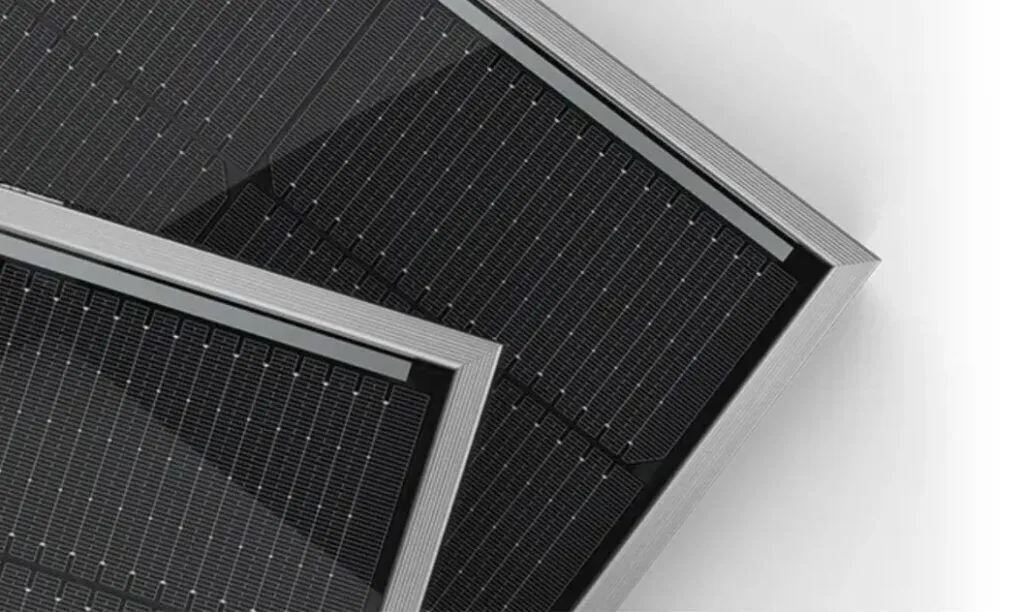
For custom PV projects, TOPCon, PERC and BC solar cells should not be selected by efficiency percentage alone. PERC is mature and cost-effective. TOPCon is a balanced mainstream high-efficiency route for many new solar products. BC can offer a cleaner front appearance and high power density, but buyers should check cost, supply, manufacturing compatibility and certification scope before choosing it.
For OEM/ODM buyers, system brands, distributors and custom solar panel buyers, the better question is not simply which solar cell is best. The better question is: which cell technology fits the module size, power target, voltage design, weight limit, appearance requirement, installation stress and certification target of this project?
That is why high-efficiency solar panels need to be reviewed as part of a full module design, not as an isolated cell choice.
Why High-Efficiency Solar Panels Matter in Custom PV Projects
In a standard rooftop or utility module, a few extra watts may look like a simple performance upgrade. In a custom PV project, efficiency can change the product design.
This is especially true when the available installation area is limited. A balcony solar panel may need to fit a railing. An RV solar panel may need to avoid vents and roof accessories. A marine solar panel may need to fit a narrow deck. A portable solar product may need enough output without becoming too large or heavy.
In these cases, high-efficiency solar cells can help increase power density. But efficiency is only one part of the decision. Buyers also need to check electrical layout, encapsulation, surface material, weight, mechanical stress, shading behavior and certification requirements.
What Is PERC Solar Cell Technology?
PERC stands for Passivated Emitter and Rear Cell. A PERC solar cell improves the rear side of a conventional crystalline silicon cell by adding a passivation layer. This helps reduce recombination losses and allows more light to be used by the cell.
For many years, PERC became the mainstream upgrade from older crystalline silicon cell structures. It is still a practical technology in many products, especially where cost control matters.
Where PERC Still Makes Sense
| Use Case | Why PERC May Still Fit |
|---|---|
| Cost-sensitive solar products | Mature process and competitive pricing |
| Standard rigid panels | Stable production and known performance |
| Entry-level or mid-range product lines | Suitable when top efficiency is not the main selling point |
| Large-volume projects with tight budgets | Easier cost control and familiar supply chain |
Main Limits of PERC
The issue with PERC is not that it stopped working. The issue is that its room for further efficiency improvement is more limited compared with newer n-type routes.
For buyers developing a new high-efficiency product line, PERC may look less attractive when the project requires higher power in the same size, better premium positioning, improved technology differentiation or a stronger long-term product roadmap.
What Is TOPCon Solar Cell Technology?
TOPCon stands for Tunnel Oxide Passivated Contact. A TOPCon solar cell uses a thin tunnel oxide layer and a passivated contact structure to reduce electrical losses. In today’s market, TOPCon is commonly associated with n-type silicon cells.
The practical reason TOPCon matters is its balance. It can improve efficiency while keeping manufacturability and supply planning more realistic than some premium cell structures. For buyers comparing TOPCon solar panels with older cell routes, the value is not only higher output. It is also product positioning, size efficiency and system design flexibility.
Where TOPCon Fits Custom PV Projects
| Application | Why TOPCon Can Fit |
|---|---|
| Balcony solar panels | Limited area makes power density important |
| RV solar panels | Roof space is limited and layout is often irregular |
| Marine solar panels | Compact size and application stress both matter |
| Off-grid kits | Higher output can reduce panel quantity or footprint |
| Lightweight modules | Higher efficiency can help offset limited module area |
| OEM/ODM solar products | Good balance of efficiency, supply and product positioning |
What Buyers Should Not Assume
TOPCon is useful, but it is not a shortcut around module engineering. Buyers should not assume that a TOPCon cell automatically makes a panel flexible, solves every shading issue, qualifies the product for every market or guarantees enough system output without checking load, battery and controller requirements.
TOPCon improves the cell side of the design. The final product still depends on encapsulation, layout, interconnection, materials and testing.
What Is BC, IBC or xBC Solar Cell Technology?
BC stands for Back Contact. In a back-contact solar cell, the electrical contacts are moved to the rear side of the cell. This reduces or removes front-side metal grid lines. Common market names include IBC, ABC, HPBC, xBC and other back-contact variations.
The most visible advantage is appearance. A BC solar panel can create a cleaner front surface. That is why back-contact technology is attractive for premium all-black modules, building-integrated solar products, balcony panels and design-sensitive applications.
Why BC Looks Attractive
BC technology can help when the product needs a cleaner front appearance, higher power density, premium visual positioning or reduced front-side shading from metal contacts.
For a balcony solar panel, appearance may matter more than it does for a remote off-grid system. A cleaner panel can be easier to accept on apartment balconies, facades or visible building surfaces.
What Buyers Should Check Before Choosing BC
| Check Point | Why It Matters |
|---|---|
| Cell supply | BC supply may be more supplier-dependent |
| Cost target | BC is usually positioned higher than standard PERC and many TOPCon options |
| Cutting and interconnection | Custom sizes may require more process control |
| Encapsulation | Premium cells still need reliable module packaging |
| Production yield | More complex structures may affect manufacturing planning |
| Certification | Final approval depends on the module model, not only the cell type |
TOPCon vs PERC vs BC: Core Differences for Buyers
| Factor | PERC | TOPCon | BC / IBC / xBC |
|---|---|---|---|
| Market role | Mature mainstream legacy route | Mainstream high-efficiency upgrade route | Premium high-efficiency route |
| Efficiency potential | Medium | High | High to very high |
| Cost level | Lower | Medium | Higher |
| Front appearance | Visible grid lines | Fine front grid lines | Cleaner front surface |
| Supply maturity | Very mature | Strong and growing | More supplier-dependent |
| Custom module fit | Good for cost control | Strong overall balance | Strong for premium appearance |
| Best use case | Budget-sensitive standard panels | High-efficiency custom products | Premium, space-limited or design-sensitive products |
| Main buyer risk | Lower differentiation | Need to verify BOM and certification | Cost, supply and manufacturing compatibility |
The important point is that PERC, TOPCon and BC are not only cell technologies. They affect the business model of the final product. A distributor may choose TOPCon to create a higher-efficiency product line. A system brand may choose BC for a premium balcony panel. An OEM buyer may still choose PERC for a price-sensitive standard module.
How Cell Technology Affects Non-Standard Solar Panel Design
1Module Size and Power Density
Higher-efficiency cells allow more power in a smaller area. This matters when a panel must fit a balcony railing, vehicle roof, marine deck, portable frame, compact off-grid structure or custom product enclosure.
But module size is not only a mechanical decision. It also affects voltage, current and system compatibility. A compact high-wattage panel may create different electrical requirements from a larger low-wattage panel.
2Electrical Layout
Custom solar panels need electrical design, not just cell selection. Buyers should confirm target wattage, open-circuit voltage, maximum power voltage, current range, series and parallel layout, controller input range, battery system voltage and bypass diode configuration.
Two panels with similar wattage may behave differently if one has higher voltage and lower current while the other has lower voltage and higher current. The right choice depends on the charging system and cable design.
3Encapsulation and Surface Material
High-efficiency cells still need the right module structure. For flexible, lightweight or semi-flexible panels, buyers should pay close attention to ETFE or PET surface film, glass or non-glass front layer, EVA or POE encapsulant, backsheet or composite support layer, edge sealing and junction box design.
This is especially important for RV, marine, portable and balcony solar products. A TOPCon or BC cell does not make a panel flexible by itself. Flexibility depends on the full module structure.
4Weight and Mechanical Stress
Many buyers ask for high-efficiency lightweight solar panels. That is reasonable, but it also requires careful design. Silicon cells are still brittle materials. A lightweight module may reduce installation load, but it must also manage microcrack risk, bending stress, vibration, thermal expansion, adhesive method, mounting method and transport stress.
For balcony, vehicle and marine applications, weight matters. But the lowest-weight panel is not always the best option. The panel still needs enough structural support for the installation environment. Sungold’s PA621 lightweight solar panels can be reviewed where weight and installation load are key project requirements.
5Shading and Bypass Design
Shading performance is often misunderstood. Cell technology helps performance, but shading behavior depends mainly on module electrical layout and system design.
Important factors include cell string layout, bypass diode grouping, parallel or series design, half-cut or shingled layout, MPPT range, microinverter or charge controller behavior and the physical shading source.
For balcony solar, RV roofs and marine decks, partial shading is common. A vent, railing, mast, roof rack or nearby building can reduce output. In these cases, anti-shading solar panels may be relevant when the project has frequent partial shading risk.
6Certification and Model-Specific Testing
A solar cell technology name is not the same as certification. A buyer should not assume that a module is qualified for a market simply because it uses TOPCon, PERC or BC cells. Certification should be checked at the module model level.
For B2B procurement, this is important because different projects may require different evidence, such as IEC 61215, IEC 61730, market-specific electrical safety requirements, salt mist testing, damp heat testing, thermal cycling or mechanical load testing.
Which Cell Technology Should You Choose?
| Project Need | Better Fit | Practical Reason |
|---|---|---|
| Lowest cost and mature supply | PERC or standard TOPCon | Better cost control |
| Higher power in limited space | TOPCon | Strong balance of efficiency and availability |
| Premium all-black appearance | BC | Cleaner front side |
| Balcony solar product line | TOPCon or BC | Efficiency and appearance both matter |
| RV or marine panels | TOPCon | Good balance for compact systems |
| Flexible solar panels | Depends on full module structure | Encapsulation and mechanical design matter as much as cell type |
| Anti-shading products | Depends on layout | Cell type alone is not enough |
| OEM/ODM custom panels | TOPCon is often a balanced starting point | Good mix of efficiency, supply and cost |
| Budget-sensitive standard panels | PERC | Still useful when differentiation is not required |
A practical way to decide is to start with the application, not the cell name. Buyers should define where the panel will be installed, how much space is available, what wattage is required, what voltage and current range the system needs, whether appearance matters, and which certifications are required.
Common Mistakes When Comparing High-Efficiency Solar Panels
Only Comparing Efficiency
Efficiency matters, but it is not the whole product. A higher-efficiency cell may still be the wrong choice if it increases cost, complicates supply or does not fit the system voltage. For custom PV projects, buyers should compare the full module design.
Assuming BC Is Always the Best
BC can be excellent for premium applications. It has strong visual value and high power density potential. But if the project is cost-sensitive, hidden from view or used in a rugged environment where appearance is not important, BC may not be the best economic choice.
Treating TOPCon as a Shading Solution
TOPCon can improve cell-level performance, but it does not remove shading risk. If the application has partial shading, buyers should review module layout, bypass design and system MPPT behavior.
Ignoring Voltage and Current
A solar panel is not selected by wattage alone. Two 200W panels may have different voltage and current behavior. If the controller, battery or inverter is not matched properly, the system may not perform as expected.
Asking for Flexible Panels Without Checking Encapsulation
A high-efficiency cell does not automatically create a flexible panel. Flexible and lightweight modules depend on surface material, encapsulant, backsheet, support layer, cell interconnection, bending limit and mounting method. Sungold’s PA219 flexible solar panel can be reviewed when the project needs a flexible format, but application limits still need to be confirmed by project conditions.
How Sungold Supports Custom High-Efficiency PV Projects
For custom PV buyers, the next step is not to choose a cell technology by name. The better approach is to define the product requirement first.
A buyer should clarify the application scene, available area, target wattage, voltage and current range, weight limit, surface material, appearance requirement, shading condition, certification target and expected order scale.
Sungold can support this type of review through application-specific solar module design, including TOPCon solar panels, BC solar panels, PA621 lightweight solar panels, PA219 flexible solar panels, anti-shading solar panels and balcony solar panel solutions.
The right cell route should be selected together with the full module structure. That is the safer way to turn high-efficiency technology into a reliable product.
B2B Buyer Checklist Before Requesting a Quote
| Check Item | Why It Matters |
|---|---|
| Target application | Balcony, RV, marine, off-grid and portable projects have different stress conditions |
| Available size | Determines whether high-efficiency cells are necessary |
| Target wattage | Must match the system, not only the marketing target |
| Voltage and current range | Affects controller, inverter and battery compatibility |
| Cell technology | PERC, TOPCon and BC affect cost, appearance and power density |
| Surface material | Affects durability, appearance and application boundary |
| Weight limit | Critical for balcony, vehicle and portable applications |
| Shading condition | Determines whether special layout or anti-shading design is needed |
| Certification requirement | Must be checked by model and target market |
| Documentation requirement | Datasheets, certificates and test reports should match the actual product model |
FAQ
TOPCon solar panels usually offer higher efficiency potential than PERC panels, especially for new high-efficiency product development. But “better” depends on the project. PERC can still make sense for cost-sensitive standard modules, while TOPCon is often stronger when higher power density and product differentiation are important.
BC solar panels can offer a cleaner front appearance and high power density. They are attractive for premium all-black modules, balcony panels and building-integrated designs. But BC may involve higher cost, more supplier dependency and stricter manufacturing review. TOPCon is often the more balanced choice for many custom PV projects.
TOPCon can be used in high-efficiency module design, but flexibility depends on the full module structure. The surface film, encapsulant, backsheet, support layer, cell interconnection and bending limit matter as much as the cell type.
There is no single best cell type for every custom PV project. PERC is mature and cost-effective. TOPCon is often a balanced high-efficiency option. BC is attractive for premium appearance and space-limited designs. The best choice depends on the application, size, wattage, electrical layout, weight, shading condition, cost target and certification requirement.
Final Thoughts
High-efficiency solar panels should not be selected by efficiency ranking alone.
PERC is mature and cost-effective. TOPCon is currently a practical high-efficiency route for many new custom module projects. BC offers strong visual and power-density advantages for premium applications.
For custom PV projects, the real decision is broader. Buyers should evaluate the cell technology together with module size, electrical layout, encapsulation, surface material, mechanical stress, shading risk and certification scope. That is how high-efficiency technology becomes a reliable solar product, not just a better number on a datasheet.