

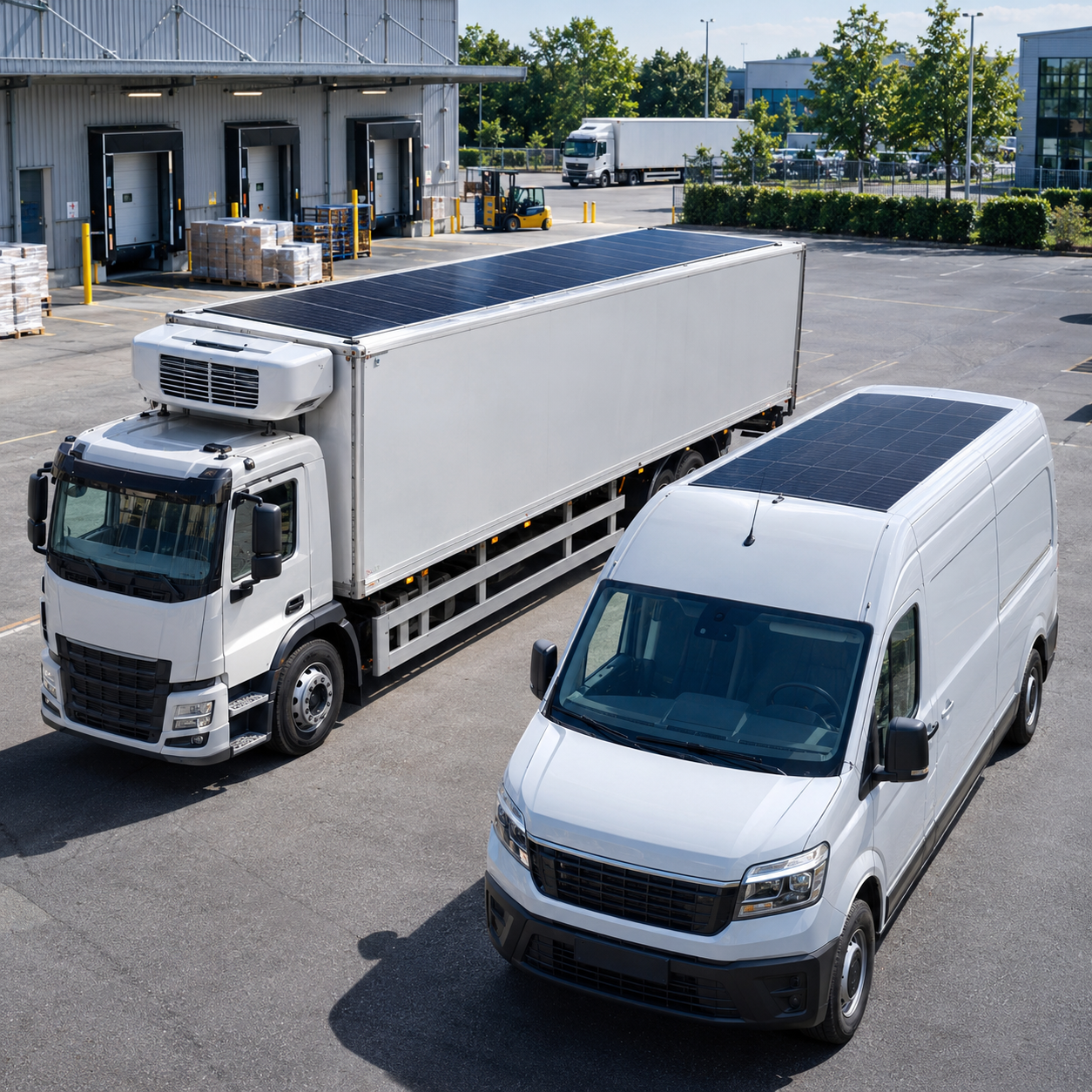
You have a flexible solar panel and a surface that was never designed as a solar roof. It may be curved, light, exposed to vibration or difficult to drill. The practical question is simple: should the panel be bonded, held slightly above the surface or fitted to a rack? A flexible solar panel mounting system should be chosen around the finished application, because the panel is only one part of the installation.
Start With the Surface, Not the Panel
Many mounting problems begin before the panel arrives. A buyer selects the wattage first, then discovers that the surface expands in the sun, flexes during travel, traps water at an edge or leaves no sensible route for the cable.
Before deciding on adhesive, brackets or a rack, look at the surface as an engineer would:
- Is it flat, curved or irregular?
- Does it move, vibrate or expand with temperature?
- Can water drain away from the panel and cable exit?
- Will someone need to remove the panel later?
- Can the surface accept the proposed bonding or fixing method?
If several answers are still unknown, it is too early to finalize the mounting method. That is usually the point at which a photo, drawing or sample review saves more time than another round of installation work.
How to Choose a Flexible Solar Panel Mounting System
Most projects end up in one of four directions: direct bonding, a supported air gap, a mechanical rack or a custom mounting interface. The useful question is not which method sounds easiest. It is which method still works after heat, water, movement and servicing are added to the picture.
| Mounting direction | Where it may fit | What needs checking |
|---|---|---|
| Direct bonding | Stable, low-profile surfaces where removal is not the first priority | Surface compatibility, heat cycles, edge treatment, moisture and future replacement |
| Spacers or raised strips | Projects where airflow, cable access or some separation from the surface matters | Support points, wind exposure, drainage, weight and panel movement |
| Mechanical rack | Equipment that needs a removable panel or a more defined structural interface | Fastener loads, vibration, corrosion, height, wind and load transfer |
| Custom interface | Curved, irregular, weight-sensitive or OEM-integrated products | Drawing, curvature, cable exit, connector position, documentation and sample validation |
When Direct Bonding Is the Right Conversation
Direct bonding is often chosen because it keeps the profile low. There is no large frame to fit around, and the panel can follow a suitable surface closely. Those are real benefits when the substrate is stable and the installation is not expected to be removed frequently. In that situation, the flexible solar panel mounting system is part of the surface-preparation decision, not just an adhesive choice.
But “strong adhesive” is not a mounting specification. The roof coating, paint, membrane or composite surface must be compatible with the bonding method. The panel backsheet and the adhesive also need to be considered together. Heat, moisture and repeated movement can change how the bond behaves over time.
Do not describe a bonded installation as maintenance-free unless the product documentation supports that wording. A clean-looking installation can still be difficult to inspect or replace.
When a Raised Support or Rack Makes More Sense
A raised structure solves a different problem. It can leave room for airflow, make the cable easier to support or avoid bonding directly to a surface that is uneven or difficult to prepare.
It also creates new work: extra height and weight, possible wind exposure, concentrated loads and more places for water or dirt to collect. On a moving product, every bracket and fastener becomes part of the vibration path.
There is no universal air-gap dimension or bracket spacing that can be copied from one project to another. The panel construction, support material, surface shape, expected loads and manufacturer guidance all matter.
Custom Applications Need Different Mounting Questions
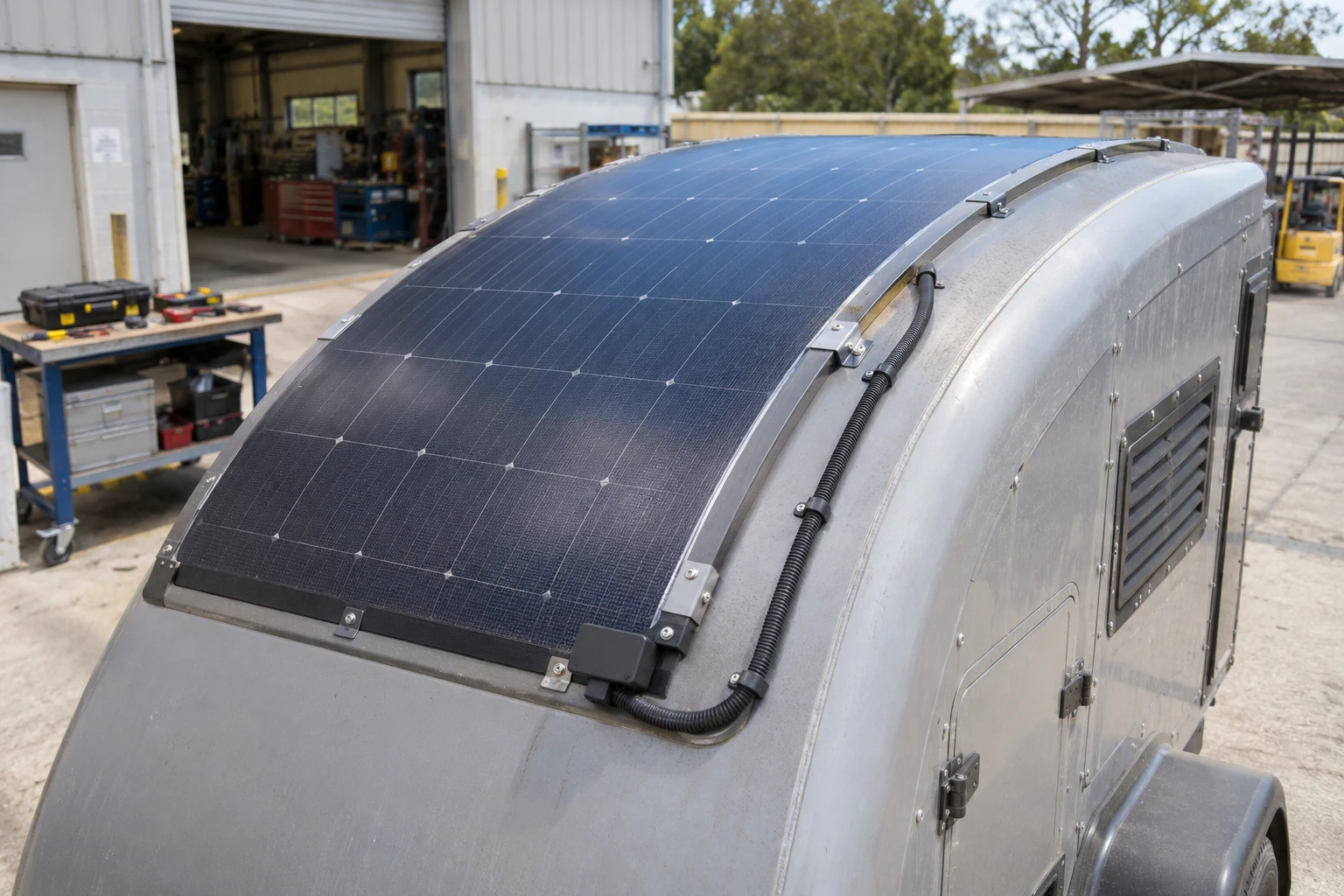
A custom vehicle, marine device, portable machine or low-load roof rarely offers a perfect installation surface. In practice, the mounting decision is usually driven by the one constraint the buyer cannot ignore: curvature, weight, vibration, water exposure or access for future repair.
| Application condition | Decision to make before ordering |
|---|---|
| Curved or irregular surface | Confirm the panel format, allowable curvature, edge support and whether a custom shape is needed. |
| Low-load structure | Count the panel, support, fasteners and service hardware together. The mounting system is part of the roof load. |
| Moving or vibrating equipment | Review cable strain, edge movement, fastener loads and how repeated motion reaches the module. |
| Outdoor or wet environment | Plan drainage, cable entry, surface compatibility and inspection access as one installation. |
| OEM product integration | Confirm size, voltage, cable exit, connector position, packaging and documentation before sampling. |
Heat and Drainage Are Not Secondary Details
The mounting method changes the environment behind the panel. A panel close to a dark or hot surface may have less air movement than one on an open support. That can affect operating temperature and real-world output, but the size of the effect must be judged from the module, surface and local weather rather than from a universal rule.
Water needs an equally clear path. Do not let the panel edge, junction box or cable entry become a low point where water remains trapped. A rack can improve access but also create pockets for dirt. Direct bonding can look neat but still needs careful edge and cable planning.
For general photovoltaic operation and maintenance background, see the NREL photovoltaic operation and maintenance guidance. It is a general reference, not a replacement for the installation instructions for a particular panel and substrate.
Movement and Cable Routing Can Decide the Result
A panel mounted on a moving product does not experience one clean, static load. It sees repeated vibration, wind, temperature changes and sometimes impact during handling. The cable can become the weak point if it is pulled across an edge, pressed against a hot part or left unsupported near the junction box.
Map the cable route before fixing the panel. Keep it away from sharp edges, moving hinges and hot equipment. Protect the entry point and leave enough access for inspection. If the project needs a rear exit, a side exit or a particular connector position, confirm it before production. Cutting or relocating the cable after delivery can create a new failure point.
When to Ask the Manufacturer for a Review
Ask for a project review before installation when the surface is curved, the product vibrates, the panel will be bonded permanently, the substrate is unusual or the design requires a custom size or cable position. A short review at this stage is more useful than trying to correct the mounting method after the first panel has been fixed.
Sungold can review the application direction for flexible and lightweight module families such as PA219 flexible solar panels and PA621 lightweight solar panels. The final series, mounting method and documentation still depend on the exact project conditions and model.
What to Send With a Custom Solar Panel Inquiry
A useful inquiry does not need a long specification document. These items are usually enough for an initial review:
- Photos, drawings or installation sketches;
- usable length, width, curvature and irregular sections;
- surface material and existing finish;
- expected vibration, wind, salt exposure, water contact or heat;
- target wattage and system voltage;
- battery, MPPT, inverter or power-station input limits;
- cable exit and connector requirements;
- whether the panel must be removable, replaceable or integrated into a larger product.
With this information, a manufacturer can compare a low-profile bonded layout, a supported air gap, a mechanical rack, several smaller modules or a custom panel interface.
FAQ: Custom Flexible Solar Panel Mounting
Can flexible solar panels be mounted directly to a custom surface?
They may be considered for some custom surfaces, but the substrate, panel backsheet, bonding method, heat exposure, drainage and maintenance plan must be reviewed first. Direct bonding is not a universal installation method.
Do flexible solar panels need an air gap?
Not every project needs the same gap. An air space may help airflow and service access, but the required spacing depends on the panel structure, support design, surface and operating conditions.
Is a rack better than adhesive for a custom solar installation?
Neither method is automatically better. Adhesive may suit a stable low-profile surface, while a rack may be more practical when airflow, removability, drainage or service access matters. The decision must follow the project conditions.
What should I check before choosing a flexible solar panel mounting system?
Check the surface material, curvature, movement, heat, drainage, vibration, cable route, system limits and future maintenance access. Send these details to the manufacturer before finalizing the panel and mounting method.
Final Thoughts
Flexible panels solve a surface-fit problem. They do not remove the need to plan the installation around movement, heat, water, cable stress and future access.
For a custom vehicle, marine device, portable machine or non-standard roof, the best answer may be direct bonding, a raised support, several smaller panels or a custom interface. Start with the surface and the use case. Then choose the panel and flexible solar panel mounting system together.
Share your surface photos, dimensions, material and electrical limits with Sungold before ordering. That information gives the manufacturer a better basis for reviewing the panel format and mounting direction.