




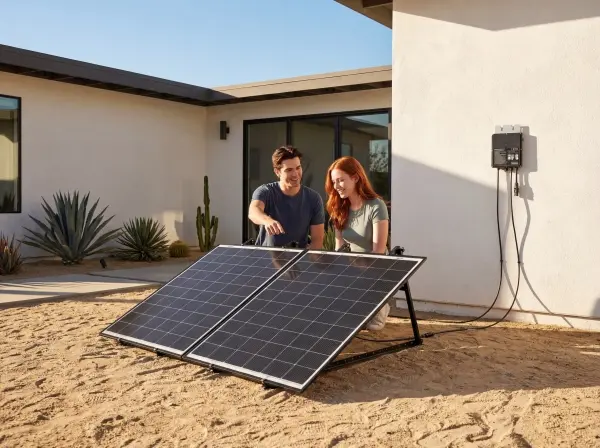
A complete 800W Balkonkraftwerk in Germany costs approximately €500–€700 for a mid-range system in 2026. City subsidies of up to €500 are available in Berlin, Munich, and Hamburg — reducing effective cost to as low as €200. Zero VAT applies since 2023. Annual savings are approximately €150–€200 at €0.32/kWh, with a typical payback of about 2–5 years. Always choose 800W over 600W — the 2024 Solarpaket I raised the limit and the higher output delivers better ROI.
Why Germany Leads the Global Plug-In Solar Market
Germany's combination of high electricity prices (averaging €0.32/kWh — among the EU's highest), favorable legislation, city subsidies, and a renter-majority population (nearly 55% of households rent) has created the perfect conditions for Balkonkraftwerk to become a mainstream product category. Over 800,000 systems are registered at MaStR as of Q1 2026, and growth continues accelerating following the 2024 Solarpaket I reform.
- 800,000+ systems registered in Germany (MaStR, Q1 2026)
- 55% of German households rent — the primary Balkonkraftwerk demographic
- €0.32/kWh average residential electricity rate — among EU's highest
- 0% VAT on solar panels and inverters since January 2023
- 2024 Solarpaket I raised the limit from 600W to 800W and simplified registration
800W vs 600W: Which Is Right for You?
Since the 2024 Solarpaket I raised the German legal limit to 800W (AC rated output), there is almost never a reason to choose a 600W system over 800W.
| Factor | 800W (Recommended) | 600W (Outdated Standard) |
|---|---|---|
| Legal limit (2024+) | Yes — fully compliant | Below new limit — still legal |
| Typical panel config | 2 × 400–430W panels | 2 × 300–350W panels |
| Annual generation (south) | ~720–800 kWh/year | ~540–600 kWh/year |
| Annual savings (€0.32/kWh) | ~€150–€200/year | ~€115–€140/year |
| Cost range (2026) | €350–€900 | €250–€650 |
| Payback period | 3–5 years | 4–6 years |
When 600W makes sense: Only if extreme space constraints (e.g., a very narrow balcony where two standard panels physically cannot fit). Otherwise, always choose 800W for better ROI.
What Does a Balkonkraftwerk Cost in 2026?
Prices have decreased significantly since 2022–2023 due to falling panel prices globally. Zero VAT since January 2023 automatically reduces purchase cost by approximately €100–€150 on mid-range systems.
| Tier | Price Range | What You Get | Best For |
|---|---|---|---|
| Budget | €350–€500 | Entry-level brands, ~20% panel efficiency, 2–5 year warranty, basic mounting | Trial run, very limited budget |
| Mid-Range (Recommended) | €500–€700 | Established brands (incl. Sungold Solar), 21–22% efficiency, VDE inverter, adjustable mount, 25-year panel warranty | Most buyers — best ROI |
| Premium | €700–€900 | Top-tier brands, 22%+ efficiency, smart inverter with app, full service packages | Long-term permanent installations |
| With Battery Storage | €1,200–€2,500 | 800W system + 1–5 kWh lithium battery, BMS, smart monitoring | Households home in evenings; longer payback (5–8 yr) but greater energy independence |
City Subsidies in Germany 2026
Beyond the federal VAT exemption, dozens of German cities offer direct cash subsidies for Balkonkraftwerk installations. Subsidies change frequently — verify current status before purchasing.
| City / Region | Subsidy Amount | Eligibility | How to Apply |
|---|---|---|---|
| Berlin | Up to €500 (IBB) | Renters and owners; income-linked for higher amounts | IBB online portal — apply after purchase |
| Munich (Bayern) | Up to €500 | Primary residence; system must be installed, not just ordered | Stadtwerke München (SWM) application form |
| Hamburg | Up to €500 (combined) | Renters and owners; solar-only ~€150–€200 | IFB Hamburg online portal |
| Cologne | Up to €250 | Low-income (KölnPass holders); renters in qualifying buildings | Stadt Köln climate office; landlord consent required |
| Dortmund | Up to €250 | All residents | DEW21 online form |
| Frankfurt am Main | Up to €200 | Primary residence; system over 300W | energiekampagne-frankfurt.de |
| Stuttgart | Up to €150 | Renters and homeowners; must use certified VDE components | City of Stuttgart energy office |
| Hanover | Up to €200 | All residents | Stadtwerke Hannover portal |
| Leipzig | Up to €200 | Leipzig residents; MaStR registered | Stadtwerke Leipzig online form |
| Bremen | Up to €200 (BAB) | Low and middle income households | Bremer Aufbau-Bank online portal |
| Nuremberg | Up to €150 | All residents with balcony or outdoor space | Stadt Nürnberg Umweltamt |
Subsidy amounts and eligibility change frequently. Verify current status at your city's official website before purchasing. Most subsidies require MaStR registration and purchase from a certified retailer. You can typically combine city subsidies with the VAT exemption.
Payback Period by German City (800W, 2026)
Payback varies by solar irradiance, panel orientation, electricity rate, and available subsidies. South-facing panels in Bavaria perform up to 25% better than north-facing setups in Hamburg.
| City | Annual Output (South, 800W) | Annual Saving | Payback (No Subsidy) | Payback (€300 Subsidy) |
|---|---|---|---|---|
| Munich | ~850 kWh | ~€272 | about 2–3 years | ~1.5–2 years |
| Stuttgart / Frankfurt | ~820 kWh | ~€262 | about 2–3 years | ~1.5–2 years |
| Berlin | ~780 kWh | ~€250 | about 2.5–3.5 years | ~1.5–2 years |
| Cologne / Dortmund | ~750 kWh | ~€240 | about 2.5–3.5 years | ~2 years |
| Hamburg / Bremen | ~700 kWh | ~€224 | about 3–4 years | ~2 years |
Plug-In Solar Brand Comparison for Germany
The German market offers systems from European, Chinese, and international manufacturers. Key factors when comparing: VDE-AR-N 4105 certification, inverter warranty length, monitoring app quality, and mounting hardware.
| Brand Type | Price Range | Panel Origin | Inverter | Key Consideration |
|---|---|---|---|---|
| Budget brands (generic) | €300–€500 | Various | Basic, 2–5 yr warranty | Limited documentation; verify certifications before purchase |
| Sungold Solar (Manufacturer) | €500–€750 | Sungold factory (ID/CN) | VDE certified, app monitoring | Direct manufacturer supply; OEM and distributor programs available |
| European-assembled brands | €600–€900 | Varied | Hoymiles, Deye inverters | Local after-sale support; often resells Asian panels at premium |
| Premium brands | €700–€1,100 | High-efficiency monocrystalline | Smart inverter with advanced monitoring | Best for permanent high-output installations |
Frequently Asked Questions
A complete 800W system (panels, inverter, mounting, cables) costs approximately €350–€500 for budget options, €500–€700 for mid-range systems, and €700–€900 for premium. Systems with battery storage: €1,200–€2,500. Zero VAT applies automatically — no special application needed.
Berlin and Munich offer the highest subsidies — up to €500 each. Hamburg also offers up to €500 for combined heating+solar projects. For many buyers, combining a city subsidy with the VAT exemption reduces effective system cost by €300–€600. Verify current eligibility and amounts before purchasing, as programs change frequently.
Almost always 800W. Since the 2024 law change, 800W is the new standard. It generates approximately 25–33% more electricity than 600W annually with only a modest price increase. A 600W system only makes sense if your balcony railing is too narrow for two standard-size panels.
Register at marktstammdatenregister.de — it's free and takes under 30 minutes. You'll need: postcode, installation date, panel technology and total peak power (kWp), inverter manufacturer and AC output (W). See the Balkonkraftwerk Law Guide for step-by-step instructions.
Related guides: Balkonkraftwerk Law & Registration Guide · Apartment Solar Guide · Savings Calculator · Is Plug-In Solar Legal?