 EN
EN
 Deutsch
 Italiano
 Español
 Français
 日本語
日本語
Reviewed by Sungold Solar Technical Team
Last updated: May 2026
Quick Answer: Anti-Shading Solar Panels
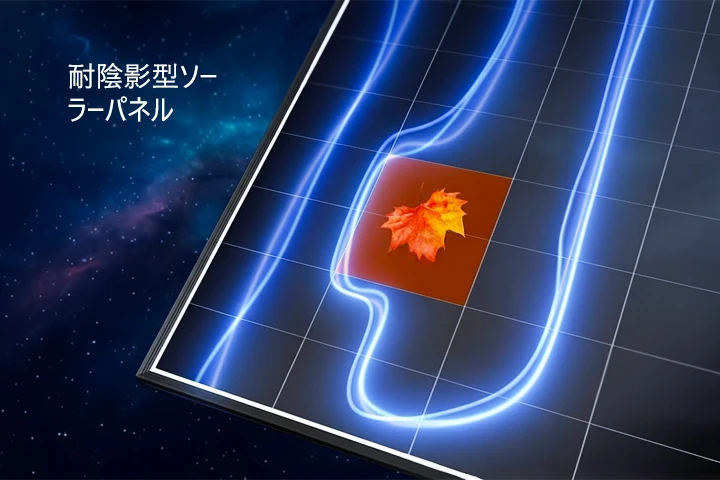
Anti-shading solar panels are solar modules designed with refined current-routing or bypass architecture to reduce the impact of partial shading on module output and hotspot risk. Sungold Solar describes its Cell-level Shadow Management Technology as a module-level current-routing approach that helps reroute current around shaded cell areas when resistance rises. Exact product support should be confirmed by model, because not every solar panel automatically includes anti-shading technology.
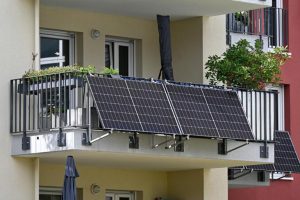
Partial shading is common in real RV, marine, balcony, and off-grid installations. It may come from a roof fan, antenna, rack, mast, railing, chimney, tree branch, cable path, or nearby structure. The shaded area may be small, but it can still affect current flow, output stability, and long-term reliability.
For B2B buyers, the useful question is not only whether a panel is called “anti-shading.” The better question is whether the selected model, roof layout, wiring design, and evidence record support the partial-shading claim being used for that project.
This guide explains how anti-shading solar panels work, where cell-level shadow management helps, how to compare anti-shading panels with bypass diodes and optimizers, and what Sungold Solar buyers should verify before specifying a model for RV, marine, balcony, or off-grid applications.
Table of Contents
- Why partial shading is a design problem
- What anti-shading solar panels are
- How cell-level shadow management works
- Anti-shading panels vs bypass diodes vs optimizers
- RV and marine application checks
- How to evaluate anti-shading claims
Who This Guide Is For
This guide is written for technical and commercial buyers who need to evaluate solar panels for projects where partial shading is likely.
It is especially useful for:
- RV upfitters designing roof solar packages with fans, racks, antennas, skylights, and air conditioners
- Marine solar suppliers working around mast, railing, boom, rope, and cabin shadows
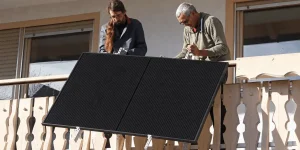
- Balcony solar buyers dealing with railings, wall edges, and limited mounting angles
- Off-grid system integrators planning arrays near trees, poles, chimneys, or uneven structures
- Transportation and tourism facility buyers installing solar around unavoidable structural shade
- Distributors comparing solar panel technologies for different end-use markets
- OEM and ODM buyers specifying module size, voltage, cable exit, connector, label, packaging, and application-specific product features
This article supports Sungold Solar’s anti-shading product page by explaining the technology and buyer evaluation logic. Commercial product selection should still be confirmed by exact model and project requirements.
Why Partial Shading Is a Design Problem
A solar panel does not need to be fully covered to lose output. Partial shading can affect the electrical behavior of one module and, depending on wiring, the larger solar array.
Common partial-shading sources include:
| Application | Common Shade Source | Why It Matters |
|---|---|---|
| RV / camper van | Roof fan, rack, antenna, skylight, air conditioner | Shade can move across one section of a panel during the day |
| Marine | Mast, boom, railings, ropes, cabin structure | Moving shadows can affect panels unevenly on deck or cabin surfaces |
| Balcony | Railings, wall edges, nearby buildings | Narrow line shadows can cross part of a module |
| Off-grid cabin | Trees, chimneys, poles, roof edges | Shade pattern changes by season and time of day |
| Transportation facilities | Shelters, posts, signage, roof structures | Structural shade may be unavoidable |
| Tourism facilities | Trees, canopies, curved roofs, nearby objects | Aesthetic placement may conflict with ideal solar exposure |
Partial shading can lead to:
- lower power output
- mismatch loss between shaded and unshaded cell areas
- output fluctuation during changing sun conditions
- increased hotspot formation risk, depending on module design and shade pattern
- harder system prediction for mobile or space-limited projects
The practical lesson is simple: if shading is likely, evaluate the layout, wiring, controller, and solar panel design together. Wiring alone cannot solve every shade problem. Module technology alone does not replace proper installation planning.
What Are Anti-Shading Solar Panels?
Anti-shading solar panels are solar modules designed to better manage partial shading compared with conventional module layouts. They are not shade-proof panels, and they do not eliminate all power loss under shade.
A safer public definition is:
Anti-shading solar panels are solar modules designed with refined current-routing or bypass architecture to reduce the impact of partial shading on module output, mismatch loss, and hotspot risk.
For Sungold Solar, the relevant technology term is Cell-level Shadow Management Technology, commercially described as Sungold Anti-Shading Solar Panel Technology.
Sungold materials describe this as a module-level / cell-level current-routing and partial-shading management approach. Smart current routing elements are integrated inside the module. When part of the module is shaded and cell resistance rises, the design helps reroute current around shaded areas to reduce mismatch loss and lower hotspot formation risk.
Use this type of wording:
Sungold Cell-level Shadow Management Technology is designed to help manage partial-shading impact by rerouting current around shaded cell areas on confirmed models.
Avoid this type of wording:
The panel maintains full power output under shade.
The first statement explains a scoped technology mechanism. The second statement turns the mechanism into an unsupported performance promise.
How Sungold Cell-Level Shadow Management Works
The approved explanation should stay qualitative unless a specific test report supports a quantified claim.
| Step | What Happens |
|---|---|
| 1 | Part of the solar module becomes shaded |
| 2 | Resistance rises in the shaded cell area |
| 3 | Integrated smart current routing elements help reroute current around the shaded area |
| 4 | Mismatch loss and hotspot formation risk may be reduced |
| 5 | Actual performance depends on product model, shade pattern, installation layout, wiring, controller, and system design |
This distinction matters. It is safe to explain the mechanism as a current-routing approach based on Sungold’s technology materials. It is not safe to add universal percentage-based performance claims without model-specific evidence.
For example, the article may say:
The technology is positioned to help reduce power loss, hotspot risk, and output fluctuation caused by partial shading.
The article should not say:
The technology guarantees full power output under shade.
Example Test Evidence for Partial-Shading Evaluation
For percentage-based anti-shading claims, buyers should ask for model-specific test data. A useful partial-shading evaluation should identify the tested model, shade pattern, baseline comparison, measurement method, and limitation of the result.
| Test Item | Recommended Description |
|---|---|
| Tested model | SGSP 120W / SGM2-140W / SG-PA621-140W, or another exact mapped model |
| Shade pattern | One cell area, narrow line shade, corner shade, horizontal strip, or another defined pattern |
| Baseline | A conventional module with similar wattage and comparable construction |
| Measurement | Pmax, Voc, Isc, operating temperature, and visual or thermal observations where available |
| Result | Use only confirmed numbers from the relevant test record |
| Limitation | Results vary by model, shade pattern, wiring, controller, installation angle, and environment |
If a project requires a quantified claim such as output retention under a defined shade condition, Sungold recommends reviewing model-specific shading test data before applying that claim in a public page, quotation, or buyer document.
This does not weaken the technology story. It makes the story more credible. B2B buyers trust claims more when the evidence boundary is visible.
Anti-Shading Solar Panels vs Conventional Solar Panels
The difference between a conventional panel and an anti-shading panel should be explained as a design and evidence question, not as a simple “good vs bad” comparison.
| Factor | Conventional Solar Panel | Anti-Shading Solar Panel | Buyer Check |
|---|---|---|---|
| Partial shade behavior | Output may drop depending on module layout, wiring, and shade pattern | Designed to help manage current flow around shaded cell areas on confirmed models | Ask which exact model carries the technology |
| Hotspot risk | Depends on shade pattern, cell layout, bypass behavior, and installation conditions | Positioned to help lower hotspot formation risk under partial shading | Ask whether test evidence exists for the claim |
| Best-use environment | Clean, open, unshaded installation areas | RV roofs, marine decks, balcony railings, tree/chimney shade, transportation or tourism facilities | Match panel direction to the real shade source |
| Evidence needed | Datasheet, installation guidance, and system design checks | Product mapping, datasheet, and performance evidence for specific anti-shading claims | Separate qualitative mechanism claims from percentage claims |
| Claim boundary | Do not assume all standard panels handle shade equally | Do not claim zero loss, shade-proof behavior, or guaranteed output | Confirm model scope before publishing or quoting |
Anti-shading technology can be valuable, but it still needs scope. Buyers should know which model carries the technology, what evidence supports the claim, and what shade conditions were considered.
Anti-Shading Solar Panels vs Bypass Diodes vs Optimizers
Anti-shading solar panels are sometimes confused with bypass diodes, optimizers, or wiring choices. These are related to shade management, but they are not the same thing.
| Solution | Works At | Main Role | Best For | Limitation |
|---|---|---|---|---|
| Bypass diodes | Cell string / substring | Reduce severe shading loss by bypassing affected sections | Standard module protection | Less refined than cell-level current-routing paths |
| Cell-level shadow management | Module / cell-level design | Reduce partial-shade impact through refined current routing on confirmed models | RV, marine, balcony, off-grid, and space-limited projects | Needs confirmed model mapping and evidence for exact claims |
| Optimizer | Module-level electronics | Improve module-level output management depending on system design | Larger arrays, complex roofs, or uneven module conditions | Adds cost, electronics, and system complexity |
| Parallel wiring | System wiring | Reduces the impact of one shaded panel on another panel in some layouts | RV, marine, and mobile systems with segmented panels | Higher current and cable sizing need review |
A strong design may combine several of these tools. For example, an RV system may use mapped anti-shading panels, careful roof layout, parallel wiring, and a properly selected controller. The best answer depends on the installation, not only the panel label.
When Anti-Shading Solar Panels Make Sense
Anti-shading solar panels are most relevant when shade cannot be fully avoided.
| Scenario | Why It Matters | Buyer Direction |
|---|---|---|
| RV roof with fans, racks, or antennas | Small roof accessories can shade one area of a panel | Review anti-shading module options and roof layout together |
| Marine deck with mast or railing shadows | Shade can move across the module during the day | Check model suitability, environmental exposure, and mounting method |
| Balcony railings | Narrow shadows can cross the panel area | Review module orientation, mounting angle, and product mapping |
| Tree or chimney shade | Shade changes by time and season | Evaluate shade pattern before choosing module and wiring direction |
| Transportation stations | Structural shade may be unavoidable | Consider module layout, shading exposure, and maintenance access |
| Tourism facilities | Aesthetic placement may limit ideal sun exposure | Balance visual placement with module design and output expectations |
For projects where partial shade is unavoidable, buyers should evaluate three layers at the same time:
- Site layout: where shade comes from and how it moves.
- Electrical design: wiring method, controller, and array segmentation.
- Module design: whether the selected solar panel model is mapped to anti-shading technology.
If only one of these layers is considered, the system may still underperform.
Available Sungold Anti-Shading Model Direction
Sungold’s anti-shading technology should be associated only with products and models that are mapped or listed in relevant product records. The table below uses customer-facing wording for public content.
| Sungold Model / Family | Anti-Shading Discussion Status | Public Wording |
|---|---|---|
| SGSP 120W | Listed model | Available for anti-shading project discussion; do not claim a certified shading-output percentage unless supported by test data |
| SGM2-140W | Listed model | Suitable for partial-shade application review; confirm exact project requirements before quoting |
| Selected TF models | Selected models only | Confirm the exact TF model before using anti-shading wording |
| SG-PA621-140W | Listed model | Can be reviewed for lightweight anti-shading applications |
| PA621 family | Family-level relevance | Confirm wattage and exact model before using model-level anti-shading claims |
| PA219 | Not currently listed | Do not describe PA219 as anti-shading unless later confirmed by Sungold technical team |
This section protects both the buyer and the brand. If a product appears in a general family discussion, that does not mean every wattage, SKU, or customized version automatically carries the technology.
Use:
selected Sungold models mapped for anti-shading project discussion
Avoid:
all Sungold panels have anti-shading technology
For the commercial product page, buyers can review Sungold’s anti-shading solar panels and then confirm model fit with the technical team.
Anti-Shading Technology for RV Applications
RV solar systems often face partial shading because roof space is limited and crowded.
Common RV shade sources include:
- roof fans
- air conditioners
- antennas
- roof racks
- skylights
- storage boxes
- cable glands
- nearby trees when parked
For RV upfitters, anti-shading solar panels can be part of a broader roof-layout strategy. The buyer should still check available roof area, mounting method, cable routing, panel model, controller input range, wiring method, and maintenance access.
A practical RV buyer checklist:
| Check Item | Why It Matters |
|---|---|
| Exact roof layout | Determines where shade is likely to fall |
| Panel model mapping | Confirms whether the selected model carries anti-shading technology |
| Wiring method | Series wiring can be more sensitive to one shaded panel, depending on layout |
| Controller input range | Must match array voltage/current design |
| Cable exit position | Affects installation quality and roof sealing |
| Mounting method | Affects airflow, durability, and serviceability |
Anti-shading technology can help in RV applications, but it should not be used as a reason to ignore roof planning.
For RV project planning, buyers can review Sungold’s RV solar kits solution and confirm whether a mapped anti-shading model is suitable for the project.
Anti-Shading Technology for Marine Applications
Marine solar installations have a different shading problem. Shade may come from masts, booms, ropes, railings, cabin structures, or nearby equipment. The shade pattern can change throughout the day as the boat turns or the sun angle changes.
Marine projects also have environmental requirements beyond shading:
- humidity
- salt exposure
- vibration
- curved or limited surfaces
- cable sealing
- walking or maintenance access
- corrosion-resistant mounting details
For marine buyers, anti-shading technology should be reviewed together with marine suitability. A module may be useful under partial shade, but the product still needs appropriate mechanical, material, waterproofing, and installation support for the marine environment.
Use a scoped statement such as:
For marine applications with partial mast, railing, or equipment shade, mapped anti-shading solar panel models may be reviewed as part of the module-selection process. Final product choice should also consider salt exposure, cable sealing, mounting method, and confirmed model evidence.
Buyers can connect this discussion with Sungold’s marine solar power solution when planning boat, yacht, or marine equipment projects.
How to Evaluate Anti-Shading Claims Before Buying
Not every anti-shading claim has the same evidence level. Some claims explain a technology mechanism. Some describe product-family positioning. Some are model-level claims. Some require test reports.
Before relying on an anti-shading claim, ask:
| Question | Why It Matters |
|---|---|
| What exact product model carries the technology? | Prevents product-family claims from being applied to every model |
| Is the model listed for anti-shading discussion? | Confirms whether anti-shading wording is allowed |
| Is there a datasheet or specification record? | Supports basic product and model claims |
| Is there a performance test report? | Required for output-retention percentages or quantified comparisons |
| What shade pattern was tested? | Different shade patterns can produce different results |
| What was the baseline comparison? | A claim needs context to be meaningful |
| Is the statement qualitative or quantitative? | Qualitative mechanism wording needs less evidence than exact percentages |
| Are warranty and certification claims separate? | Anti-shading claims do not automatically prove warranty or certification coverage |
| Does the application match the test condition? | RV, marine, balcony, and off-grid environments are not identical |
This is the difference between a useful technology claim and an unsafe marketing claim.
What Buyers Should Send for a Project Review
For B2B projects, a useful inquiry should include more than a desired wattage.
Send the following information when asking Sungold Solar to review an anti-shading solar panel direction:
- application type: RV, marine, balcony, off-grid, transportation facility, tourism facility, or custom project
- shade source: fan, rack, mast, railing, tree, chimney, nearby building, or other structure
- shade pattern: fixed, moving, seasonal, narrow line shadow, or broad partial shade
- target wattage
- available installation area
- required module size
- mounting method
- target system voltage
- controller or inverter input range, if known
- cable routing requirements
- whether a standard or custom solar module is needed
The better the project information, the easier it is to recommend whether an anti-shading solar panel direction is appropriate.
If you are planning an RV, marine, balcony, off-grid, or custom project with unavoidable partial shading, you can request an anti-shading project review from Sungold Solar.
Further Technical Reading
These references are useful for understanding partial shading, bypass diode behavior, mismatch loss, and hotspot risk at a general photovoltaic-module level. They are not Sungold product certificates and should not be used as proof of a specific Sungold model claim.
| Reference | Why It Is Useful |
|---|---|
| Partial Shading in Monolithic Thin Film PV Modules: Analysis and Design | U.S. Department of Energy project page discussing partial shading analysis and module design considerations |
| A Comprehensive Review on Bypass Diode Application on Photovoltaic Modules | Open-access technical review covering bypass diodes, partial shading, hotspot issues, and PV module protection |
FAQ: Anti-Shading Solar Panels
What are anti-shading solar panels?
Anti-shading solar panels are solar modules designed with refined current-routing or bypass architecture to reduce the impact of partial shading on module output, mismatch loss, and hotspot risk. Sungold Solar’s Cell-level Shadow Management Technology is described as a module-level current-routing approach used on confirmed models.
How does shading affect solar panels?
Shading can reduce solar panel output by limiting the current produced by shaded cell areas. Depending on module design, wiring, and shade pattern, partial shading can also create mismatch loss, output fluctuation, and hotspot formation risk.
How does shading affect solar panels in series?
In a series-connected array, one shaded or underperforming panel can reduce the output of the string. The exact impact depends on panel design, bypass behavior, shade location, and system layout. RV, marine, and mobile systems with partial shade need careful module and wiring selection.
Do anti-shading solar panels eliminate power loss?
No. Anti-shading solar panels should not be described as zero-loss or shade-proof. They are designed to help manage partial shading and may reduce mismatch loss, hotspot formation risk, and output fluctuation on confirmed models. Actual performance depends on the model, shade pattern, installation, and system design.
Are anti-shading panels the same as optimizers?
No. Sungold’s Cell-level Shadow Management Technology is described as a module-level current-routing approach integrated inside the solar module. An optimizer is a power electronics device used to manage module-level output depending on system design. Anti-shading panels, optimizers, inverters, and batteries have different roles.
Which applications benefit most from anti-shading solar panels?
Anti-shading solar panels are most relevant for applications where partial shade is common or difficult to avoid, such as RV roofs with fans or racks, marine decks with mast or railing shadows, balcony railings, off-grid cabins near trees or chimneys, and transportation or tourism facilities with structural shade.
Can PA219 be described as an anti-shading solar panel?
Not based on the current anti-shading product mapping. PA219 should not be described as an anti-shading solar panel unless Sungold technical team later confirms model-level mapping and supporting evidence. PA219 remains governed by its own flexible solar panel evidence rules.
What evidence should buyers ask for before trusting anti-shading claims?
Buyers should ask for the exact product model, model support status, datasheet or specification record, test report if performance percentages are claimed, shade pattern, baseline comparison, and whether the claim is qualitative or quantitative. Warranty and certification claims should be checked separately.
Are anti-shading solar panels useful for RV roofs?
They can be useful when RV roofs have partial shade from fans, racks, antennas, air conditioners, skylights, or parked-tree shade. However, the roof layout, wiring method, controller input range, mounting method, and confirmed product model still need to be reviewed before selecting a panel.
Are anti-shading solar panels useful for marine systems?
They can be useful for marine systems where shade from masts, railings, ropes, booms, or cabin structures moves across the panel. Final selection should also consider salt exposure, humidity, cable sealing, mounting method, and confirmed product evidence for the specific model.
Conclusion: Treat Partial Shading as a Design Constraint
Partial shading is not only a minor installation inconvenience. In RV, marine, balcony, off-grid, and mobile solar projects, it can shape the entire module-selection process.
Anti-shading solar panels can help when the technology is mapped to the right product model and used in the right application context. But buyers should avoid unsupported claims such as zero loss, shade-proof performance, universal model coverage, or guaranteed output.
A better approach is to evaluate:
- the shade source
- the installation layout
- the wiring and controller design
- the exact solar panel model
- the technology support status
- the available evidence behind any performance claim
If you are planning an RV, marine, balcony, off-grid, or custom solar project with partial-shading concerns, send your application scenario, shade pattern, target wattage, mounting method, and required module size.
Sungold Solar can help review whether an anti-shading solar panel direction is suitable for your project.