




Electric blankets are perfect for keeping you warm using very low power. Let’s explore the world of electric blankets and their energy consumption. Have you ever wondered, “How many watts does an electric blanket use?” We will break down the facts in simple terms. Understanding how many watts electric blankets use can help you better manage your energy bills.
How Many Watts Do Electric Blankets Use?
Electric blankets typically use about 100 to 150 watts of power. Compared to other household appliances, this means that energy consumption is relatively low. So if you’re concerned about your energy use, rest assured that using an electric blanket won’t significantly affect your electric bill. Be sure to follow the manufacturer’s guidelines for safe and effective use and enjoy the warmth and comfort it provides during cold days and nights.
Key points about electric blanket wattage
Here are the key points on how many watts an electric blanket uses?
Average power: Electric blankets typically use about 100 to 150 watts of power.
Daily energy consumption: The amount of power you use each day depends on how long you use your blanket. For example, if you use the blanket at 150 watts for 6 hours a day, it will consume 0.9 kWh.
Energy Efficiency of Portable Power Stations: To save power and enhance portability, consider using a portable power station like Jackery. These charging stations can power a variety of devices, including electric blankets, providing an environmentally friendly and cost-effective solution.
By knowing the average wattage of your electric blanket and managing the time it is used, you can effectively control your energy costs. Portable power stations add convenience and sustainability to your electric blanket experience.
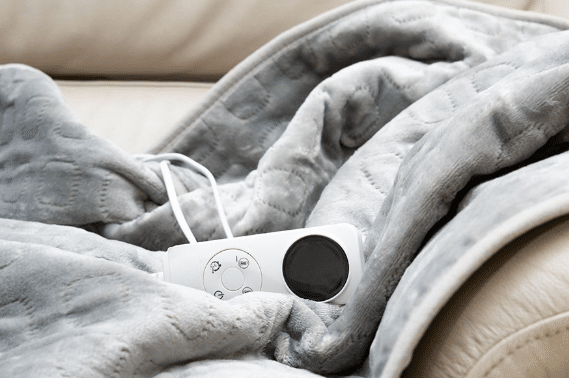
How many watts does an electric blanket use?
Electric blanket wattage may vary depending on settings and temperature conditions. Here is a general breakdown of wattage for different seasons:
SUMMER: During the warmer months, when less heat is needed, electric blankets typically consume about 50-100 watts on low settings.
MEDIUM: In the spring or fall, when temperatures are moderate, a medium setting may use around 100-150 watts.
WINTER: During cold winter months, the high setting may use about 150-200 watts to provide ample warmth.
EXTREME WINTER: In freezing conditions, the highest setting may be 200 watts or more to generate a lot of heat.
Keep in mind that these are rough estimates and actual wattage may vary depending on the specific model and brand of electric blanket. Always check the manufacturer’s information for accurate wattage details.
Cost of powering an electric blanket
The cost of using an electric blanket depends on its wattage, the amount of time it is used, and the local price of electricity. Here’s how to estimate the cost:
Calculate the cost of daily use: Multiply the wattage of your electric blanket by the number of hours you use it per day. Then divide by 1000 to convert watts to kilowatts. Finally, multiply by the cost of electricity (usually in cents/kWh) to get the daily cost.
Example: (150W × 6 hours)/1000 = 0.9 kWh
If electricity costs 15 cents/kWh: 0.9 kWh × 15 cents = $0.135
Calculate the monthly and yearly cost: Multiply the daily cost by the number of days you use the blanket per month, then multiply by 12 for the yearly cost.
Example: $0.135 × 30 days = $4.05 per month
Annual cost: $4.05 × 12 months = $48.60
We have estimated here, actual costs may vary. Using a programmable timer or a lower setting can help save money.
Frequently Asked Questions About Electric Blanket Wattage
1. What is the average energy consumption of an electric blanket?
A: The average power consumption of an electric blanket is about 100 to 150 watts. This means that it turns on about 100 to 150 watt-hours of electricity per hour. The exact amount may vary depending on how the blanket is set up. To calculate how long a portable power station can run an electric blanket, you can use this simple formula: operating time = station capacity * 0.85 / electric blanket wattage. 0.85 takes into account some energy loss during use.
2. How much electricity does an electric blanket consume?
A: The power of electricity is the amount of energy used or produced in a given period of time. It is measured in watts (W) and represents the rate at which energy is consumed or transferred. An electric blanket typically uses about 100 to 150 watts of power. This means it uses about 100 to 150 watt-hours of power per hour.
3. How much electricity does an electric blanket consume per hour?
A: Electric blankets usually use about 50 to 200 watts of power per hour, depending on their settings and size. Power usage may vary depending on factors such as the heat level of the blanket and the temperature of the room. It is important to check the manufacturer’s instructions or labeling to know the specific power consumption of your electric blanket.