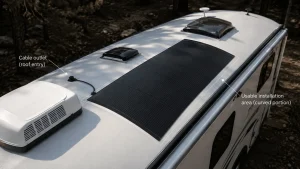




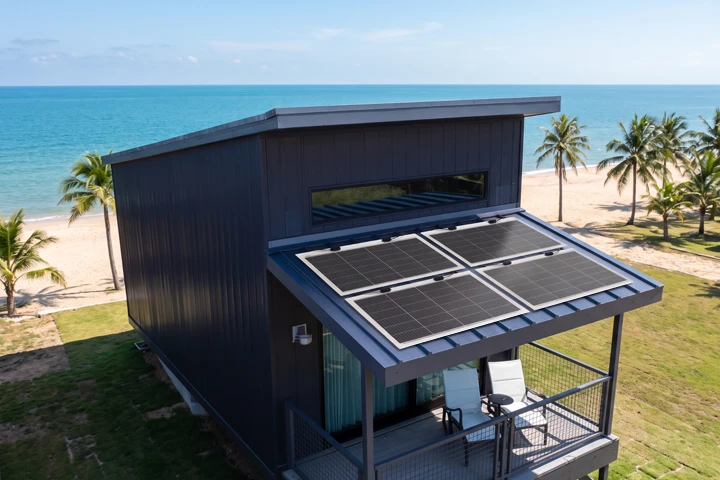
Flexible solar panels on EPDM roofs may be suitable for some low-slope roof applications, but direct bonding should never be assumed. The adhesive, roof membrane, heat path, drainage layout and future maintenance access all need to be reviewed before installation.
For a roof owner, the main concern is not simply whether the panel is lightweight. The more important questions are whether the installation could affect the EPDM membrane, create water-trapping areas, make the roof harder to inspect or cause the panel to run hotter than expected.
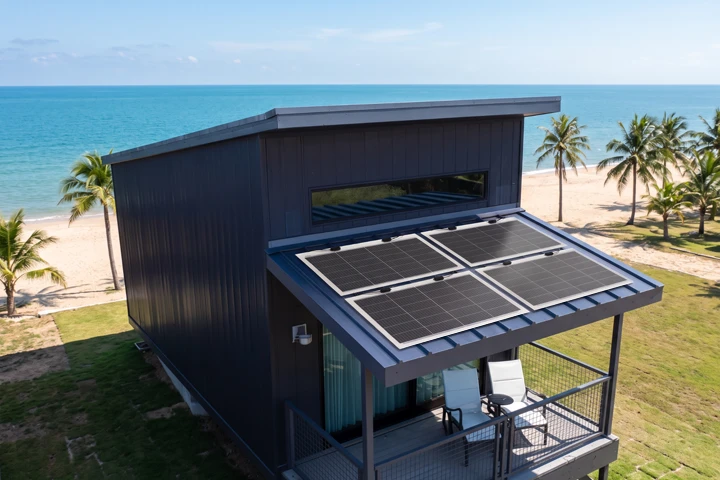
Key Takeaways for Flexible Solar Panels on EPDM Roofs
- Check solar panel roof membrane compatibility before selecting an adhesive.
- Do not treat full-surface bonding as the default installation method.
- Review heat dissipation and the need for a flexible solar panel air gap.
- Keep roof drains, overflow paths and maintenance routes clear.
- Plan for inspection, repair and panel replacement before installation.
Flexible Solar Panels on EPDM Roof Compatibility
Flexible solar panels may be considered for some EPDM and low-slope roof applications. The final decision depends on the roof membrane, panel construction, attachment method, wind exposure, drainage and maintenance requirements.
A lightweight panel does not automatically make every roof suitable. The complete installation has to work with the roof system rather than only fit the available surface.
| Installation question | Why it matters |
|---|---|
| Is the adhesive compatible with the EPDM membrane? | An unsuitable adhesive may affect bonding, the membrane surface or future repair work. |
| Will the panel be fully bonded or partly supported? | The attachment method affects heat, moisture, wind movement and service access. |
| Will water still flow to the roof drains? | Panels, cables and adhesive should not create avoidable water-trapping areas. |
| Can the roof be inspected later? | Direct bonding may make leak tracing, roof repair and panel replacement more difficult. |
Check Flexible Solar Panel Adhesive for EPDM
Adhesive selection is one of the first checks for flexible solar panel adhesive for EPDM applications. For flexible solar panels on EPDM roof projects, do not choose a product only because it is described as strong, waterproof or suitable for outdoor use.
The adhesive supplier and the EPDM membrane manufacturer should both be consulted. The panel backing layer and any primer may also affect the result. For general background on single-ply roof attachment methods, see this single-ply roofing attachment guide from GAF. The exact adhesive and roof warranty still need project-specific confirmation.
Before full installation, check:
- Whether the adhesive manufacturer lists EPDM as a compatible substrate;
- Whether a primer is required;
- Whether the panel backing needs surface preparation;
- Whether the bond can handle roof temperature changes;
- Whether the adhesive affects the roof warranty;
- Whether a small-area adhesion test is required.
A sample test is useful because the actual combination of EPDM membrane, primer, adhesive and panel backing may behave differently from a general product description.
For general thermal and bonding considerations, see our guide to flexible solar panel overheating solutions. EPDM compatibility still requires a separate project review.
Should Flexible Solar Panels Be Fully Bonded to EPDM?
Full bonding is not automatically the best option. It may create a clean, low-profile installation, but it can also reduce access below the panel and make heat and moisture management more difficult.
Depending on the roof and project requirements, the installation may use direct bonding after compatibility testing, controlled adhesive strips or beads, raised supports, a non-penetrating mounting structure or a removable installation method.
These methods are not interchangeable. A raised structure may improve airflow but increase wind exposure. A bonded panel may move less but become harder to remove. A removable system may improve maintenance access but require additional stability checks.
Do not assume that a small gap is always safer. The gap must also be compatible with wind exposure, waterproofing, cable routing and movement against the roof membrane.
Flexible Solar Panel Air Gap and Heat Management
A flexible solar panel installed close to a dark roof surface can become hot in strong sunlight. The actual result depends on the roof color, ambient temperature, airflow, panel construction and mounting method.
A flexible solar panel air gap or supported installation may help release heat from behind the panel. It is only useful when air can actually move through the space.
- Check whether the panel is fully sealed against the roof.
- Confirm whether air can enter and leave beneath the panel.
- Check whether adhesive beads block the intended air path.
- Leave practical clearance for cables and connectors.
- Prevent panel edges from rubbing against the membrane.
Heat management is not only about short-term power output. It also affects stress on the panel, adhesive and roof surface over time.
Solar Panel Drainage on a Low-Slope Roof
Drainage is one of the most important checks for solar panel drainage on a flat roof or low-slope EPDM roof. The layout should show how water moves across the roof, not only where the panels can fit.
Mark roof drains, scuppers, low points, overflow paths, roof edges, maintenance walkways and areas that must remain clear before installation.
Panels, cables and adhesive should not form a continuous barrier that redirects water toward a low point. Cables should also be secured without pressing them into drainage channels.
A panel can fit the roof dimensions and still create a maintenance problem if it blocks a drain or makes it difficult to locate a future leak. This is why flexible solar panels on EPDM roof layouts should be reviewed together with the roof drainage plan.
Leave Access for Roof and Panel Maintenance
EPDM roofs may require inspection or repair during the life of the building. The solar panel layout should leave a practical way to inspect the membrane, cable exits, junction boxes and panel edges.
- Can the roof drain be reached without walking on the panel?
- Can the cables and connectors be inspected?
- Can the panel be removed if the membrane needs repair?
- Will the installation make leak tracing more difficult?
- Are service routes around roof equipment still available?
Direct bonding may be suitable for some applications, but it can increase replacement difficulty. This should be considered before the first sample or installation method is approved.
What Information Should You Provide Before Installation?
A useful review needs more than the overall roof length and width. Provide the EPDM membrane type and roof age if available, a roof drawing or marked aerial photograph, roof slope and drainage locations, roof color and surface condition, obstructions and maintenance paths, target panel layout, proposed adhesive or mounting method, cable route, local wind and snow conditions, and roof warranty requirements.
This information helps determine whether the project should use direct bonding, a supported low-profile system, several smaller panels or another panel format.
When Should Direct Bonding Be Reconsidered?
Direct bonding should be reconsidered when membrane compatibility is unknown, the roof warranty does not allow the method, drainage is difficult to protect or there is no realistic way to inspect and replace the panel.
It may also be unsuitable when the roof has severe ponding, a damaged membrane, high wind exposure, complex thermal movement or frequent maintenance traffic.
In these situations, a non-penetrating or serviceable mounting method may be easier to review. The final decision should be based on the complete roof system, not only on panel weight.
FAQ About Flexible Solar Panels on EPDM Roofs
Can flexible solar panels be glued directly to an EPDM roof?
They may be suitable for some projects, but the adhesive, panel backing and EPDM membrane must be checked for compatibility. Roof warranty, drainage and future maintenance access should also be reviewed.
Do flexible solar panels need an air gap on an EPDM roof?
Not every project uses the same mounting method. An air gap may help with heat dissipation, but it must also be compatible with wind exposure, waterproofing, cable routing and roof access.
How do you prevent water from collecting around solar panels on a low-slope roof?
Keep roof drains, overflow paths and maintenance routes clear. The panel layout, adhesive pattern, supports and cable route should be reviewed together so they do not create avoidable water-trapping areas.
Final Thoughts
Flexible solar panels on EPDM roof applications may be practical in some projects, but low weight and a clean appearance are not enough to confirm suitability.
The main checks are membrane compatibility, adhesive testing, heat release, drainage, wind exposure and maintenance access. Reviewing these details before installation reduces the risk of creating a solar installation that is difficult to repair or manage later.