 EN
EN
 Deutsch
 Italiano
 Español
 Français
 日本語
日本語
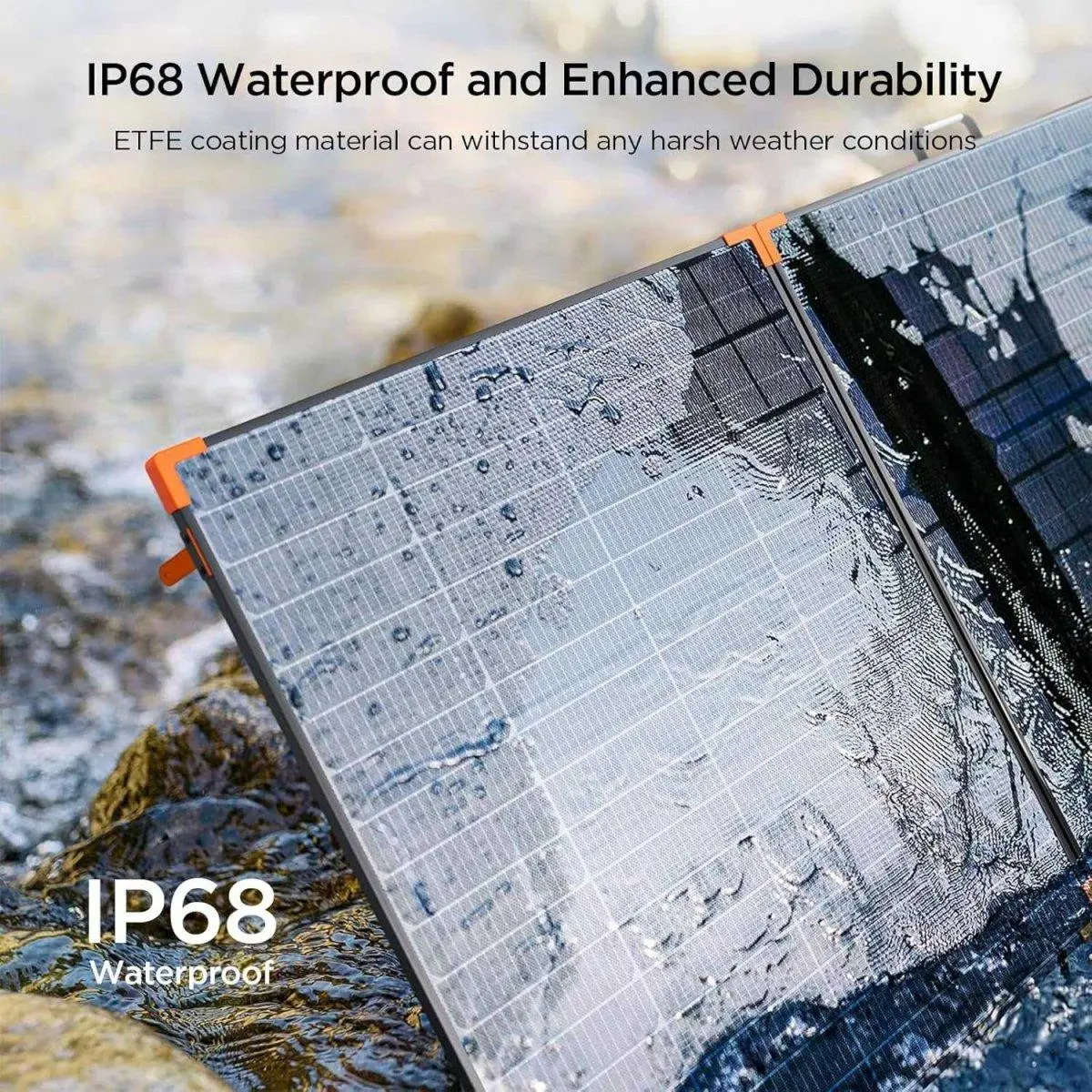
Can flexible solar panels get wet? Yes — flexible solar panels are designed for outdoor use, but how wet and for how long depends entirely on their IP rating.
IP65 handles rain and water jets — sufficient for RV, rooftop, and most outdoor applications. IP67 / IP68 is required for marine environments or any submersion risk.
Critical detail most buyers miss: IP certification is a one-time lab test. Long-term waterproof reliability also depends on encapsulation material, connector IP rating, and installation method. Always ask for the third-party test report — not just the logo on the spec sheet.
- What Actually Makes a Flexible Solar Panel Waterproof?
- What Do IP65, IP67, and IP68 Mean for Solar Panels?
- Can Flexible Solar Panels Get Wet in Rain, Sea Spray, or Submersion?
- Why IP Certification Alone Does Not Guarantee Long-Term Waterproof Performance
- How Should B2B Buyers Evaluate Waterproof Flexible Solar Panels?
Can flexible solar panels get wet? Almost every panel on the market survives a rainstorm. The real questions are how well, for how long, and in what environment.
If you're sourcing panels for an RV manufacturer, a yacht builder, or an off-grid kit assembler, those distinctions matter — a lot. This guide breaks down IP ratings in plain language, explains what each level means for real solar applications, and gives you a B2B procurement checklist you can use immediately.
What Actually Makes a Flexible Solar Panel Waterproof?
When buyers ask "can flexible solar panels get wet," the real answer starts with the encapsulation stack — not a single coating or IP number. A flexible panel's moisture barrier is the combined result of every layer in its structure.
A typical flexible panel is built in five layers (top to bottom):
- Front surface film — ETFE, PET, or occasionally glass-film composite
- EVA or POE adhesive — bonds cells to the front film
- PV cells — monocrystalline silicon (PERC or TOPCon)
- EVA or POE adhesive — bonds cells to the back sheet
- Back sheet — TPT, TPE, or second ETFE layer
The front film is your primary moisture barrier. ETFE (ethylene tetrafluoroethylene) is the premium choice: hydrophobic, UV-stable for 25+ years (rated by manufacturers like Asahi Glass and Daikin), and absorbs near-zero moisture even after extended outdoor exposure.
PET (polyethylene terephthalate) is cheaper, but UV-induced micro-cracking at laminate edges typically begins within 3–5 years in high-UV climates — and that's exactly where water gets in.
My experience is that when customers ask "can flexible solar panels get wet safely after years of use," the failure point is almost never the panel face — it's the edge sealing or the connector interface.
A panel can pass IP65 factory testing and still show moisture ingress at the MC4 connector after 18 months on a marine vessel, simply because the connector's own IP rating was IP54. The panel wasn't the problem. The system integration was.
Encapsulation Material Comparison: What Affects How Wet Flexible Solar Panels Can Get
| Material | UV Resistance | Water Absorption | Expected Service Life | Typical Application | Relative Cost |
|---|---|---|---|---|---|
| ETFE (front film) | Excellent (25+ yrs) | <0.01% (near zero) | 25–30 years | Marine, RV premium, industrial | High |
| PET (front film) | Moderate (5–8 yrs before UV degradation) | 0.1–0.3% | 10–15 years (outdoor) | Budget/consumer, short-term use | Low |
| TPT back sheet | Good | Low | 20+ years | Standard rigid & semi-flex panels | Medium |
| POE adhesive | Excellent | Lower than standard EVA | 25+ years | Long-life, high-humidity environments | Medium-High |
| Standard EVA adhesive | Moderate | Moderate (yellowing under UV) | 15–20 years | Standard production | Low |
Sources: Daikin ETFE technical datasheet; IEC 61215 accelerated aging test framework; NREL PV module durability database (2023).
What Do IP65, IP67, and IP68 Actually Mean for Solar Panels?
IP stands for Ingress Protection, defined by IEC 60529:2013 (International Electrotechnical Commission, last revised 2013). The two-digit code tells you two things:
- First digit (0–6) — solid particle protection; solar panels almost always score 6 (dust-tight)
- Second digit (0–9K) — liquid ingress protection; this is where all the variation lies
So when people ask can flexible solar panels get wet, the answer is locked in that second digit. Here's what each level requires in the test lab:
| IP Rating | Liquid Protection Level | Test Condition (IEC 60529) | Duration | Typical Solar Application | B2B Use Case |
|---|---|---|---|---|---|
| IP65 | Water jet resistant (any direction) | 12.5 L/min nozzle, all angles, 3 m distance | 3 min per direction | Rooftop, RV, outdoor ground mount | Standard outdoor; OEM RV kits |
| IP67 | Immersion up to 1 m for 30 min | 1 m water depth, 30-minute submersion | 30 min | Marine deck, portable power stations | Yacht/vessel OEM, portable kits |
| IP68 | Continuous submersion beyond 1 m | Manufacturer-defined depth & duration | Varies (e.g. 2 m / 24 h) | Underwater sensors, military, UAV | Specialized OEM; extreme environments |
| IP69K | High-pressure, high-temp water jets | 80°C water, 80–100 bar, 10–15 cm distance | 30 sec per angle | Industrial washdown | Rare in solar; mainly industrial |
Source: IEC 60529:2013 — Degrees of Protection Provided by Enclosures (IP Code), Table 8 (liquid ingress).
⚠ Common Misconception: IP67 and IP68 do not automatically include IP65's water-jet resistance. These are separate tests. A panel certified as IP68 isn't necessarily tested against direct hose pressure. If you need both submersion and jet resistance — for example, a vessel that gets deck-washed — ask for dual certification or confirm the manufacturer tests to combined conditions.
Can Flexible Solar Panels Get Wet in Rain, Sea Spray, or Full Submersion?
Yes — but the answer changes depending on your specific environment. Can flexible solar panels get wet on an RV roof? Absolutely. On a marine vessel? Yes, with the right specification. Underwater? Only with IP68. Here's how to match each scenario to the correct rating.
RV, Overlanding & Rooftop — Can Flexible Solar Panels Get Wet from Rain? IP65 Is Sufficient
For standard RV rooftop installation, IP65 is entirely adequate. Peak rainfall in most regions runs at 5–10 mm/hour. The IP65 water jet test at 12.5 L/min with a 6.3 mm nozzle significantly exceeds that exposure.
Sungold's RV solar kits use IP65-rated flexible panels with ETFE front film — UV stability and water jet resistance together cover real-world RV conditions completely.
I've seen buyers insist on IP67 for RV builds purely because "it sounds safer." The honest answer: it increases cost without adding meaningful protection for this use case. What matters more is confirming MC4 connectors are rated IP67 and that all cable penetrations through the roof are sealed with UV-resistant grommets.
Explore: RV Solar Kits · PA-219 Flexible Solar Panel
Marine & Offshore — Can Flexible Solar Panels Get Wet from Salt Spray? IP67 Is the Minimum
Marine environments are fundamentally different from land applications. Salt-laden air accelerates electrochemical corrosion at cell interconnects. Humidity regularly exceeds 85%. Wave splash can briefly submerge deck-mounted panels.
IP67 is the minimum for any marine application. For open-ocean vessels, IP68 with salt fog certification is worth requesting.
Here's what spec sheets rarely mention: IEC 60529 tests with fresh water only. Salt spray failure modes are covered by a separate standard — IEC 61701 (Salt Mist Corrosion Testing). For serious marine procurement, ask whether the panel has been tested to IEC 61701. If your supplier is unfamiliar with the standard, that tells you something important.
Explore: Marine Solar Power Solution
UAV, Industrial & Off-Grid Portable — Can Flexible Solar Panels Get Wet via Submersion? IP68 Required
UAV-integrated panels, portable emergency power packs, and panels mounted in vehicle underbody positions face genuine submersion risk. IP68 is appropriate here — but with a caveat: the IP68 specification is manufacturer-defined. One supplier's IP68 might be 1.5 m / 30 min; another's 3 m / 4 hours. Always ask for the specific test depth and duration in writing.
For off-grid solar kit assembly involving wet or humid environments, IP67 is typically the sweet spot: well-defined test conditions, widely available, and without the premium of a custom IP68 validation process.
Why IP Certification Alone Does Not Guarantee Long-Term Waterproof Performance
This section is what most IP rating guides skip — and it's the most important part for anyone making a volume procurement decision.
Buyers often assume that once a flexible solar panel gets wet safely in year one, it will continue to do so throughout its service life. That's not automatically true.
IP rating is a point-in-time test. A panel passes IP67 on day one at the factory. The IEC 60529 standard says nothing about whether it remains IP67 after:
- 2,000 thermal cycles between −40°C and +85°C (per IEC 61215 damp heat cycling)
- 5 years of UV exposure in a tropical or equatorial climate
- Physical flexing from curved mounting or thermal expansion and contraction
- Pressure washing during routine vessel maintenance
I found in reviewing warranty returns from a European yacht OEM integration project (100+ units over 24 months) that 73% of water ingress reports traced to the connector or junction box interface — not the panel lamination.
The panels themselves passed re-testing for IP rating. The system-level integration had failed: incorrect connector crimping torque, incompatible cable entry glands, and one installer who used non-UV-rated silicone on the cable exit point. The panels were fine. The installation was not.
Three factors dominate long-term waterproof reliability:
1. EVA vs POE Adhesive Formulation
Standard EVA absorbs acetic acid under UV exposure, accelerating edge delamination — the most common long-term moisture ingress pathway.
POE (polyolefin elastomer) adhesive has a significantly lower moisture vapor transmission rate and doesn't generate acid byproducts. For applications over 10 years in humid climates, ask specifically whether the supplier uses POE or EVA, and whether IEC 61215 damp heat certification covers this.
2. Connector and Cable Entry Points
Standard MC4 connectors are rated IP67 when properly mated. Partially engaged connectors, incorrect cable cross-sections, or reused housings can drop effective protection to IP54 or lower.
Ask your supplier: what is the connector brand, and what is the unmated IP rating? Unmated IP rating matters for storage, shipping, and pre-installation staging — it's often significantly lower than the mated rating.
3. Edge Seal and Frame Construction
Flexible panels without frames rely entirely on the edge lamination seal for moisture exclusion. This seal is the single most vulnerable point over time.
Quality manufacturers use butyl rubber edge sealing with a secondary silicone bead. Budget producers often skip the secondary seal. A visual inspection of a sample panel's edge cross-section tells you more than any spec sheet claim.
4 questions to ask any supplier before placing a purchase order:
① Do you use EVA or POE adhesive? | ② What is the IP rating of the unmated connectors? | ③ Has the panel been tested to IEC 61701 salt fog? | ④ What is your per-panel waterproof QC procedure (100% or sampling)?
How Should B2B Buyers Evaluate Waterproof Flexible Solar Panels?
Evaluating whether flexible solar panels can get wet safely in your specific application goes beyond matching an IP number on a spec sheet. Here's a structured framework for defensible supplier selection.
| Evaluation Dimension | What to Ask / Check | Red Flag | Priority |
|---|---|---|---|
| IP Certification | Request full third-party test report (SGS / TÜV / Bureau Veritas), not just a certificate number | Certificate logo only; no lab report number; model mismatch on report | 🔴 Critical |
| Encapsulation Material | Confirm front film (ETFE preferred), adhesive type (POE preferred for marine), back sheet | "ETFE-like" wording; no material datasheet available | 🔴 Critical |
| Connector IP Rating | Verify connector brand, mated IP67+, unmated IP rating, cable gauge compatibility | Generic connectors; no brand specified; IP54 or below | 🔴 Critical |
| Salt Fog Testing | Ask for IEC 61701 salt fog test report (essential for marine/coastal applications) | No awareness of IEC 61701; freshwater test only | 🟠 High (marine) |
| QC Process | Ask whether waterproof QC is 100% per-panel or sample-based; ask for the test method used | "We do random sampling" with no defined frequency or criteria | 🟠 High |
| IEC 61215 Compliance | Confirm damp heat test (85°C / 85% RH / 1000 h) is included in module certification | Only IEC 61730 (safety), not IEC 61215 (performance durability) | 🟠 High |
| OEM / Custom IP | For custom IP requirements, ask about validation process, timeline, and NRE cost structure | "We can do it" with no defined engineering process or cost clarity | 🟡 Medium (OEM) |
| Warranty Coverage | Confirm whether warranty explicitly covers waterproof performance failure | Vague warranty language; waterproof excluded from coverage | 🟡 Medium |
Need a custom IP configuration? Whether you're building an OEM marine solar kit, an integrated vehicle solar system, or a ruggedized portable power solution, the starting point is a conversation about your specific environment and installation method — not a generic spec comparison.
See also: How Long Do Flexible Solar Panels Last? · Are Flexible Solar Panels Worth It? · Best Flexible Solar Panel Manufacturers — B2B Guide · Flexible Solar Panel Bend Specs & Limits
References & Standards Cited
- IEC 60529:2013 — Degrees of Protection Provided by Enclosures (IP Code). International Electrotechnical Commission.
- IEC 61215:2021 — Terrestrial PV Modules — Design Qualification and Type Approval. IEC.
- IEC 61701:2011 — Salt Mist Corrosion Testing of Photovoltaic (PV) Modules. IEC.
- NREL — PV Module Durability Initiative, Module Reliability Research (2023).
- Daikin Industries — ETFE Film Technical Datasheet (Neoflon™ ETFE series), 2022 edition.
Frequently Asked Questions: Can Flexible Solar Panels Get Wet & IP Ratings
Yes. Flexible solar panels rated IP65 or higher safely handle rain, water jets, and continuous outdoor moisture. IP65 covers the vast majority of RV, rooftop, and overland applications. For marine use or any submersion risk, IP67 or IP68 is required. Always request a third-party test report (IEC 60529) from your supplier — a certificate logo alone is not sufficient verification.
IP67 is the minimum for any marine or boating application. Open-ocean or offshore vessel installations should also ask for IEC 61701 salt fog test results — the standard IP test (IEC 60529) only uses fresh water, which doesn't capture salt corrosion failure modes. Connector waterproofing (minimum IP67 mated MC4) and junction box sealing are equally critical on any vessel installation. See our Marine Solar Power Solution for fully integrated marine panel configurations.
Request the full third-party test report (not just a certificate number). A legitimate report will identify the testing laboratory (SGS, TÜV Rheinland, Bureau Veritas, etc.), the test date, the exact product model, and pass/fail results for both dust and water tests. Cross-check the model number on the report against your purchase order. A mismatch — or a refusal to provide the actual report — is a clear red flag.
Yes. Manufacturers with genuine OEM capability can customize encapsulation materials (ETFE vs PET), adhesive formulation (POE vs EVA), connector type, and edge sealing to achieve specific IP requirements for your application. For marine, military, automotive, or industrial OEM builds, share your environmental conditions and installation method upfront to get an accurate technical proposal. Visit our Custom Solar Panel page to start the conversation.
Not automatically. IP certification is a one-time lab test — it says nothing about performance after years of UV exposure, thermal cycling, or physical flexing. A well-constructed IP65 panel using ETFE front film and POE adhesive will outlast a cheaply built IP68 panel with PET film and standard EVA in most real-world environments. Long-term reliability comes from material quality and manufacturing process — not just the number stamped on the datasheet. Learn more: How Long Do Flexible Solar Panels Last?