 EN
EN
 Deutsch
 Italiano
 Español
 Français
 日本語
日本語
What Does an Inverter Do in an Off-Grid System, and How Does It Work?
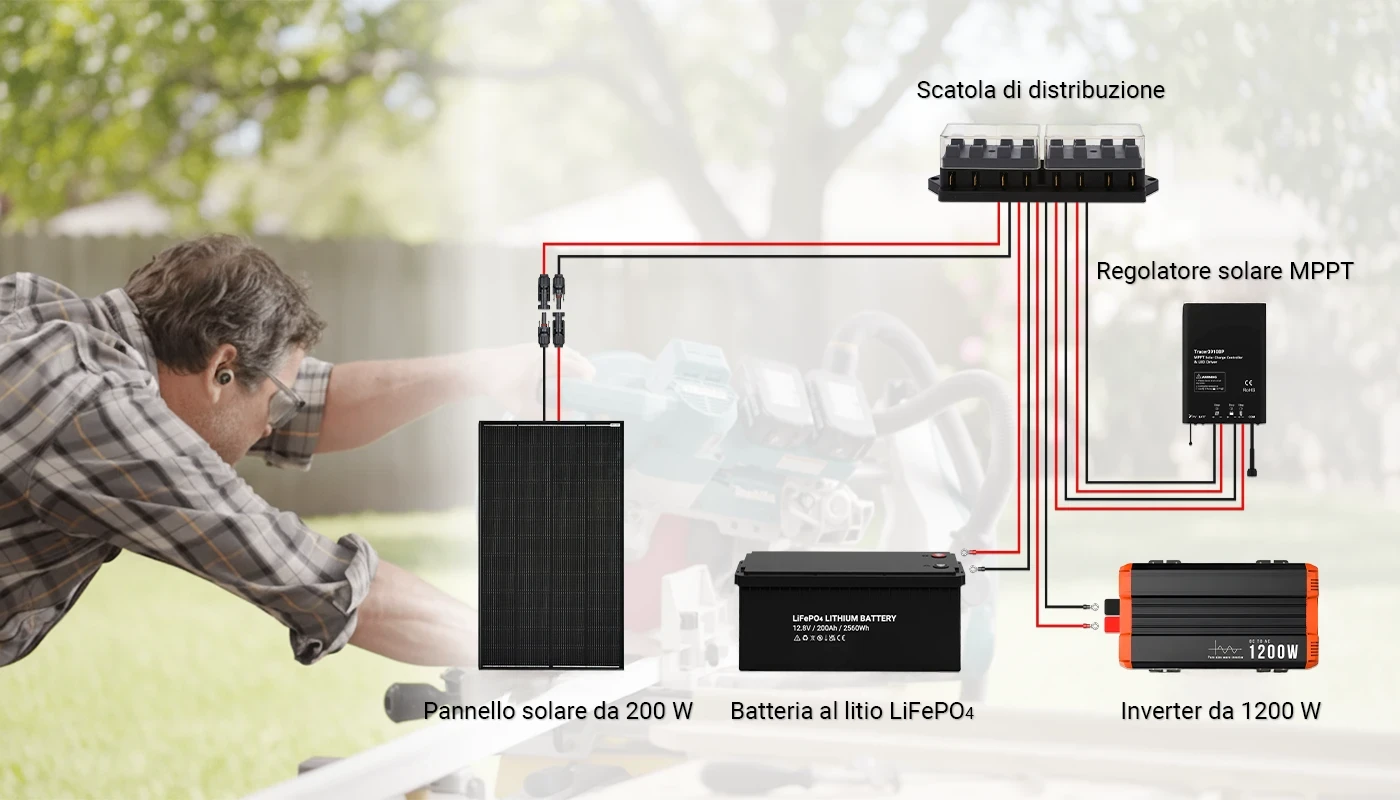
In the rapidly evolving landscape of renewable energy, off-grid solar systems have transitioned from niche applications to essential infrastructure for remote telecommunications, mobile living (RVs/Marine), and independent industrial power. While solar panels capture the sun’s energy, the inverter acts as the “brain” and “heart” of the system.
At Sungold, with 18 years of manufacturing expertise in non-standard component engineering, we understand that an inverter is not just a converter; it is the critical link that determines the stability, efficiency, and longevity of your off-grid power solution.
1. The Core Function: Bridging the Gap Between DC and AC
The primary role of an inverter in an off-grid system is the conversion of Direct Current (DC) into Alternating Current (AC).
Solar panels generate DC power, and batteries store energy in the same form. However, the vast majority of modern electronics—from household appliances to high-precision industrial equipment—operate on AC power (typically 110V or 230V). Without a high-performance inverter, the energy harvested by your panels remains “trapped” in a form unusable by standard equipment.
The Difference in Off-Grid Requirements
Unlike grid-tied systems, off-grid inverters must be capable of “Black Start” capabilities and must manage their own frequency and voltage stability without the reference of a utility grid. This requires superior internal architecture and robust thermal management.
2. How Does an Off-Grid Inverter Work? The Technical Mechanism
Understanding the internal mechanics of an inverter helps project managers and engineers specify the right components for complex SME applications.
Step 1: Voltage Stepping (The DC-to-DC Stage)
The low-voltage DC from the battery bank (usually 12V, 24V, or 48V) must first be increased to a level high enough to create the target AC voltage. This is achieved through high-frequency switching and transformers.
Step 2: Inversion via H-Bridge
The heart of the process involves a circuit known as an H-Bridge. By using power transistors (typically MOSFETs or IGBTs) to switch the direction of the DC current back and forth hundreds of times per second, the inverter creates a pulse-width modulated (PWM) wave that simulates an alternating pattern.
Step 3: Pure Sine Wave Filtering
Cheaper inverters produce a “Modified Sine Wave,” which is blocky and can damage sensitive electronics. For professional-grade systems, a Pure Sine Wave Inverter is mandatory. It uses advanced filters (inductors and capacitors) to smooth the jagged pulses into a clean, continuous wave that is often more stable than the power supplied by a traditional utility grid.
3. Beyond Conversion: The Four Essential Roles of a Modern Inverter
In a sophisticated off-grid setup, the inverter performs multiple tasks simultaneously:
I. Load Management and Surge Protection
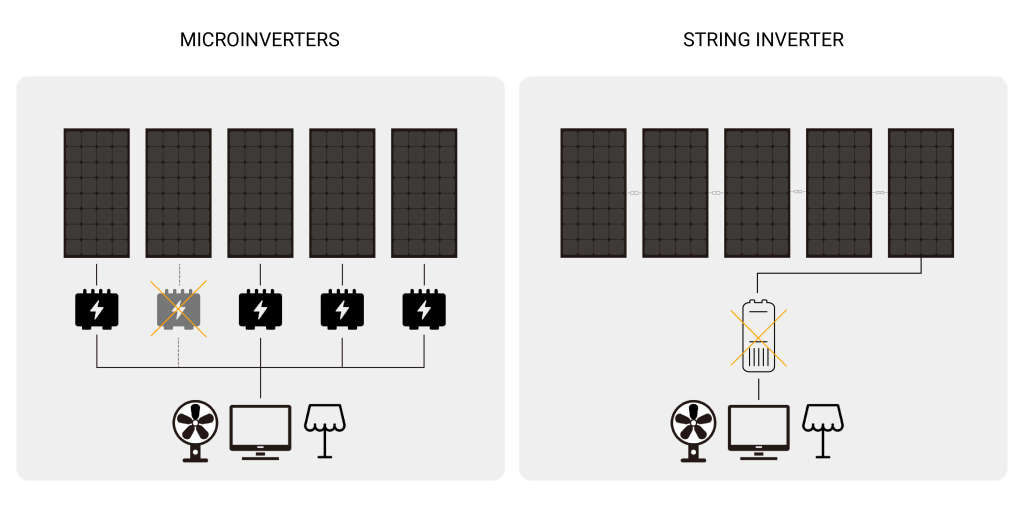
Appliances with motors, such as refrigerators or power tools, require a “surge” of power to start. A high-quality inverter must provide a peak power rating (often double its continuous rating) to handle these inductive loads without tripping.
II. System Monitoring and Safety
Modern inverters monitor voltage levels, frequency, and temperature. They act as a safety gate, shutting down the system in the event of a short circuit, over-voltage, or thermal overload, protecting both the battery bank and the connected appliances.
III. Battery Health Optimization
Many off-grid inverters now integrate “Inverter-Charger” capabilities. They can communicate with the Battery Management System (BMS) to ensure that the discharge depth is maintained within safe limits, significantly extending the lifecycle of the power storage unit.
IV. Grid/Generator Integration (Hybrid Functionality)
For many SME applications, the inverter acts as a transfer switch. If the solar harvest is insufficient and the batteries run low, the inverter can automatically start a backup generator or bridge to a local microgrid.
4. Why Material Engineering Matters: The Sungold Advantage
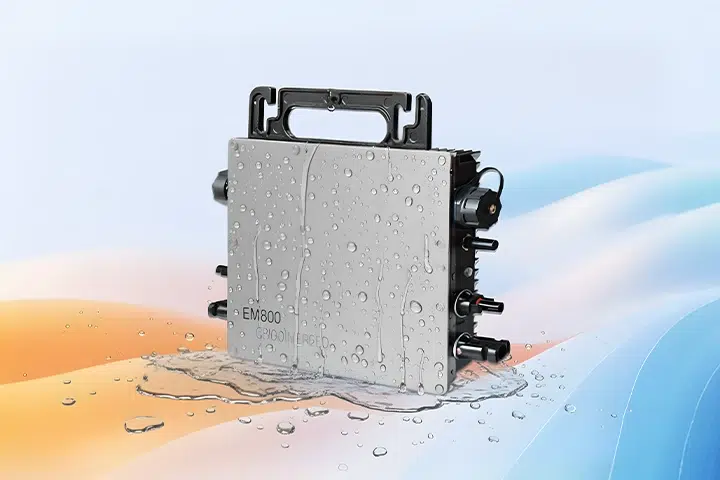
When designing off-grid systems for harsh environments—such as marine applications or high-salt coastal areas—the durability of the inverter and its surrounding components is paramount.
At Sungold, we specialize in non-standard component manufacturing. Our integration philosophy emphasizes:
-
Thermal Conductivity: Ensuring that the heat generated during the DC-AC conversion is dissipated efficiently to prevent derating in hot climates.
-
Salt Spray Resistance: For systems near the ocean, internal components must be treated to prevent corrosion (IEC 61701 standards).
-
Mechanical Integrity: Just as our panels are tested for 5400 Pa loads, we advocate for inverters with robust housings that can withstand the vibrations of mobile RV or industrial environments.

5. Choosing the Right Inverter for Your SME Project
When specifying an inverter for an off-grid project, consider the following technical metrics:
| Feature | Requirement for Professional Systems | Why It Matters |
| Waveform | Pure Sine Wave | Essential for medical equipment, motors, and laptops. |
| Efficiency | >93% | Minimizes energy loss during conversion. |
| Idle Consumption | <15W | Prevents the inverter from draining the battery when no load is active. |
| IP Rating | IP65 (for outdoor/marine) | Protection against dust and water ingress. |
6. Conclusion: The Foundation of Energy Independence
The inverter is far more than a simple converter; it is the orchestrator of your off-grid energy ecosystem. By selecting a high-efficiency, pure sine wave inverter, you ensure that your investment in solar panels and batteries delivers reliable, utility-grade power anywhere in the world.
As a B2B OEM/ODM partner with nearly two decades of manufacturing depth, Shenzhen Sungold Solar Co., Ltd. remains committed to providing the technical components and expertise needed to power the next generation of off-grid innovation. Whether you are building smart agricultural systems or marine-grade power solutions, understanding the “how” behind your inverter is the first step toward true energy independence.