 EN
EN
 Deutsch
 Italiano
 Español
 Français
 日本語
日本語
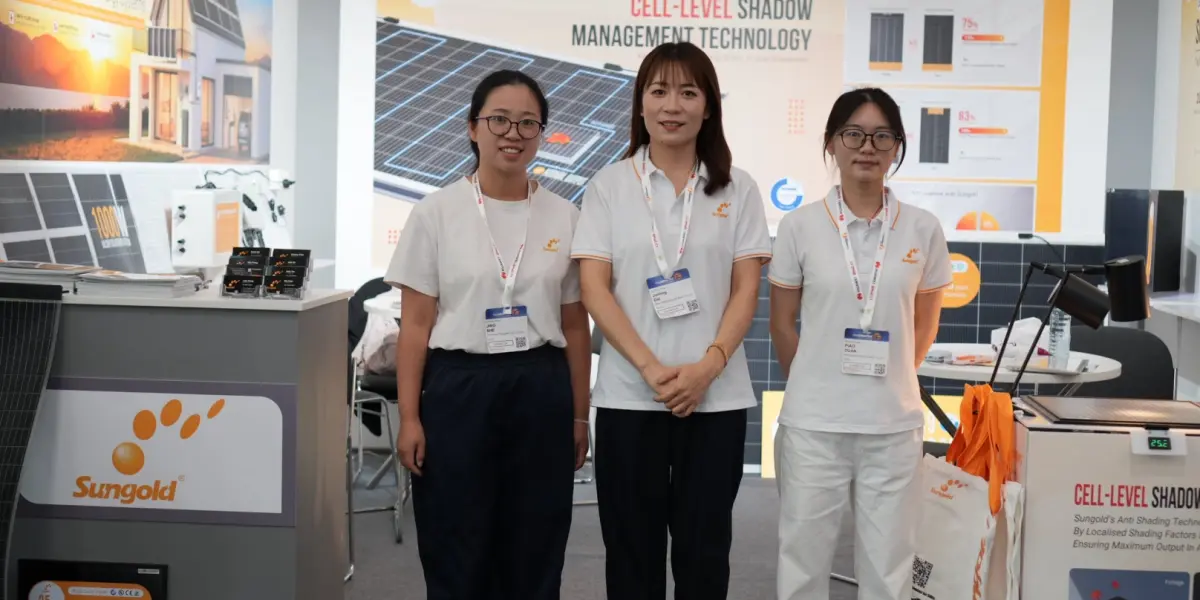
Munich, Germany, June 26, 2026 – Sungold Solar has concluded its participation at Intersolar Europe 2026, held from June 23 to 25 at Messe München. During the three-day exhibition, the company welcomed distributors, OEM/ODM customers, system integrators, installers and project professionals at Hall A1, Booth A1.730A.
The exhibition gave Sungold Solar an opportunity to present its latest application-oriented solar module solutions, including anti-shading solar technology, PA219 flexible solar panels, PA621 lightweight solar panels, high-efficiency BC module options and customized solar modules for RV, balcony, marine and off-grid applications.
Rather than focusing only on solar panels as stand-alone products, many booth discussions centered on how modules should fit into real systems: available roof space, installation surface, battery voltage, cable routing, structural load, shading conditions, certification planning and OEM production requirements.
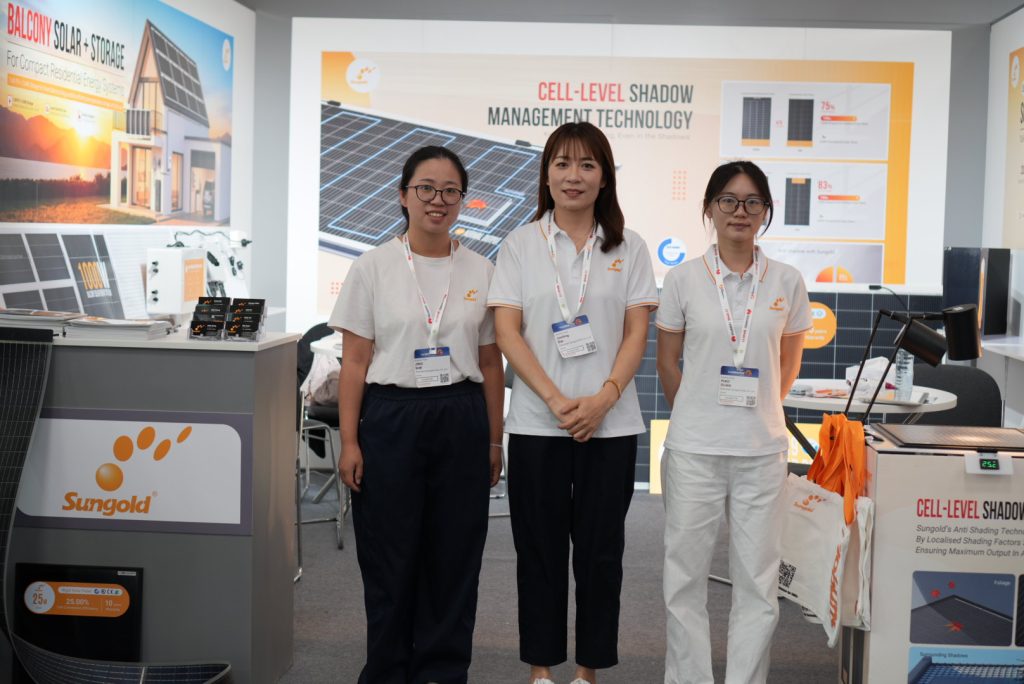
Meeting Global Solar Partners in Munich
Throughout the exhibition, Sungold Solar met with long-term partners and new visitors from Germany, France, Italy, Spain, the Netherlands, the United Kingdom and other European markets. Many conversations began with a specific application rather than a standard wattage request.
Some visitors shared project drawings, product dimensions, target system voltages, mounting restrictions or local market requirements. These details helped the Sungold Solar team move from general product introduction to practical technical discussion.
The company appreciates every customer and industry professional who visited the booth and shared project feedback. These conversations help Sungold Solar better understand how solar modules are being integrated into vehicles, balconies, lightweight roofs, portable equipment and specialized off-grid products.
Products and Technologies That Drew Attention
Anti-Shading Solar Technology
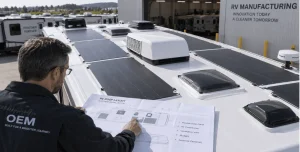
Partial shading remains a practical challenge in compact solar installations. On RV roofs, shadows may come from air-conditioning units, roof vents, antennas or luggage racks. Balcony railings, nearby buildings and other obstacles can create similarly irregular shading conditions.
At Intersolar Europe 2026, Sungold Solar presented its anti-shading approach, which uses segmented cell areas, multi-branch circuit design and enhanced bypass-diode configurations to help reduce the impact of local shading on the rest of the module.
For these applications, module design should be evaluated together with panel orientation, obstacle position, available area and system voltage. Sungold Solar can support customers through customized electrical layouts and module configurations for project-specific requirements.
PA219 Flexible Solar Panels
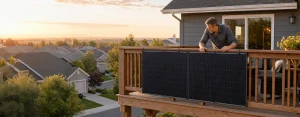
The PA219 flexible solar panel series drew attention from customers working with curved roofs, vehicle bodies, balcony structures and other surfaces where framed glass modules may not be suitable.
For B2B projects, the value of a flexible solar panel is not only low weight or bendability. Integration often depends on whether the module can match an existing product envelope, mounting area or cable path. Visitors therefore asked about customized dimensions, output ranges, junction-box positions, cable lengths, connector options, mounting details and appearance requirements.
Sungold Solar’s customization process may include drawing review, electrical configuration, material selection, sample development and application testing before a design moves toward volume production.
PA621 Lightweight Solar Panels
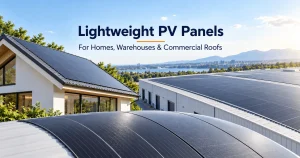
The PA621 lightweight solar panel series addressed another recurring concern from visitors: adding solar generation without placing unnecessary load on the supporting structure.
This is relevant for RV and commercial-vehicle roofs, balcony mounting systems, lightweight buildings and mobile equipment. Customer discussions focused on the balance between module weight, mechanical construction, mounting method and long-term use conditions.
Sungold Solar does not position lightweight panels as a universal replacement for glass modules. The appropriate structure depends on the roof material, load limits, wind exposure, attachment method and service environment. For this reason, project evaluation remains an important step before final module selection.
BC Module Options for Space-Constrained Projects
High-efficiency BC cell and module options also attracted interest, especially from customers working with limited installation area and demanding output targets.
The displayed solutions showed how BC cell technology may be combined with different module structures according to the application. Visitors also noted the clean front appearance of back-contact designs, which can be important when the module is visible as part of a branded product or architectural installation.
Cell efficiency alone does not determine system performance. Final output also depends on module construction, active area, temperature, orientation, shading and electrical design. For project buyers, the more useful question is how a BC-based module can be configured to meet a specific size, power and installation target.
Market Feedback from the Exhibition
The conversations in Munich reinforced several practical observations about the European solar market.
Weight and installation convenience are becoming more important in distributed applications. Customers are evaluating not only rated power, but also how a module will be transported, handled, mounted and integrated into an existing structure.
OEM buyers also expect solar module manufacturers to support non-standard dimensions and electrical requirements. Voltage, current, cable exit, connector type, mounting points, surface material and packaging can all influence whether a product is suitable for a customer’s platform.
Space-limited RV, balcony and off-grid installations require closer attention to shading, wiring and layout. A technically suitable module is not simply the one with the highest rated power; it is the one that fits the available area and remains compatible with the wider system.
Visitors also emphasized documentation, certification planning, quality consistency, manufacturing transparency and supply reliability. These points reflect booth discussions and project feedback from the exhibition, rather than statistical claims about the broader market.
From Exhibition Conversations to Manufacturable Projects
After Intersolar Europe 2026, Sungold Solar will continue following up with customers who shared project requirements at the booth.
For each relevant inquiry, the first step is to clarify the application: available dimensions, target power, operating voltage, installation surface, expected shading, environmental exposure, cable routing and required documentation. The engineering team can then evaluate suitable module structures, cell layouts, materials, junction-box positions and connection methods.
Where customization is required, the process may continue through drawing confirmation, sample development, testing and production assessment. Packaging, branding and delivery requirements can also be reviewed for OEM and distributor projects.
This project-based workflow reflects Sungold Solar’s role as a solar module customizer for B2B customers. Since 2008, the company has developed and manufactured application-oriented solar modules for brands, distributors, system integrators and OEM customers that need more than an off-the-shelf panel.
Thank You for Meeting Sungold Solar in Munich
Sungold Solar thanks every customer, partner and industry professional who visited Booth A1.730A, as well as the organizers and team members who supported the exhibition.
Intersolar Europe 2026 has ended, but the technical conversations started in Munich will continue. Companies developing RV, marine, balcony, portable or specialized off-grid solar products are welcome to contact the Sungold Solar team to discuss specifications, drawings, samples and OEM requirements.
Next Stop: CARAVAN SALON DÜSSELDORF 2026
Sungold Solar’s next exhibition in Germany will be CARAVAN SALON DÜSSELDORF 2026, taking place from August 28 to September 6 at Messe Düsseldorf. The team is scheduled to exhibit in Hall 13, Booth 13D52, with a stronger focus on solar integration for motorhomes, caravans, commercial vehicles and mobile energy applications.
The Düsseldorf event will provide another opportunity to examine lightweight, flexible and anti-shading module concepts in the context of vehicle roofs and OEM development. Sungold Solar looks forward to continuing the conversations that began in Munich and meeting new partners working on mobile solar products.
Source Note
Request a Project-Specific Solar Panel Review
Intersolar Europe 2026 exhibition dates are referenced from the official Intersolar Europe website.