 EN
EN
 Deutsch
 Italiano
 Español
 Français
 日本語
日本語
Quick Answer
Most electric water heaters operate at 240V and draw between 12.5 and 22.9 amps depending on tank size. A standard 40-gallon electric water heater (4500W at 240V) draws approximately 18.8 amps. Portable and smaller water heaters (120V) typically draw 8.3–16.6 amps. The core formula is simple: Amps = Watts ÷ Volts.
For off-grid solar installations, understanding these amp ratings is the first step in correctly sizing the solar array, battery bank, and inverter needed to deliver reliable hot water without grid power. This guide covers the numbers, the sizing method, and the solar panel options available for different off-grid heating scenarios.
Key Takeaways
- Small and portable water heaters (10–20 gallon, 120V) consume 1000–2000W and draw 8.3–16.6 amps — manageable for temporary off-grid setups.
- Standard residential water heaters (30–50 gallon, 240V) draw 12.5–22.9 amps at 3000–5500W. A 40-gallon tank requires a 30-amp breaker.
- Tankless water heaters need 15–25 amps at 120V for small models and 25–50A at 240V for high-flow units — a critical consideration for off-grid system design.
- Water heaters have no startup surge — unlike motors, resistive heating elements draw consistent current from the moment they turn on, simplifying inverter sizing.
- For permanent off-grid water heating, a properly designed solar panel and battery bank system significantly outperforms off-the-shelf portable power stations in both cost per kWh and long-term reliability.
How Many Amps Does a Water Heater Use?
Understanding Amps, Volts, and Watts
Before diving into off-grid system design, it helps to understand the three electrical units that determine how much power a water heater needs:
Amps (Amperage) — The flow rate of electric current. Water heater amps typically range from 8 to 25 amps, depending on size, type, and operating voltage.
Amps = Watts ÷ Volts
Volts (Voltage) — The electrical pressure or potential difference. Most residential water heaters operate at 240V, while smaller portable units run on 120V.
Volts = Watts ÷ Amps
Watts (Power) — The rate of energy consumption. Water heater wattage ranges from 300W (solar water heaters) to 5500W (large 50-gallon electric tanks) and even higher for tankless units.
Watts = Volts × Amps
Water Heater Amps by Type and Capacity
Different water heater types draw different amounts of current. The table below shows typical values for the most common configurations, including the off-grid scenarios where each type is most practical.
| Water Heater Type | Wattage | Amps @ 120V | Amps @ 240V | Best Off-Grid Scenario |
|---|---|---|---|---|
| Solar Water Heater | 300–600W | 2.5–5.0A | — | Off-grid cabin, eco-lodge |
| Heat Pump Water Heater | 500–1500W | 4.1–12.5A | — | Energy-efficient off-grid home |
| Portable Water Heater | 1000W | 8.3A | — | Camping, RV, field ops |
| Tankless (Small, 120V) | 1500–3000W | 12.5–25A | — | Tiny home, van life |
| Electric Tank (30 Gal) | 3000–3500W | — | 12.5–14.5A | Off-grid cabin, small home |
| Electric Tank (40 Gal) | 4000–4500W | — | 16.6–18.7A | Standard off-grid home |
| Electric Tank (50 Gal) | 5000–5500W | — | 20.8–22.9A | Large off-grid home |
| Tankless (240V, High GPM) | 6000–12,000W | — | 25–50A | Commercial off-grid; often not recommended for standard off-grid due to high power draw |
Note: Values are typical ranges. Actual amp draw depends on the specific model, heating element configuration, and thermostat settings. Always consult the manufacturer’s label for exact specifications.
Startup vs. Running Current
Unlike air conditioners, refrigerators, and other motor-driven appliances, water heaters do not draw surge current at startup. Resistive heating elements draw the same current from the moment they turn on. This simplifies off-grid system design because the inverter only needs to handle the heater’s rated (continuous) wattage, not a startup spike.
For example, a 4500W water heater operating at 240V draws a steady 18.8 amps continuously until the thermostat shuts off the heating element — no surge, no peak. This predictable load profile makes water heaters one of the easier high-power appliances to model when sizing an off-grid solar system.
How to Size a Solar System for Off-Grid Water Heating
For off-grid installations, a water heater is often one of the largest loads in the system — frequently exceeding the combined draw of lights, refrigeration, and electronics. Getting the sizing wrong can mean running out of hot water mid-shower or, worse, damaging batteries through deep discharge cycling.
Proper sizing requires three calculations: daily energy needs, battery capacity, and solar array wattage. Here is the step-by-step method professional off-grid installers use to get it right the first time.
Step 1: Calculate Daily Energy Needs
Start by determining how much energy the water heater consumes per day:
Daily Energy (Wh) = Water Heater Wattage × Daily Operating Hours
Example: A 40-gallon electric water heater rated at 4500W, used for 3 hours per day:
4,500W × 3 hours = 13,500 watt-hours (13.5 kWh) per day
In practice, water heaters cycle on and off rather than running continuously. The “daily operating hours” figure should be based on the total time the heating elements are actually energized — typically 2–4 hours per day for a standard household, depending on usage patterns and water temperature rise requirements.
Installer Tip
For off-grid projects, always size for the worst-case scenario (winter with colder incoming water temperature and fewer daylight hours). Oversizing by 20–30% prevents customer complaints during the coldest months when water heating demand is highest and solar generation is lowest.
Step 2: Size the Battery Bank
The battery bank must store enough energy to power the water heater during periods without sunlight (overnight, overcast days):
Battery Capacity (Wh) = Daily Energy × 1.2 (efficiency buffer)
Example: 13,500 Wh × 1.2 = 16,200 Wh (16.2 kWh)
Converting to amp-hours at 12V: 16,200 Wh ÷ 12V = approximately 1,350 Ah (at 48V: 338 Ah).
For off-grid water heating, LiFePO4 batteries are strongly recommended due to their higher depth of discharge (DoD), longer cycle life, and better charge acceptance compared to lead-acid or AGM batteries. A LiFePO4 bank also eliminates the risk of sulfation from partial state-of-charge operation — a common issue with water heaters that cycle on and off throughout the day and night.
Step 3: Size the Solar Array
The solar array must generate enough energy daily to recharge the battery bank and simultaneously supply power during daylight hours:
Solar Array (W) = Battery Capacity ÷ Peak Sun Hours ÷ System Efficiency
Example: 16,200 Wh ÷ 4 peak sun hours ÷ 0.75 efficiency = 5,400W of solar panels
Peak sun hours vary significantly by location. Phoenix, Arizona averages 6+ hours, while Seattle averages closer to 3.5 hours. For European installations, northern Germany may see 2.5 hours in winter, while southern Spain can see 5+ hours year-round.
The table below provides quick-reference sizing for common water heater types.
| Water Heater Type | Daily Use (hrs) | Daily Energy (Wh) | Min Battery (Ah @ 12V) | Min Solar Array (W)* |
|---|---|---|---|---|
| Portable (1000W) | 1–2 | 1,000–2,000 | 100–200 | 300–700 |
| Heat Pump (1500W) | 2–3 | 3,000–4,500 | 300–450 | 1,000–1,500 |
| Electric 30 Gal (3,000W) | 3 | 9,000 | 900 | 3,000 |
| Electric 40 Gal (4,500W) | 3 | 13,500 | 1,350 | 4,500 |
| Electric 50 Gal (5,500W) | 3 | 16,500 | 1,650 | 5,500 |
* Based on 4 peak sun hours and 0.75 system efficiency. Adjust for your specific location.
Portable Power Stations vs. Solar Panel + Battery Systems
Many off-grid users initially consider a portable power station (like those from Jackery, EcoFlow, or Bluetti) paired with foldable solar panels as a quick solution for water heating. While these all-in-one units work well for small electronics and basic appliances, they have significant limitations when it comes to the sustained high power demand of water heaters.
| Factor | Portable Power Station + Panel | Solar Panel + Battery Bank System |
|---|---|---|
| Applicable Power Range | ≤ 3,000W (inverter-limited) | Unlimited (matched to load) |
| Water Heater Compatibility | Only portable heaters ≤ 1,000W | All types — tank, tankless, heat pump |
| Battery Expansion | Limited per unit (2–6 kWh typical) | Virtually unlimited (parallel banks) |
| Solar Input Capacity | Capped by MPPT input (500–1000W typical) | Unlimited — add panels as needed |
| System Lifespan | Battery degrades in 3–5 years | LiFePO4: 10+ years; panels: 20+ years |
| Daily Hot Water Capacity | 1–2 heating cycles | Continuous (system-dependent) |
| Initial Cost (Typical) | $2,000–$4,000 | $3,000–$8,000+ |
| 5-Year Total Cost | Higher (battery replacement needed) | Lower (no panel replacement) |
| Best Use Case | Temporary, mobile, emergency backup | Permanent off-grid installation |
| Installer Involvement | Minimal (consumer self-setup) | Professional design and installation recommended |
Key Insight for Installers
The critical difference is sustained, scalable power. A portable power station might run a 1000W portable water heater for 1–2 hours before depleting its internal battery. Charging it back up through its limited solar input can take an entire day. A properly designed panel-plus-battery system delivers continuous, on-demand hot water — and that is exactly where professional off-grid installers add value for their clients.
For installers specifying off-grid water heating systems, the message to clients is straightforward: if hot water is a daily requirement, a purpose-built solar panel and battery system is the only reliable long-term solution.
Portable power stations remain a valid option for temporary or backup scenarios — a contractor working at a remote job site for two weeks may find a power station and foldable panels perfectly adequate for a small portable water heater. But for permanent off-grid dwellings where hot water is expected daily, year-round, the upfront investment in a properly engineered solar-plus-storage system pays for itself within 18–36 months in battery replacement savings alone.
Solar Panel Options for Off-Grid Water Heating Systems
The right solar panel choice depends on the installation type and site conditions. Below are three Sungold Solar product lines suited to different off-grid water heating scenarios.
For Permanent Off-Grid Installations: PA219 Flexible Solar Panels
The PA219 series is Sungold Solar’s lightweight flexible solar panel range designed for permanent off-grid installations where roof curvature, weight constraints, or low roof load capacity make rigid panels impractical.
- Certification: Covered PA219 models within the certified scope are tested according to IEC 61215 and IEC 61730 requirements, with additional CSA certification to CSA C22.2 No. 61730 and UL 61730-1/-2 for North American projects.
- Durability: Covered models are listed with a Class C fire performance rating, IP68 enclosure protection, PID-free performance, and design loading of 1600Pa positive/negative with a 1.5 safety factor.
- Environmental Resistance: Selected Sun flex-PA219 samples have completed IEC 61701:2020 salt mist corrosion testing and IEC 62716:2013 ammonia corrosion testing (20 cycles, 480 hours).
- Best Applied To: Off-grid cabins with curved or lightweight roofs, eco-lodges, permanent RV conversions, marine installations, and agricultural buildings where ammonia exposure is a concern.
- Power Range: SG-T-PA219 TOPCon models from 110W to 490W within the certified scope.
For Weight-Sensitive Installations: PA621 Lightweight Solar Panels
The PA621 series is designed for off-grid projects where every kilogram matters — lightweight trailers, mobile workshops, and weight-constrained roof decks.
- Design Features: Vibration-resistant construction for mobile installations, optimized heat dissipation for elevated operating temperatures, and a lightweight overall form factor.
- Best Applied To: Off-grid utility trailers, weight-sensitive RV installations, mobile medical or communications units requiring solar power for water heating.
- Note for Specifiers: The PA621 series is still in the documentation and certification process. Contact the Sungold sales team for current specifications and certification status before publishing project documentation.
For Mobile and Temporary Setups: Hi-Power Portable Foldable Solar Panels
The Hi-Power series is a portable foldable solar panel solution designed for outdoor power, RV and camping, emergency backup, and temporary off-grid water heating scenarios.
| Model | Power | Voc | Weight | Folded Size | Cell Type | Warranty |
|---|---|---|---|---|---|---|
| HP-M2-2×100W | 200W | 38.75V | 6.11 kg | 900×590×50 mm | Mono 182 TOPCon | 5 yr / 1 yr |
| HP-M2-4×100W | 400W | 38.75V | 12.34 kg | 900×590×90 mm | Mono 182 TOPCon | 5 yr / 1 yr |
| HP-BC-2×100W | 200W | 38.76V | 6.24 kg | 920×590×50 mm | Mono 182 BC | 5 yr / 1 yr |
| HP-BC-4×100W | 400W | 38.75V | 12.49 kg | 920×590×90 mm | Mono 182 BC | 5 yr / 1 yr |
Warranty: 5 years module / 1 year accessories. Certification: Hi-Power models within the approved series certification scope are TÜV NORD certified according to IEC TS 63163:2021.
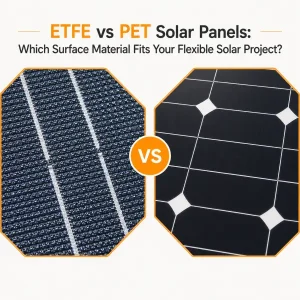
- Key Features: Up to 25% solar conversion efficiency with TOPCon and BC monocrystalline cells; glossy ETFE front material for impact and weather resistance; lightweight foldable design (6.1 kg for 200W, 12.3 kg for 400W) for easy transport and setup; modular series or parallel expansion to match system voltage requirements. With multiple units, a 4-panel 400W kit can be expanded to 800W, 1200W, or more — scaling up to meet the solar array requirements calculated in Step 3 of the sizing guide above.
- Customization: For B2B projects, Hi-Power can be customized in power output, voltage, cable interface, connector type, bag design, stand structure, and accessory configuration — ideal for OEM off-grid water heating kit projects where the solar panels need to match a specific charge controller input voltage or battery bank voltage.
- Best Applied To: Temporary off-grid work sites (construction, surveying, film production), camping with portable 120V water heaters, emergency water heating backup during grid outages, field operations for disaster relief or remote research stations, and as supplementary charging for permanent off-grid battery banks during extended cloudy periods.
Scenario Reference: Matching Solar Panel Types to Off-Grid Water Heating Installations
| Off-Grid Scenario | Primary Panel | Secondary Option | Battery Recommendation |
|---|---|---|---|
| Permanent off-grid cabin / home | PA219 (multiple panels, roof mount) | — | LiFePO4 12–20 kWh |
| RV / camper van conversion | PA219 (curved roof mount) | Hi-Power (supplementary) | LiFePO4 5–10 kWh |
| Mobile work / utility trailer | PA621 (weight-sensitive) | Hi-Power (ground deploy) | LiFePO4 5–10 kWh |
| Temporary field camp | Hi-Power (foldable, portable) | — | Portable station 1–2 kWh |
| Emergency water heating backup | Hi-Power (quick deploy) | — | LiFePO4 2–5 kWh |
| Marine / coastal off-grid | PA219 (salt mist tested sample) | Hi-Power (deck deploy) | LiFePO4 5–15 kWh |
Frequently Asked Questions About Water Heater Amps and Off-Grid Solar
How many amps does a 40-gallon water heater use?
A 40-gallon electric water heater typically consumes 4000–4500W at 240V, drawing 16.6–18.7 amps of current. For off-grid use, this translates to roughly 3,000–5,000W of solar panels plus a 12–15 kWh battery bank to support daily hot water needs.
Can a portable solar panel power a water heater directly?
No. Solar panels generate DC electricity that must charge a battery bank, which then powers the water heater through an inverter. Direct panel-to-heater connection is not practical due to voltage mismatch and the intermittent nature of solar generation. The battery acts as a buffer, storing energy during sunny periods and delivering it on demand.
How many solar panels do I need to run a water heater off-grid?
It depends entirely on the heater type and daily usage pattern. A portable 1000W water heater used for 1–2 hours per day needs roughly 300–700W of solar panels. A standard 40-gallon electric water heater requires 3,000–5,000W of solar capacity — roughly 8–15 panels depending on individual panel wattage, local sun hours, and system efficiency.
Final Thoughts
Understanding how many amps a water heater uses is the foundation of any off-grid solar water heating project. From a portable 1000W unit drawing 8.3 amps to a standard 40-gallon tank drawing 18.7 amps, the numbers are predictable — and that predictability makes proper system sizing straightforward when you follow the right method.
The key takeaway for off-grid installers and system integrators: portable power stations work for small loads, but permanent off-grid water heating demands a properly designed solar panel and battery bank system. By matching the right solar panel type (flexible, lightweight, or portable foldable) to the specific installation scenario, you can deliver reliable, long-term hot water solutions for your clients — and build a stronger business around the expertise you bring to every project.
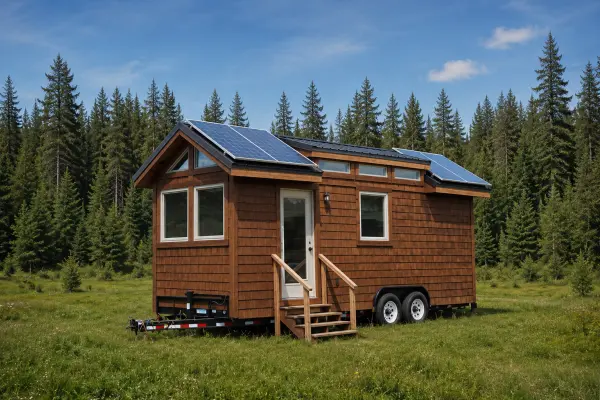
Sungold Solar offers installer-grade flexible, lightweight, and portable solar panel solutions with IEC, TÜV, and CSA certification support (within the applicable certified scope), plus OEM and ODM customization for power output, voltage, connectors, cable configuration, panel dimensions, and packaging. Whether your off-grid water heating project requires curved-roof flexible panels for a forest cabin, vibration-resistant lightweight panels for a mobile workshop, or portable foldable panels for a seasonal field camp, our engineering team can work with you to specify the right panel type, configuration, and certification documentation for your specific application.
For off-grid installers and system integrators, the ability to specify panels that are certified to the relevant standards (IEC 61215, IEC 61730, IEC TS 63163, CSA/UL 61730 within the certified product scope) provides the documentation needed for project permitting, customer assurance, and long-term reliability. Contact our B2B sales team to discuss your next off-grid water heating project.