 EN
EN
 Deutsch
 Italiano
 Español
 Français
 日本語
日本語

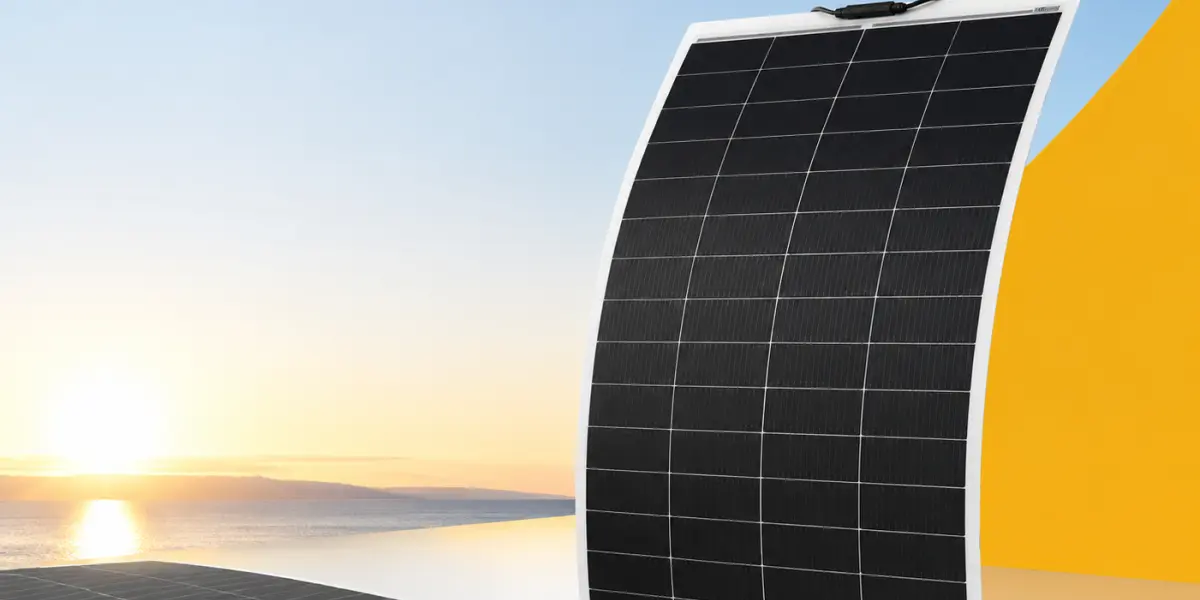
Custom flexible solar panels can be reviewed by size, voltage, cable position, connector type, surface material, backing structure, appearance, and packaging. For B2B buyers, the key is not simply asking whether customization is possible. The key is providing enough project information for the supplier to review electrical fit, installation space, cable routing, certification scope, and sample feasibility before production.
For buyers, customization usually becomes an engineering question before it becomes a purchasing question. A flexible solar panel may need to fit a curved RV roof, a marine deck, a balcony product, a vehicle roof, a portable power kit, or an OEM product shell. Each use case changes the design discussion.
Before sampling, buyers need to confirm what the panel must fit, connect to, and survive. Size, voltage, and cable design are the first details to settle because they affect the module layout, installation method, controller matching, and long-term field performance.
Custom Flexible Solar Panels for Low-Profile Projects
Standard flexible solar panels can work well when the installation space, electrical system, and cable route are already compatible. But many B2B projects have constraints that standard panels do not fully address.
An RV roof may have vents, roof rails, air-conditioning units, and curved surfaces. A marine project may need low-profile panels, sealed cable routing, and better material review for moisture and salt air. A balcony solar kit may need lighter weight, cleaner appearance, and predictable mounting. A portable power or vehicle system may need a specific voltage and connector.
In these projects, the solar panel is not only a product. It becomes part of a larger package. That package may include a controller, battery, microinverter, mounting accessory, user manual, private label, and after-sales process.
What Can Usually Be Customized?
The exact customization scope depends on the product series, project volume, material selection, and engineering review. Most B2B discussions start with the items below.
| Customization Item | What Buyers Need to Define | Why It Matters |
|---|---|---|
| Size | Length, width, available mounting area | Affects cell layout, wattage, voltage, and installation fit |
| Wattage | Target power range | Must match available area and system demand |
| Voltage | 12V, 24V, or system-specific range | Affects controller, battery, wiring, and safety review |
| Cable position | Front, side, or back-exit cable | Affects waterproofing, appearance, and installation speed |
| Connector | Standard or project-specific connector | Affects system compatibility and assembly |
| Surface material | ETFE, PET, or other laminate option | Affects durability, cost, appearance, and application fit |
| Backing and mounting | Backing layer, adhesive, holes, or fixing method | Affects installation surface and long-term stability |
| Packaging | Label, manual, carton, logo, kit format | Important for distributors and system brands |
Size Customization: More Than Cutting a Panel to Fit
Size is usually the first customization request. It is also one of the easiest details to underestimate.
A custom panel size affects cell arrangement, wattage, voltage, current, edge spacing, cable position, packaging size, and production feasibility. A narrow panel may not produce the same output as a wider panel with similar surface area. A compact panel may require a different cell layout. A very curved surface may need a different product format or a larger safety margin.
Buyers should provide the maximum available installation area, not only a preferred panel size. If the panel will be installed on a curved surface, the bend direction and mounting method should also be reviewed. For a deeper explanation of bend limits, see this guide on bending limits for flexible solar panels.
Voltage Customization: Match the Panel to the System
A panel can be the right wattage but still the wrong electrical fit. This is a common problem in battery, vehicle, portable power, and off-grid projects.
Before asking for a custom voltage flexible solar panel, buyers should confirm the battery system voltage, controller input range, current limit, open-circuit voltage limit, cable length, and connection method. A 12V battery maintenance system, a 24V auxiliary system, a portable power station, and a microinverter-based balcony kit may all need different checks.
Cable Position: A Small Detail That Can Decide Installation Quality
Cable position affects appearance, waterproofing, installation speed, and maintenance. It should be discussed before sampling, not after the panel has already been designed.
Front or Side Cable Exit
A front or side cable exit is easier to inspect and connect during installation. It can work well when the cable path is visible and accessible. This format may fit RV roofs, off-grid panels, test samples, and applications where service access matters more than hidden wiring.
The risk is that visible cables may need extra fixing, UV protection, abrasion protection, and strain relief. Poor cable routing can pull on the panel edge or create water-entry risk near the exit area.
Back-Exit Cable Design
A back-exit cable design places the cable exit on the rear side of the panel. It can create a cleaner surface and may be useful for vehicle roofs, balcony products, marine decks, and OEM product integration.
Back-exit design should be selected with installation drawings. Buyers need to confirm whether the mounting surface allows rear cable routing, whether a hole or recessed channel is required, how the exit will be sealed, and whether the cable can be accessed for maintenance.
If these details are not checked early, a clean-looking sample can become difficult to install in the field.
Rear Junction Box and Cable Exit Design
A rear junction box places the connection point toward the back of the panel. For some vehicle, marine, balcony, and OEM projects, this can make the visible surface cleaner and align the cable with an internal channel or edge route.
It is not simply a cosmetic change. The junction box location affects the installation surface, cable bend radius, sealing, strain relief, connector clearance, and access for inspection. A rear exit may be unsuitable if the back of the panel sits directly against a surface with no room for the box or cable.
What to Confirm Before Sampling
- Exact junction box or cable-exit location on the drawing.
- Available clearance behind the panel and around the connector.
- Route length from the exit to the controller, battery, inverter, or power station.
- Required sealing, cable protection, polarity marking, and strain relief.
- Whether the cable and connector must remain serviceable after installation.
For that reason, “rear junction box” should be included in the RFQ drawing rather than added as a last-minute note. The final design remains subject to the selected panel construction and engineering review.
Low-Profile Flexible Solar Panel Installation
Low profile does not mean the panel can be installed without considering heat, movement, water, and maintenance. A panel bonded directly to a roof may have less clearance and a cleaner appearance, but it can also be harder to remove and may run hotter than a raised installation.
Van and marine users repeatedly raise the same practical questions: whether to leave an air gap, how to reduce wind lift, how to avoid drilling, and how the panel will be replaced later. These are useful buyer questions, but individual user experiences are not a substitute for the installation instructions and material limits of the selected panel.
Direct Bonding and Airflow
Some projects prioritize the lowest possible profile and use an adhesive-based installation. Other projects use spacers, mounting strips, rails, or another structure to create clearance. The right choice depends on the panel construction, roof material, wind and vibration conditions, and the project’s service plan.
If an air gap is required or recommended, it should be part of the mounting design. If direct bonding is proposed, review how heat, water, surface movement, edge sealing, and future removal will be managed.
Connector and Cable Length
Connector and cable length look like small line items, but they often create assembly problems when they are left until the end of the project.
A cable that is too short may force installers to add extension cables. A cable that is too long may need extra fixing. A connector that does not match the controller, battery, portable power station, or kit design may create support issues after sale.
Buyers should confirm connector type, cable length, cable gauge, polarity marking, waterproofing requirement, and whether the panel will be sold alone or as part of a kit.
Surface Material and Backing Options
ETFE, PET, backing structure, and cable sealing should be selected around the environment, not around the material name alone.
Marine and outdoor projects may need stronger review for UV exposure, moisture, salt air, and abrasion. Balcony and visible product designs may care more about appearance and weight. Cost-sensitive products may need a different balance between surface material, durability, and price positioning.
It is also important to separate surface films from internal encapsulation materials. ETFE and PET are surface films or protective laminate materials, while EVA and POE are internal encapsulant layers.
For buyers comparing field durability, this article on how long flexible solar panels last can help frame material selection, installation quality, heat, and maintenance as connected factors.
Common Application Scenarios
Different applications create different customization priorities. The table below is a practical starting point for RFQ preparation.
| Application | Common Custom Need | Key Risk to Check |
|---|---|---|
| RV roof | Lightweight structure, curved mounting, cable routing | Heat, vibration, roof layout, adhesive or mounting method |
| Marine | Durable surface, sealed cable routing, low-profile design | Salt air, moisture, deck abrasion, cable waterproofing |
| Balcony solar | Lightweight format, clean appearance, mounting method | Wind load, railing fit, local rules, user instructions |
| Portable power | Connector matching, compact format, packaging | Voltage/current input, handling, product support |
| Commercial vehicle | Narrow roof space, auxiliary battery support | Vibration, cable protection, controller match |
| OEM product shell | Exact size, back-exit cable, private label | Drawing accuracy, assembly tolerance, sample validation |
RFQ Checklist for Custom Flexible Solar Panels
A useful RFQ should give the supplier enough information to review feasibility before quoting. This reduces repeated sample revisions and helps both sides avoid unclear assumptions.
- Application scenario: RV, marine, balcony, vehicle, portable power, off-grid, or OEM product.
- Available installation area: maximum length, width, thickness limit, and restricted space.
- Target wattage range: preferred range, not only a fixed number.
- Voltage and electrical requirement: battery voltage, controller input range, and current limit.
- Cable exit position: front, side, or back-exit design.
- Cable length and connector type: connector model, cable length, cable gauge, and polarity requirement.
- Surface material preference: ETFE, PET, all-black appearance, or another direction.
- Mounting method: adhesive, screw, clamp, bracket, or product-shell integration.
- Target market: certification, label, plug, and documentation requirements may vary by market.
- Packaging and branding: label, manual, carton, logo, and kit format.
- Sample quantity and expected volume: MOQ, sample cost, lead time, and production planning should be confirmed case by case.
For a broader procurement workflow, buyers can also review this flexible solar panel OEM/ODM buyer guide.
What Buyers Should Not Assume
Custom flexible solar panel projects often run into problems when assumptions are made too early.
- Do not assume any size can keep the same wattage.
- Do not assume a custom panel automatically shares the same certification scope as a standard model.
- Do not assume a cable exit change has no effect on waterproofing or installation.
- Do not assume ETFE or PET alone determines durability.
- Do not assume a 12V or 24V label is enough for system matching.
- Do not assume MOQ, sample time, warranty, price, or delivery time without project confirmation.
How Sungold Reviews Custom Flexible Solar Panels
For custom flexible solar panel projects, buyers should start with an RFQ brief that includes the application, available size, voltage requirement, cable exit position, connector type, mounting method, and target market.
Sungold can review project-specific requirements through its custom solar panel development path and PA219 flexible solar panel options when the application needs a lightweight, flexible module format. For OEM/ODM buyers, the most useful starting point is a drawing or requirement sheet that allows panel size, cable routing, electrical design, documentation, and packaging to be reviewed together.
FAQ About Custom Flexible Solar Panels
Yes, custom sizes can often be reviewed, but size changes may affect wattage, voltage, current, cell layout, cable position, and production feasibility. Buyers should provide the available installation area and target application before requesting a fixed specification.
Voltage customization may be possible depending on the module design and project requirements. Buyers should confirm the battery system, controller input range, current limit, and connection method before selecting a voltage.
A back-exit cable design places the cable exit on the rear side of the panel. It can create a cleaner surface and support product integration, but it requires review of installation surface, sealing method, cable routing, and maintenance access.
At minimum, provide the application, available size, target wattage, voltage requirement, cable exit position, connector type, mounting method, target market, packaging needs, and expected sample or order quantity.
Final Thoughts
Flexible solar panel customization is not only about changing size or adding a logo. For B2B projects, the real decision is whether the panel can fit the application, electrical system, installation surface, cable path, documentation requirement, and production plan.
The earlier buyers provide clear project information, the easier it is to judge feasibility, reduce sample revisions, and move from concept to quotation.