 EN
EN
 Deutsch
 Italiano
 Español
 Français
 日本語
日本語
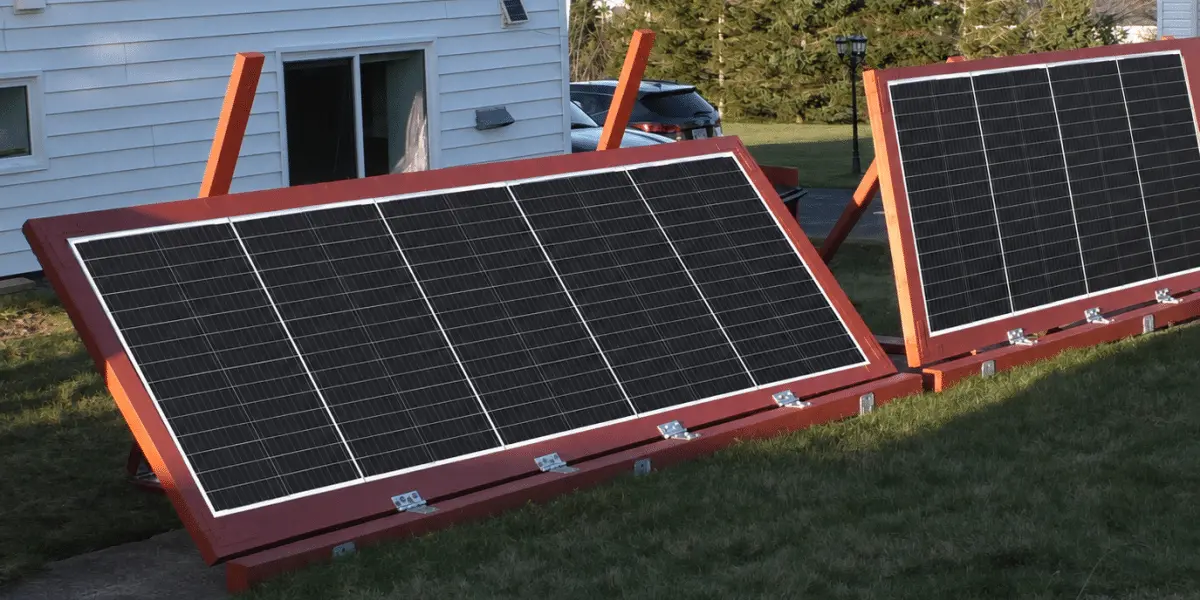
DIY solar panels can mean two different things: building a solar panel from raw cells, or assembling a solar kit with factory-made panels, a charge controller, batteries, cables, and mounting hardware. For most users and kit buyers, the safer path is not making the panel from scratch. It is choosing tested solar panels, matching the electrical system, and confirming installation limits before the kit is used.
Many buyers search for DIY solar panels because they want a lower-cost way to power an RV, cabin, shed, portable power station, balcony setup, or small backup system. The question sounds simple, but the answer depends on the project. A small portable solar setup is very different from a grid-tied rooftop system.
The most useful first step is to separate panel manufacturing from system assembly. Manufacturing a reliable solar panel requires controlled materials, lamination, electrical testing, sealing, and long-term outdoor reliability. Assembling a small solar power system usually means selecting a factory-made panel and matching it with the right controller, battery, inverter, cable, and mounting method.
What People Mean by DIY Solar Panels
The phrase “DIY solar panels” is often used too broadly. Before buying parts, buyers should decide which type of DIY project they actually mean.
| DIY Type | What It Usually Means | Practical Risk Level |
|---|---|---|
| Building from raw cells | Soldering cells, adding busbars, sealing, wiring, and framing a panel | High |
| Installing an off-grid kit | Using factory-made panels with a controller, battery, inverter, and cables | Medium |
| Using portable solar | Connecting portable panels to a power station or small DC load | Low to medium |
| RV or cabin solar | Mounting panels and matching them with a 12V or 24V battery system | Medium |
| Grid-tied home solar | Connecting solar power to a building electrical system and utility grid | High |
For temporary setups, buyers often start with portable solar panels because they are easier to deploy, store, and pair with power stations. For roof-mounted, vehicle, or off-grid systems, the review needs to go deeper.
Should You Build a Solar Panel from Raw Cells?
For most real outdoor power projects, building a solar panel from raw cells is not the best path. A small educational panel can be useful for learning, but a working outdoor panel has to survive sunlight, moisture, heat, vibration, wind, and repeated thermal cycling.
The difficult part is not only soldering cells together. The difficult part is making a panel that remains sealed, electrically stable, and mechanically reliable over time. A weak encapsulation layer, poor cable exit, unstable junction box, or moisture path can quickly reduce output or create a safety issue.
When DIY Solar Makes Sense
DIY solar works best when the system is small, clearly defined, off-grid, and easy to isolate. It becomes more difficult when the system connects to a building, battery bank, or utility grid.
| Application | DIY Suitability | What to Check First |
|---|---|---|
| Portable power station | Good | Solar input voltage, current limit, connector type |
| RV solar | Good, if planned carefully | Roof space, battery voltage, cable route, controller input |
| Cabin or shed | Possible | Daily load, battery capacity, weather exposure, mounting |
| Marine use | Possible, with caution | Salt air, curved surface, cable sealing, corrosion resistance |
| Balcony or plug-in solar | Market-dependent | Local rules, inverter safety, mounting, user instructions |
| Full home grid-tied solar | Not recommended for most DIY users | Permits, inspection, interconnection, qualified electrical review |
DIY solar is usually more practical for small off-grid systems, RVs, sheds, and cabins. For vehicle-based projects, buyers can review RV solar kits. For cabin or backup power use, off-grid solar kits are a more relevant starting point.
The Practical System Chain
A solar kit is not just a panel. It is a system chain.
If one part does not match, the system may underperform or fail. In many practical DIY problems, the panel is not the root cause. The problem is usually an input limit, battery mismatch, cable issue, connector problem, or mounting decision.
| Component | What It Does | What Buyers Should Check |
|---|---|---|
| Solar panel | Generates DC power | Wattage, voltage, current, size, surface material |
| Charge controller | Regulates battery charging | MPPT or PWM, input voltage, battery compatibility |
| Battery | Stores energy | 12V, 24V, or 48V architecture, chemistry, BMS, usable capacity |
| Inverter | Converts DC to AC | Rated output, surge power, waveform |
| Cables | Carry current safely | Cable size, length, voltage drop, outdoor rating |
| Connectors | Link components | MC4 or brand-specific connector compatibility |
| Mounting | Holds the panel | Wind load, roof surface, vibration, heat dissipation |
A Simple Sizing Example
A practical DIY solar calculation starts with load, not panel wattage.
For example, a small off-grid setup needs to power the loads below.
| Load | Power | Use Time | Daily Energy |
|---|---|---|---|
| LED lights | 20W | 5 hours | 100Wh |
| Small fan | 40W | 4 hours | 160Wh |
| Laptop charging | 60W | 2 hours | 120Wh |
| Phone, router, small devices | 30W | 5 hours | 150Wh |
The estimated daily use is 530Wh. If the site has about 4 peak sun hours, the basic calculation is:
In theory, a 150W panel could cover that daily load. In practice, buyers should add margin for heat, cable loss, controller loss, battery charging loss, cloudy weather, shading, and seasonal variation. A planning range of 200W to 300W may be more realistic for this small example.
Why Panel Wattage Alone Is Not Enough
A common DIY mistake is choosing the biggest panel that fits the budget. That may still be the wrong panel if the voltage, current, connector, or mounting method does not fit the system.
Before choosing wattage, check these items:
- Battery voltage: 12V, 24V, or 48V
- Controller maximum PV input voltage
- Controller maximum charging current
- Power station solar input range
- Cable length and voltage drop
- Available mounting area
- Shade pattern during the day
- Series or parallel wiring plan
Two panels wired in series increase voltage. Two panels wired in parallel increase current. That difference matters because a controller may accept the total wattage but not the voltage or current configuration. Buyers should check Voc, Vmp, Isc, and Imp on the panel datasheet before ordering.
For more detail on electrical matching, buyers can also review Sungold’s solar panel amps to watts guide.
DIY Solar Kit vs Buying Parts Separately
Buying parts separately can work for experienced users, but it increases compatibility risk. A matched kit reduces the number of decisions the buyer has to make.
| Option | Advantage | Main Risk |
|---|---|---|
| Buying separate parts | More flexibility | Higher chance of mismatch |
| Pre-matched solar kit | Easier selection and support | Less customization |
| Portable solar + power station | Simple user experience | Limited by input specifications |
| Custom solar panel package | Better fit for OEM or special projects | Requires confirmed drawings and electrical specs |
For OEM buyers or solar kit brands, the next step is usually not buying random parts. It is defining the panel size, voltage, cable exit, connector, mounting method, and packaging requirement. Sungold can support this through custom solar panel development and application-specific module planning.
Safety and Permit Boundaries
DIY solar should be treated differently depending on whether it is off-grid or grid-connected. Small off-grid systems are usually easier to manage because they are isolated from the utility grid. Grid-tied systems are different. They may require permits, inspection, utility approval, and equipment that meets local electrical requirements.
For buyer-facing projects, the safest rule is simple: local rules, permit requirements, inspection steps, and interconnection approvals vary by jurisdiction. Grid-connected work, roof work, high-voltage DC wiring, grounding, and building electrical changes should be reviewed by qualified professionals.
Practical Checks Before Buying a DIY Solar Kit
Before buying parts, use this checklist.
| Question | Why It Matters |
|---|---|
| What load am I trying to power? | Prevents overbuying or under-sizing |
| How many watt-hours do I need per day? | Defines panel and battery size |
| Is the system 12V, 24V, or 48V? | Affects controller, inverter, and cable choice |
| What is the controller PV input limit? | Prevents over-voltage damage |
| How long is the cable route? | Long cables may need larger wire |
| Will the panel face shade? | Shade can reduce output sharply |
| Is the panel mounted flat or tilted? | Tilt affects production and water drainage |
| Is the installation temporary or permanent? | Affects mounting and weather protection |
| Is it off-grid or grid-tied? | Defines safety and permit boundaries |
Which Panel Type Fits DIY Solar Projects?
Different DIY applications need different panel structures.
| Panel Type | Best Fit | Practical Notes |
|---|---|---|
| Rigid solar panel | Ground mounts, cabins, fixed roofs | Durable structure, heavier than flexible options |
| Flexible solar panel | RV roofs, curved surfaces, lightweight installs | Mounting and heat buildup need review |
| Lightweight solar panel | Vehicles, weak roofs, portable structures | Useful when weight matters |
| Portable solar panel | Camping, power stations, temporary setup | Easy to deploy and store |
| Custom solar panel | OEM kits, special size or cable layout | Needs drawing and electrical confirmation |
If the installation surface is curved, weight-sensitive, or difficult to mount with glass panels, flexible solar panels or lightweight solar panels may be easier to evaluate before choosing a full kit.
Common DIY Solar Mistakes
These problems appear again and again in practical DIY solar discussions and installation videos.
- Choosing panel wattage before checking controller limits
- Assuming every panel works with every power station
- Using indoor cable or undersized cable outdoors
- Wiring panels in series without checking maximum input voltage
- Forgetting fuse, breaker, or disconnect requirements
- Mounting flexible panels without airflow or heat review
- Placing panels where morning or afternoon shade is unavoidable
- Treating grid-tied solar like a simple plug-in appliance
- Buying batteries before confirming charging profile
- Ignoring local permit or utility rules
The lesson is simple: most DIY problems are system-matching problems, not panel problems.
What Distributors and System Brands Should Check
For B2B buyers, the question is not only whether a user can install the kit. The question is whether the product package is clear, repeatable, and supportable.
| Buyer Type | What to Confirm |
|---|---|
| Distributor | User instructions, packaging, FAQ, warranty boundary |
| RV brand | Panel size, roof fit, cable routing, battery voltage |
| Portable power brand | Input voltage and current, connector, folding format |
| Off-grid kit seller | Panel, controller, battery, inverter, and cable compatibility |
| OEM/ODM buyer | Size, voltage, cable exit, connector, label, packaging |
| Project buyer | Installation surface, climate, maintenance access |
How Sungold Can Support DIY Solar Kit Projects
Sungold is not positioned as a DIY electrical installer. The stronger role is as a solar panel manufacturer and custom module partner for kit brands, distributors, RV applications, off-grid packages, and portable solar product development.
For flexible or vehicle-roof applications, PA219 flexible solar panels can be reviewed where low profile, flexible structure, and appearance matter. For portable storage matching, buyers can also review Sungold’s portable power station pairing guide.
For DIY solar kit projects, Sungold can support panel selection, custom dimensions, voltage and current planning, cable position and connector review, back-exit cable design, and application-specific module planning. Final compatibility should still be confirmed with the charge controller, battery, inverter, installation surface, and target market requirements.
FAQ
You can build a small educational panel from raw cells, but it is not usually recommended for real outdoor power use. Reliable solar panels require controlled materials, lamination, sealing, electrical testing, and weather resistance.
Usually, yes. A kit uses factory-made panels and matched components. The buyer still needs to check wiring, controller limits, battery compatibility, mounting, and local safety rules.
Small off-grid systems may be suitable for experienced users. Grid-tied home systems usually involve permits, inspection, utility approval, and qualified electrical work.
Start with daily energy use in watt-hours. Divide that by local peak sun hours, then add margin for system loss, weather, shading, and battery charging.
Off-grid systems usually need batteries. Grid-tied systems may not need batteries, but they require proper inverter and interconnection review. Portable power stations already include a battery.
Final Thoughts
DIY solar is useful when the project is small, clearly defined, and built with matched components. The real decision is not whether solar can be DIY. The better question is which parts should be factory-made, which parts can be assembled by the user, and which parts need professional confirmation.
For most buyers, the safer path is to choose tested solar panels, match the system around real load data, and confirm the electrical and mounting details before installation. For distributors, OEM buyers, and system brands, this is also where better product design begins.