 EN
EN
 Deutsch
 Italiano
 Español
 Français
 日本語
日本語
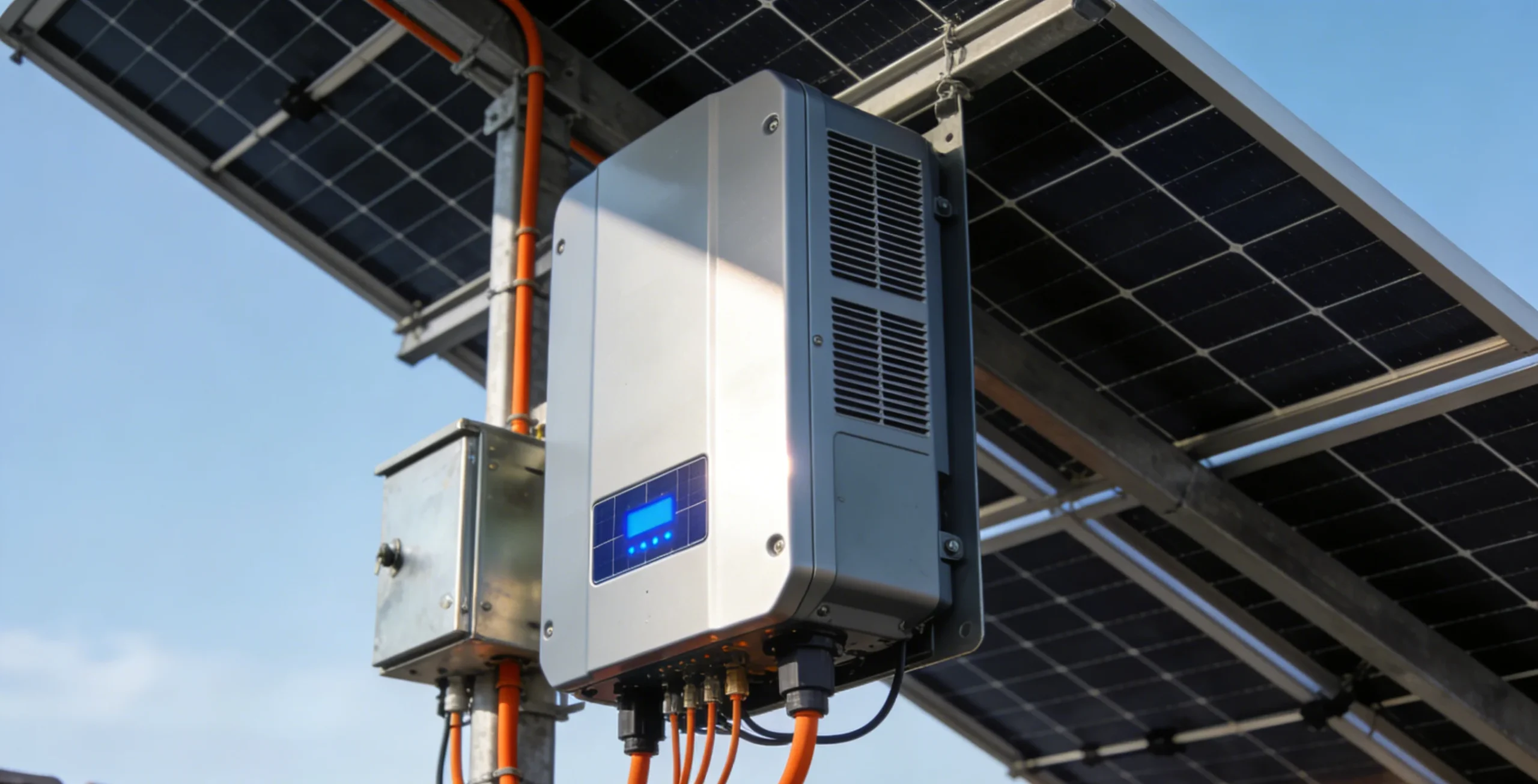
Heat affects inverter performance by increasing internal component stress, reducing conversion efficiency, triggering thermal derating, and in severe cases causing shutdown. In most solar kits, inverter overheating is not only an inverter issue. It can also be caused by high ambient temperature, poor ventilation, oversized loads, undersized wiring, battery mismatch, or a kit design that does not leave enough cooling margin.
For solar kit buyers, the practical question is not simply which inverter wattage to buy. The better question is whether the inverter, battery, solar panel, cable, and installation layout can keep working under real load and real temperature.
This matters for RV solar kits, off-grid cabins, portable solar panels used with power stations, balcony solar with storage, marine solar systems, and commercial vehicle solar auxiliary power. These systems often work in hot compartments, small cabinets, vehicle roofs, battery boxes, or outdoor locations where airflow is limited.
Why Inverter Heat Matters in Solar Kits
An inverter is one of the parts users notice only when something goes wrong. If it works, nobody talks about it. If it overheats, the whole system feels unreliable.
For a solar kit buyer, heat can show up as fan noise under load, reduced output in hot weather, warning lights, error codes, unexpected shutdown, shorter component life, or customer complaints after installation.
Why Solar Inverters Get Hot
Solar panels and batteries produce or store DC electricity. Many appliances need AC electricity. The inverter converts DC power into AC power.
That conversion is not perfect. Some energy is lost during the process, and most of that loss becomes heat.
| AC Load | Inverter Efficiency | Approx. DC Input Needed | Approx. Heat Loss |
|---|---|---|---|
| 1000W | 90% | 1111W | 111W |
| 1000W | 95% | 1053W | 53W |
| 2000W | 92% | 2174W | 174W |
| 2000W | 95% | 2105W | 105W |
This is why a higher-efficiency inverter usually runs cooler under the same load. It also shows why heat becomes more serious at higher loads. A small loss percentage becomes a large amount of heat when the system is running a refrigerator, air conditioner, microwave, power tool, pump, or other heavy load.
Some warmth is normal. The problem begins when heat cannot leave the inverter fast enough.
Normal Warmth vs Overheating
Not every warm inverter is a problem. Buyers need to separate normal operation from warning signs.
| Condition | Usually Normal? | What It Means |
|---|---|---|
| Slightly warm casing | Yes | Normal conversion loss |
| Fan starts under load | Usually yes | Cooling system is working |
| Fan runs constantly at high load | Depends | Load or ambient temperature may be high |
| Output drops in hot weather | Possible | Thermal derating may be happening |
| Alarm or temperature error | Needs checking | Heat, load, wiring, or battery issue |
| Repeated shutdown | Not normal | System design or installation needs review |
| Burning smell or melted cable | Unsafe | Stop use and inspect immediately |
A solar kit manual should explain this difference clearly. Otherwise, users may treat normal fan operation as a defect, or worse, ignore real overheating signs.
How Heat Reduces Inverter Output
Most quality inverters include protection logic. When internal temperature rises too much, the inverter may reduce output power. This is usually called thermal derating.
Derating is not the same as failure. It is a protection behavior. The inverter reduces output to protect internal components.
For example, a 2000W inverter may be rated for 2000W continuous output under specified test conditions. But in a hot RV storage bay, sealed cabinet, or outdoor enclosure with poor airflow, it may not be able to hold that output for long.
The actual result depends on inverter model, cooling design, internal temperature sensor, load level, ambient temperature, installation clearance, cable size, battery voltage stability, and whether fan vents or heat sinks are blocked.
Main Causes of Solar Inverter Overheating
Inverter overheating is usually caused by more than one factor. A buyer should look at the whole system, not only the inverter label.
| Cause | What Happens | Buyer Check |
|---|---|---|
| High ambient temperature | Inverter starts closer to its thermal limit | Check operating temperature range |
| Poor ventilation | Heat accumulates around the casing | Leave clearance and airflow path |
| Oversized load | Inverter works near full capacity for too long | Check continuous load, not only surge load |
| Undersized cable | Cable heats and voltage drops | Confirm cable size and length |
| Battery mismatch | Low voltage or unstable supply increases stress | Match battery voltage and BMS limits |
| Enclosed installation | Cooling fan cannot move air effectively | Avoid sealed boxes without airflow |
| Dust and blocked fans | Heat sink and fan lose effectiveness | Add maintenance instructions |
| Direct sunlight | Casing temperature rises before load starts | Mount away from heat sources |
| Poor load planning | Motor or compressor startup causes stress | Check surge power and duty cycle |
Many overheating complaints start with a simple sentence: the inverter is bad. In practice, the problem may be cable length, load planning, battery voltage drop, poor ventilation, or unrealistic expectations.
Inverter Heat in RV, Off-Grid and Portable Solar Kits
Different solar kit applications have different heat risks.
| Application | Heat Risk | Practical Check |
|---|---|---|
| RV solar kit | Hot storage bay, limited airflow, heavy AC loads | Install inverter with clearance and realistic load plan |
| Off-grid cabin | Long runtime, battery/inverter room heat | Check continuous output and ventilation |
| Portable power system | Compact box design, limited heat dissipation | Match solar input and battery output limits |
| Marine system | Moisture, heat, and corrosion | Use suitable location and sealed cable routing |
| Balcony solar + storage | Small enclosure, summer wall temperature | Avoid placing storage or inverter in direct heat |
| Commercial vehicle | Vibration, roof heat, enclosed equipment bay | Check cable route, voltage drop, and daily load cycle |
For RV and off-grid users, the biggest issue is often continuous load. A short surge is different from running a high-load appliance for hours. For distributors and kit brands, this difference should be explained in the product manual and FAQ.
For vehicle-based applications, buyers can review RV solar kits. For cabin, shed, or backup power use, off-grid solar kits are usually a more relevant starting point.
What Solar Panel Buyers Often Miss
Inverter overheating is not caused by the solar panel alone. But solar panel selection can affect the rest of the system.
Buyers often miss these points:
- panel voltage must fit the controller or power station input range;
- panel current must not exceed input limits;
- series wiring increases voltage;
- parallel wiring increases current;
- high Voc in cold conditions must still be within controller limits;
- panel output should match battery capacity and expected loads;
- roof, vehicle, balcony, or box layout may affect airflow around other components;
- flexible or lightweight panels need mounting review, especially where heat buildup is possible.
A system may have enough solar wattage on paper but still fail in use because the inverter, controller, battery, cable, or installation location was not matched correctly. For electrical matching basics, buyers can also review Sungold’s solar panel amps to watts guide.
Panel, Battery and Inverter Matching Checklist
Before approving a solar kit design, buyers should confirm the items below.
| Item | What to Confirm |
|---|---|
| Panel wattage | Does it fit the daily energy target? |
| Panel voltage | Does Voc/Vmp fit controller or power station input? |
| Panel current | Does Isc/Imp fit input limits? |
| Battery voltage | 12V, 24V, or 48V architecture |
| Battery BMS | Can it support the expected discharge current? |
| Inverter continuous rating | Can it run the expected load continuously? |
| Inverter surge rating | Can it handle compressor or motor startup? |
| Cable size | Is it suitable for current and cable length? |
| Installation location | Is there airflow and heat clearance? |
| Ambient temperature | Will the system operate in hot compartments? |
| User manual | Does it explain derating, alarms, and shutdowns? |
| After-sales FAQ | Can distributors answer overheating complaints? |
This checklist is useful for RV solar kits, off-grid packages, portable power accessories, balcony storage products, and custom flexible solar panel projects where size, voltage, cable position, and connector design affect the full kit.
A Practical Load Example
Assume a buyer wants to run a 1000W appliance from a 12V battery system.
At 1000W AC output and 90% inverter efficiency, the inverter may need about 1111W DC input. At 12V, that current can be roughly:
That is before cable loss, battery voltage sag, surge current, and heat. If the cable is too small or too long, voltage drop can increase stress. If the battery BMS cannot support the current, the system may shut down. If the inverter is inside a hot compartment, thermal derating may happen earlier.
This is why a 1000W load is not only a 1000W question. It is a battery, cable, inverter, ventilation, and installation question.
For Distributors and System Brands
For B2B buyers, inverter heat is not only a technical issue. It is also a customer support issue.
A better product package should include:
- recommended inverter installation location;
- minimum ventilation clearance;
- continuous load guidance;
- surge load examples;
- warning against sealed cabinets without airflow;
- cable size guidance;
- battery voltage matching notes;
- overheating alarm explanation;
- troubleshooting steps;
- maintenance guidance for dust and blocked vents;
- clear warranty and installation boundaries.
If the product is sold into hot climates, RV compartments, marine cabins, balcony storage boxes, or commercial vehicle systems, the manual should be even more specific. Good documentation reduces bad expectations. It also reduces after-sales pressure.
How Sungold Can Support Solar Kit Design
Sungold is not positioned as an inverter manufacturer or electrical installer. The stronger role is supporting solar kit buyers from the panel side.
For solar kit projects, Sungold can help review panel wattage, voltage and current range, panel size, lightweight or flexible structure, cable exit position, connector type, installation surface, application-specific mounting requirements, and OEM/ODM packaging needs.
For inverter performance, the full system still needs to be checked against the controller, battery, inverter, cable, load, and installation environment.
For RV or vehicle-roof kits, lightweight and flexible panel formats may help with available roof area and mounting design. Buyers can review PA621 lightweight solar panels for weight-sensitive projects and PA219 flexible solar panels where a low-profile flexible format matters.
For portable storage matching, buyers can also review Sungold’s portable power station solar panel pairing guide. For OEM or distributor projects, custom solar panel development can be reviewed once the target voltage, panel size, connector, cable route, and application are clear.
FAQ
An inverter gets hot because it converts DC power into AC power, and part of the energy is lost as heat. Some warmth is normal. Excessive heat may mean high load, poor ventilation, hot ambient temperature, undersized cables, or system mismatch.
Usually, yes. Many inverters use fans to remove heat when load or internal temperature rises. A fan running under load is not always a fault. Constant fan noise under light load, however, may need checking.
Yes. Many inverters reduce output when internal temperature becomes too high. This is called thermal derating. It helps protect internal components but may reduce usable power.
An inverter may shut down because internal temperature exceeds its protection limit. The cause may be high ambient temperature, poor ventilation, overload, cable voltage drop, battery mismatch, or blocked cooling vents.
Buyers should check continuous load, surge load, battery voltage, cable size, airflow, installation location, ambient temperature, and user instructions. For B2B kits, these points should be included in the product manual and after-sales FAQ.
Final Thoughts
Inverter heat is not only a device issue. It is a system design issue.
A buyer should not treat inverter wattage as a standalone number. Real performance depends on load, battery voltage, cable size, ventilation, ambient temperature, and installation space. For solar kit brands, distributors, RV system buyers, and off-grid package developers, this is where better product design begins.
The safest approach is to size the system around real load data, choose components with enough thermal and electrical margin, and make sure users understand where and how the inverter should be installed.