




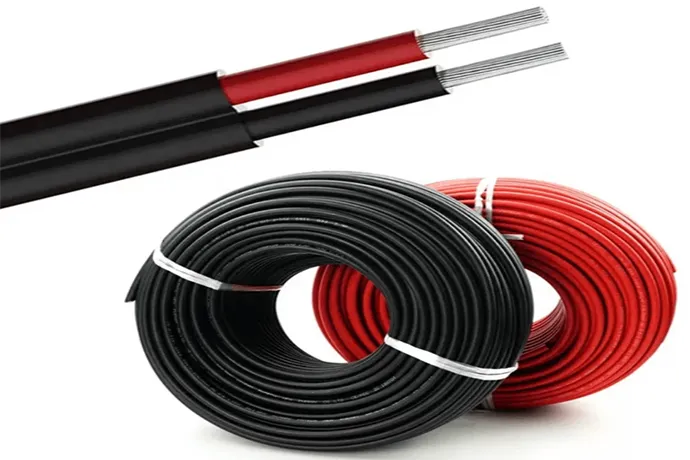
Quick answer: DC cables carry direct current between solar modules, batteries and the inverter’s DC side. AC cables carry alternating current between the inverter, distribution equipment and the load or grid. They are not interchangeable: choose each cable by current, voltage, insulation, environment, termination and local electrical requirements.
What Is a DC Cable in a Solar System?
Conclusion: A DC cable carries direct current on the generation or battery side of a solar system, so its conductor size, insulation and connectors must match the system design.
DC cables are commonly used between PV modules, combiner equipment, charge controllers, batteries and the DC input of an inverter. In a solar installation, current flows with fixed polarity, so positive and negative conductors, connector compatibility and correct polarity are essential.
The exact cable construction is application-specific. Depending on the project, the cable may use copper or another approved conductor, different insulation layers, and different protection against UV, heat, moisture, abrasion or chemicals. Always confirm the cable’s voltage rating, current capacity, temperature range and installation method before selection.
What Is an AC Cable in a Solar System?
Conclusion: An AC cable carries alternating current from the inverter to a distribution board, load, battery system or grid connection, and its specification depends on the output and installation conditions.
Solar inverters convert the DC electricity produced by the modules into AC electricity for compatible loads or grid-connected equipment. AC cables are then used on the inverter output side and may be part of single-phase or three-phase systems.
AC cable selection should account for the inverter’s output current, nominal voltage, phase arrangement, cable length, voltage drop, ambient temperature, grouping, conduit or tray installation, and the requirements of the local electrical code. The correct cable is not determined by the words “solar cable” alone.
What Is the Difference Between DC Cables and AC Cables?
Conclusion: DC and AC cables serve different parts of the energy path and should not be treated as interchangeable; compare the electrical duty, insulation, protection and termination requirements before buying.
| Decision factor | DC cable | AC cable |
|---|---|---|
| Current type | Direct current with fixed polarity. | Alternating current that changes direction periodically. |
| Common location | Between modules, batteries, combiner equipment, charge controllers and the inverter DC side. | Between the inverter, distribution equipment, loads and the grid connection. |
| Key selection inputs | DC voltage, operating current, polarity, string layout, temperature, UV exposure and connector system. | AC voltage, output current, phase arrangement, voltage drop, cable route and installation method. |
| Common environmental concerns | Outdoor UV, moisture, heat, abrasion, movement and connector sealing. | Heat, moisture, mechanical protection, grouping, conduit or tray conditions and indoor/outdoor exposure. |
| Can they be substituted? | Do not substitute without confirming the complete electrical and installation requirements. | Do not substitute without confirming the complete electrical and installation requirements. |
| Buyer documents to request | Datasheet, voltage/current ratings, temperature range, connector compatibility and applicable approvals. | Datasheet, voltage/current ratings, phase application, installation guidance and applicable approvals. |
Important: This table is a selection guide, not a wiring design. A qualified designer or electrician should confirm conductor sizing, protection, voltage drop, termination and compliance for the actual project.
Why Does Solar Cable Quality Matter?
Conclusion: Cable quality affects electrical reliability, heat management and long-term safety, especially when cables are exposed to outdoor conditions or repeated mechanical stress.
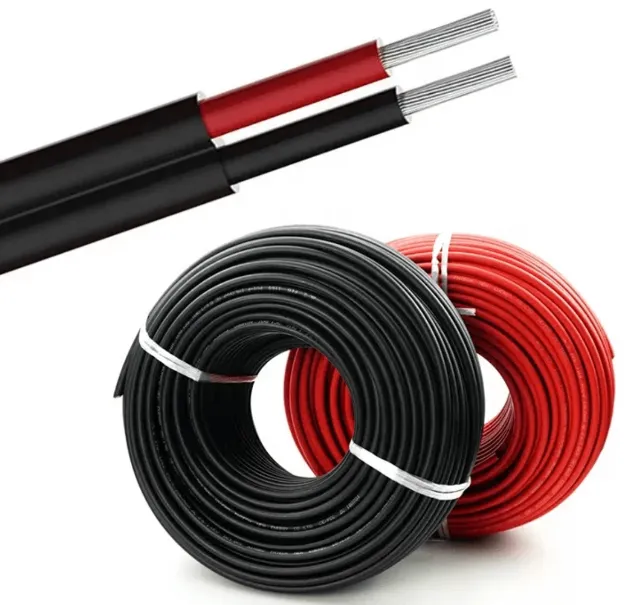
Solar cables may be installed in locations exposed to UV radiation, temperature changes, humidity, rain, salt air, bending, compression or abrasion. The cable jacket and insulation should be suitable for the intended route and environment, while the conductor and connector system should match the electrical load.
When comparing suppliers, ask for the cable datasheet, conductor material and cross-section, rated voltage and current, temperature range, minimum bend radius, connector compatibility, applicable test reports or approvals, and recommended installation conditions. Avoid choosing only by price or by a generic “solar cable” label.
For background information, you can also review Sungold’s guide to solar cables and solar wires. Final sizing and installation should remain project-specific.
What Should You Know Before Choosing DC or AC Cables?
Conclusion: The safest choice comes from the complete system specification: electrical ratings, cable route, environmental exposure, connectors, protection and applicable local requirements.
Can an AC cable be used for a DC solar application?
Do not substitute an AC cable for a DC cable without confirmation from a qualified designer and the cable manufacturer. The cable must meet the DC voltage, current, insulation, polarity, environmental and termination requirements of the application.
Can a DC cable be used on the AC side of an inverter?
Not automatically. The AC-side cable must be suitable for the inverter output voltage, current, phase arrangement, protection and installation method. Confirm the application with the cable datasheet, inverter documentation and local electrical requirements.
Should an extra protective layer be added to a solar cable?
Additional protection may be appropriate in some cable routes, but it should be designed so that it does not create excessive heat, restrict the cable’s bend radius, damage the insulation or interfere with drainage and inspection.
What documents should buyers request for solar cables?
Request the product datasheet, conductor and insulation details, rated voltage and current, temperature range, bend radius, connector compatibility, installation guidance, applicable standards or approvals, and traceable supplier information.