 EN
EN
 Deutsch
 Italiano
 Español
 Français
 日本語
日本語
Engineer’s Verdict
If you are considering ETFE flexible solar panels for an off-grid, marine, RV, balcony, or custom product project, start with four practical conclusions.
| Decision Point | What It Means for Buyers |
|---|---|
| Material matters | ETFE is a stronger option for many outdoor flexible PV applications, but the full module structure and test data still matter. |
| Heat must be managed | Flexible panels can run hot when bonded directly to a roof. Installation method and airflow should be reviewed before final design. |
| Walkability is not automatic | Only specific reinforced module structures should be considered for limited foot traffic, and only under tested installation conditions. |
| Certification matters | Check IEC 61215 / IEC 61730, fire classification, and test report scope by exact model, not only by product family. |
What Are ETFE Flexible Solar Panels?
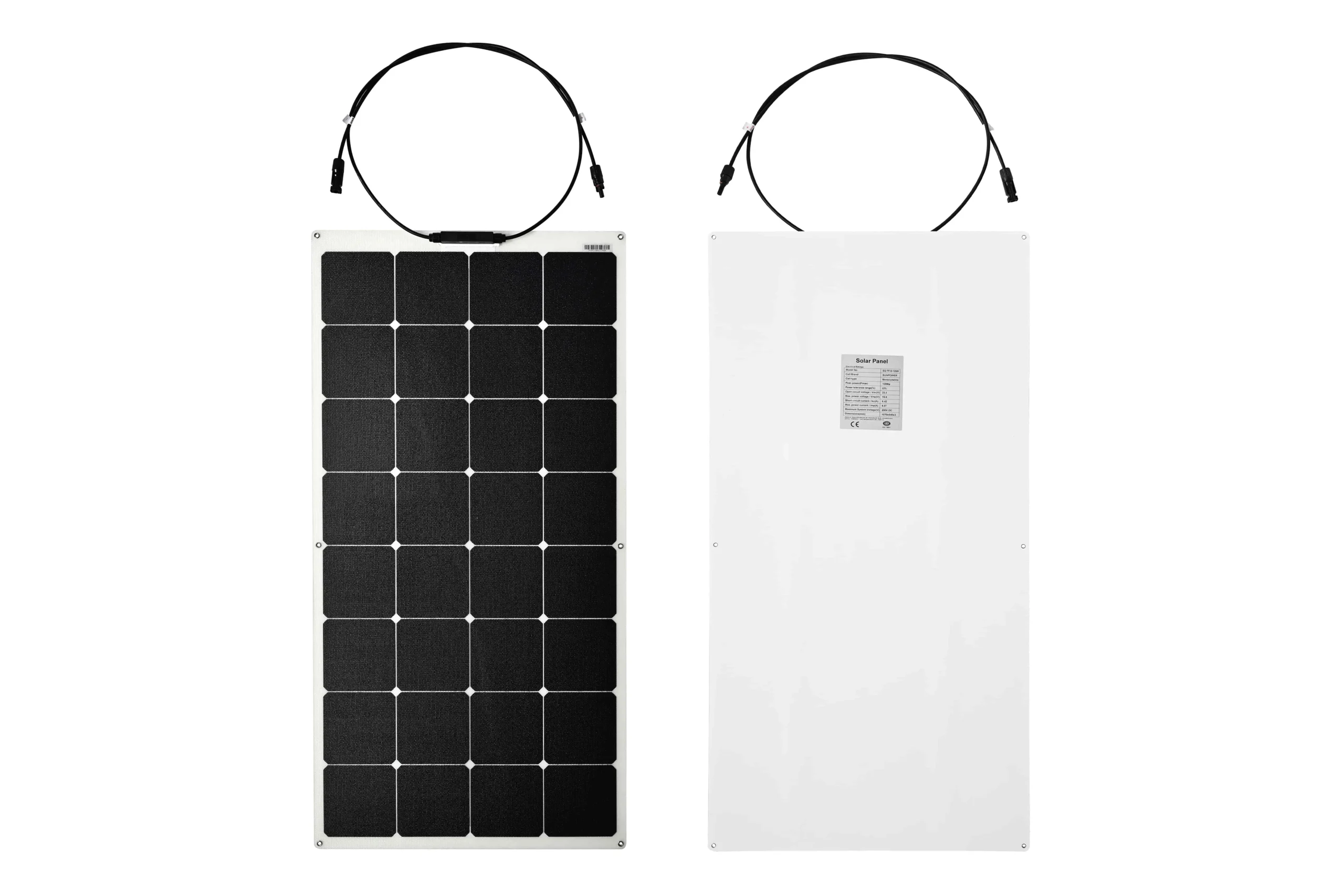
ETFE flexible solar panels are photovoltaic modules that use ETFE as a surface film or protective laminate instead of a conventional glass front. Compared with rigid glass modules, flexible panels are designed to reduce weight and fit curved or space-limited surfaces.
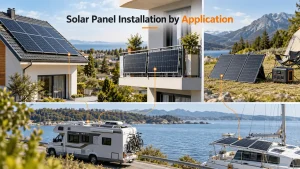
This makes them useful for RV roofs, marine decks, vehicle roofs, balcony rails, curved structures, and custom solar products where rigid glass modules are too heavy or difficult to mount.
Why ETFE Matters in Outdoor Flexible PV
Many buyers compare ETFE and PET because both can appear in flexible panel specifications. In practice, the right choice depends on application life, exposure level, cost target, and the buyer’s tolerance for outdoor aging risk.
ETFE is often preferred when the project involves stronger sunlight exposure, humidity, salt air, cleaning chemicals, outdoor abrasion, or a longer expected service life. PET may still appear in cost-sensitive designs, but it should be reviewed carefully when long-term UV, heat, or humidity exposure is expected.
| Surface Material | Typical Strength | Main Caution | Common Fit |
|---|---|---|---|
| ETFE | Weather resistance, flexible surface protection, outdoor durability | Higher cost; still needs module-level testing | Marine, RV, balcony, custom flexible PV |
| PET | Lower material cost and simple flexible-panel designs | Needs closer validation for UV, humidity, and long outdoor exposure | Cost-sensitive or shorter-duty applications |
| Glass | Mature rigid module structure and strong surface stability | Heavy and not suitable for curved surfaces | Standard rooftops and ground-mount systems |
Salt Mist and Ammonia Testing: What Buyers Should Look For
Marine, yacht, coastal, and agricultural projects often need more than a normal datasheet. Salt mist and ammonia corrosion test reports can help buyers understand whether a specific module structure has been reviewed for harsher exposure conditions.
For PA219 reference samples, reviewed report data includes salt mist testing under IEC 61701:2020 and ammonia testing under IEC 62716:2013. These results should be treated as report-specific reference data, not as a universal guarantee for every model or installation environment.
| Test Area | Reported PA219 Reference Data | How to Use It |
|---|---|---|
| Salt mist | IEC 61701:2020, severity level 3, 5% salt solution, 7-day cycle, reported 0.79% power degradation after test | Useful for coastal or marine review. Do not rewrite as a blanket “salt-proof” claim. |
| Ammonia | IEC 62716:2013, 20 cycles / 480h, NH3 6667 ppm, reported 0.80% power degradation after test | Useful for agricultural or corrosive-environment review. |
| Electrical insulation after corrosion testing | 1500 V insulation checks and 8000 V withstand voltage checks were reported as passed in the reviewed report sections | Relevant to safety review, but should be checked against the exact report and model. |
Mechanical Load Testing: Why Installation Conditions Matter
Flexible panels look soft, but their mechanical performance depends on module structure, backing material, cell layout, mounting method, and test conditions. A load result should never be separated from the tested model and mounting setup.
For one PA219 reference test on SG-T-PA219-114-425W, the reviewed static mechanical load report listed a module size of 1845 x 1177 x 3 mm, a designed load of 3600 Pa front / 1600 Pa back, and an applied test load of 5400 Pa front / 2400 Pa back. The test used three 1-hour cycles and reported 2.11% power degradation after the mechanical load test.
Heat Engineering for ETFE Flexible Solar Panels
Heat is one of the most important design issues for flexible solar panels. Because the module is thin and often installed close to a roof surface, heat can build up when there is little airflow under the panel.
Direct bonding to metal or dark roof surfaces can increase operating temperature. Higher module temperature can reduce power output and may accelerate material aging over time. The exact effect depends on cell type, roof material, air gap, weather, and operating conditions.
Installation Ideas That Reduce Heat Risk
For projects where heat is a concern, buyers and installers can review several design options:
- avoid full-surface adhesive bonding when airflow is needed;
- use a mounting layer or support structure that allows ventilation;
- confirm adhesive compatibility with the roof and module back surface;
- avoid trapping water, dirt, or heat under the panel;
- check the installation guide before sampling or bulk ordering.
Some projects use polycarbonate twin-wall sheets or other spacer structures to create a buffer layer and air gap. This approach can help reduce direct heat transfer, but the exact design should be reviewed for roof material, wind exposure, water drainage, and long-term adhesion.
Can You Walk on ETFE Flexible Solar Panels?
This question needs a careful answer. Standard flexible solar panels should not be treated as walkable. Foot pressure can damage cells, interconnections, surfaces, or encapsulation if the module is not specifically designed and installed for that type of use.
Limited foot traffic may be possible only with specific reinforced module structures, suitable surface texture, proper support underneath, and a flat hard installation surface. Even then, walking should be treated as an application-specific requirement, not a default feature.
Safety and Certification: More Than Just Power
Power output is only one part of a flexible solar panel decision. Importers, distributors, and project buyers should also review electrical safety, insulation, wet leakage, fire classification, and model-specific certification scope.
For PA219 reference documentation reviewed during previous content work, available evaluation information included IEC 61215 / IEC 61730 related evaluation, Electrical Protection Class II, system voltage listings of DC 1500V / 1000V / 600V, and Fire Safety Class C.
| Document Area | What to Confirm |
|---|---|
| IEC 61215 | Whether the module passed relevant design qualification and type approval tests. |
| IEC 61730 | Whether the module safety qualification applies to the selected model. |
| TÜV certificate | Certificate number, model scope, validity, tested standards, and report owner. |
| Fire safety class | Exact fire classification and whether it applies to the model being quoted. |
| Installation guide | Mounting method, bending limits, adhesive use, cable routing, and warranty boundaries. |
For a deeper document-focused guide, see Flexible Solar Panel Certification Guide: ETFE, Fire Rating and Test Reports.
Best Applications for ETFE Flexible Solar Panels
ETFE flexible solar panels are most useful when weight, surface fit, installation space, and outdoor exposure matter. They are not the right answer for every project, but they can solve problems that rigid glass modules cannot.
Marine and Yacht Projects
Marine projects involve salt air, humidity, curved surfaces, limited space, and frequent cleaning. ETFE flexible panels can be a strong fit when the module structure, cable waterproofing, mounting method, and salt mist documentation match the project.
RV and Vehicle Roofs
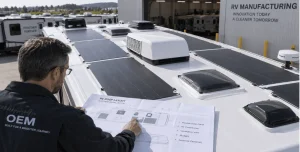
For RVs, teardrop trailers, vans, and commercial vehicles, flexible panels can reduce weight and sit close to the roof profile. This can help where rigid panels are difficult to mount. Buyers should still review heat, bending, vibration, adhesive, and cable routing before finalizing a design.
Balcony and Visible Installations
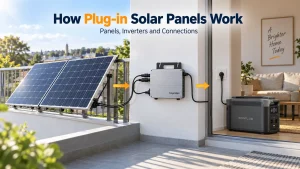
Flexible panels can be useful where the appearance, weight, and mounting surface matter. For balcony projects, buyers should also confirm local safety expectations, mounting guidance, plug-in system boundaries, and fire-related wording.
Custom OEM Projects
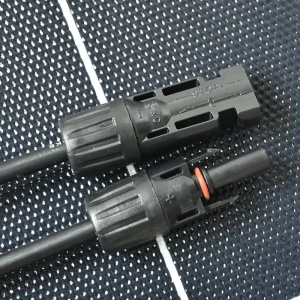
For OEM or private-label solar products, the important questions are size, voltage, cable exit, connector, surface material, backing material, label, packaging, sample approval, and certificate scope.
For project-specific module development, review Sungold’s custom solar panel page or the PA219 flexible solar panel product page.
Engineer Q&A
No. A flexible solar panel contains cells, busbars, encapsulation, wiring paths, and protective layers. Cutting the module can break the circuit, damage insulation, create safety risk, and void warranty. If a special size is needed, it should be designed at the factory level.
Adhesive choice depends on the substrate, roof material, temperature, service life, removability, and whether airflow is needed. Smooth fiberglass, metal, painted surfaces, and composite decks may require different bonding methods. Always confirm compatibility with the installation guide and project environment.
ETFE is often preferred for demanding outdoor flexible PV projects because of its weather-resistant surface properties. PET may still be used in cost-sensitive designs, but it should be reviewed carefully for UV, humidity, heat, and expected service life.
They can be suitable for marine projects when the module structure, salt mist documentation, cable waterproofing, mounting method, and surface requirements match the application. The decision should be made by project review, not by material name alone.
No. ETFE is a surface material. Fire rating must be confirmed through the relevant model-specific fire classification or certification document.
Final Thoughts
ETFE flexible solar panels can be valuable for lightweight, curved, marine, RV, balcony, and custom PV projects. The material choice matters, but it is only one part of the decision.
The stronger way to evaluate a flexible solar panel is to review the full module structure, heat behavior, installation method, corrosion exposure, mechanical load data, certification scope, and the exact model being quoted. For B2B projects, the best question is not only “Is it ETFE?” It is “Does the evidence match my project?”
Source notes: This cleaned version is based on Sungold’s published article and previously reviewed PA219 report-specific data, including IEC / TÜV evaluation information, salt mist and ammonia test references, and static mechanical load test references. Product specifications, certification claims, warranty terms, and project-specific suitability should be confirmed with Sungold before quotation or publication of sales materials.