




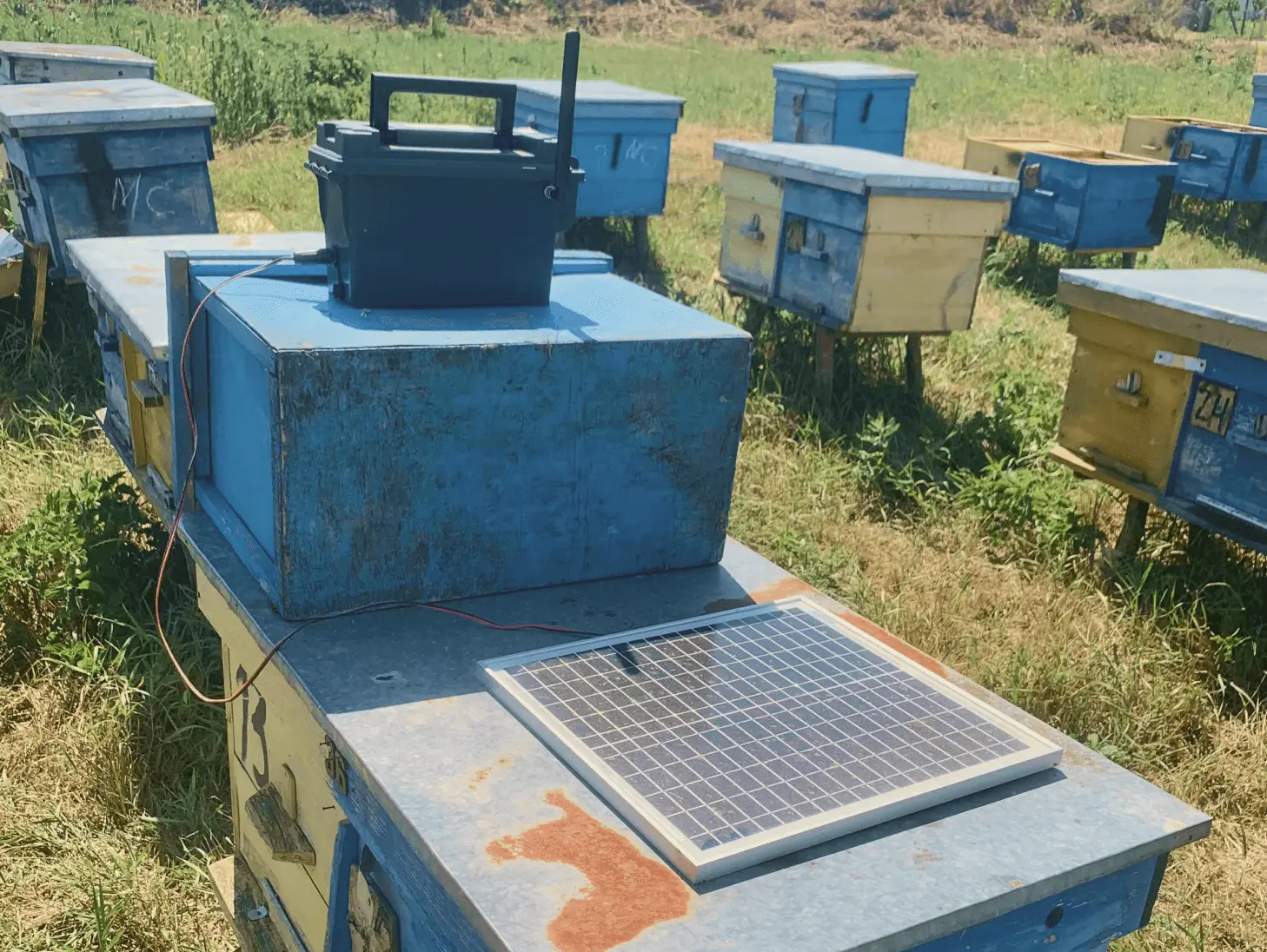
For most beehive defense system installations, a 60W off-grid solar kit paired with a 12V MPPT controller + 20Ah battery delivers 30–50% more daily draw buffer than generic 30W setups — and with a custom solar lid kit, it actually fits your hive lid. A 60W off-grid solar kit is the recommended starting point when running dual electric harp traps or cable runs exceeding 10 meters.
Why Do Standard Solar Panels Fail Beehive Defense Installations?
The 18–20mm Interface Problem Most Buyers Discover Too Late
I've seen this happen more than once: a cooperative orders a standard panel for their beehive defense system, it arrives, and the mounting footprint is 20mm too wide for the hive lid frame. The panel either overhangs or requires custom brackets that cost more than the panel itself. Standard photovoltaic panels are designed for rooftops and flat surfaces — not for the curved, recessed lid profiles of electric harp solar power arrays.
The physical interface spec matters: look for panels explicitly rated for 18–20mm frame-to-lid mounting. This is the spec most product pages omit entirely. If it isn't listed, ask before ordering. A proper 12v solar panel for beehives should come with dimensional drawings confirming lid compatibility.
How HV Pulse Loads Differ from Continuous DC Loads (and Why It Changes Your Sizing)
A common mistake is sizing a solar kit as if the controller draws power continuously. Electric harp and hornet defense power supply controllers use high-voltage pulse loads — short bursts of energy rather than a steady draw. My experience is that actual daily consumption sits between 3–8Wh/day per unit, depending on pulse frequency and ambient temperature. That's dramatically lower than the 15–20Wh/day figure some generic solar calculators assume for "DC fence controllers."
This distinction is why a purpose-built 60W off-grid solar kit often outperforms a 100W generic panel in practice: the 60W custom kit is sized for the actual load profile of a beehive defense system, not a worst-case estimate.
60W Off-Grid Solar Kit vs 30W — Which Actually Matches Your Beehive Defense System?
Calculating Real Daily Energy Draw for Electric Harp Solar Power Controllers
Start with your controller's standby current (typically 20–80mA) and active pulse current (can spike to 500mA+ for milliseconds). Over 24 hours, the effective draw is dominated by standby, not pulse. At 12V and 50mA standby: 12V × 0.05A × 24h = 14.4Wh/day. A 60W off-grid solar kit in Central/Southern Europe produces roughly 180–240Wh/day in summer, 80–120Wh/day in autumn — comfortably covering dual units with generous buffer for your hornet defense power supply.
When 30W Is Enough — and When You Need a 60W Off-Grid Solar Kit
- 30W custom solar lid kit is sufficient: Single electric harp unit, cable run under 5m, apiary located in Southern/Central Europe, summer–autumn operation only
- Step up to a 60W off-grid solar kit when: Dual-trap beehive defense system, Northern European latitude (UK, Netherlands, Germany), year-round operation including winter, consistent partial shade from tree canopy, or hornet defense power supply with extended active cycles
12V vs 24V: Voltage Selection for Your 12V Solar Panel for Beehives
The 24V argument is almost entirely about wire losses over distance, not power output. For runs under 5 meters, a 12v solar panel for beehives loses negligible power. Beyond 10 meters, 24V halves the current and cuts resistive losses by 75%. For most single-hive apiary setups, 12V is simpler, cheaper, and fully adequate. Reserve 24V for multi-hive arrays with centralized hornet defense power supply controllers.
PWM vs MPPT Controllers — Which Is Right for Your 60W Off-Grid Solar Kit?
Why MPPT Is the Right Choice for a 60W Beehive Defense System
MPPT controllers recover 10–30% more energy by optimizing the panel's operating point — and at 60W, that advantage is fully justified. Unlike smaller 30W setups where a PWM controller is 90–95% as efficient at a fraction of the cost, a 60W off-grid solar kit benefits meaningfully from MPPT, especially in low-light apiary conditions with partial canopy shade. For high-latitude installations running a year-round beehive defense system, MPPT ensures every watt of winter harvest reaches your battery.
Controller Compatibility Checklist for Integrated Bundles
- Confirm controller input voltage range covers panel Voc (open-circuit voltage) — not just Vmp
- Check low-current cutoff: some budget PWM controllers disconnect loads below 11.5V, which can reset HV pulse controllers unexpectedly
- Verify the controller supports the battery chemistry you're using (sealed AGM vs. LiFePO4 have different charge profiles)
- For a 60W off-grid solar kit powering a hornet defense power supply, confirm the MPPT controller supports the panel's Voc at cold-temperature conditions (Voc rises ~0.3%/°C below STC)
- For IEC compliance reference: IEC 62509:2011 defines performance requirements for battery charge controllers in PV systems
What Makes a Custom Solar Lid Kit Different from Generic Panels for Beehive Defense?
Why Purpose-Built Electric Harp Solar Power Panels Outperform Generic Options
Here's the counter-intuitive finding I keep coming back to: a purpose-built custom solar lid kit with higher Voc often outperforms a larger generic panel in partial shade apiary conditions. Why? Because apiary environments have irregular shading — tree canopy, adjacent hive bodies, morning fog. A panel with higher open-circuit voltage maintains charging even when 20–30% of cells are shaded, whereas a generic panel with standard cell strings drops output disproportionately.
For a robust beehive defense system, choosing a 12v solar panel for beehives that is dimensionally matched to your hive lid eliminates the 18–20mm fit problem entirely. Sungold Solar's off-grid solar kits are engineered for exactly these demanding remote-power scenarios — including agricultural and apiary applications where reliability and fit precision are non-negotiable.
Integrated HV Pulse Controller + PV Panel Bundles: What the Spec Sheet Doesn't Show
When you buy a bundle, the controller and panel are pre-matched for Voc, charge curve, and physical interface. What the spec sheet rarely tells you: the bundle has been tested as a system under pulse load conditions, not just steady-state. My experience is that mismatched components — even when individually within spec — can cause micro-cycling on the battery when pulse spikes interact with PWM switching frequency. For a hornet defense power supply running 24/7, integrated bundles eliminate this variable entirely.
For maximum efficiency in space-constrained hive-top installations, Sungold Solar's N-Type TOPCon solar panels deliver up to 22.7% module efficiency — meaning a compact 60W off-grid solar kit footprint generates the same output as a much larger conventional panel, with a 0.25% annual degradation rate that ensures long-term reliability for your electric harp solar power setup.
60W Off-Grid Solar Kit vs 30W: Which Is Right for Your Beehive Defense Array?
| Spec | 30W / 12V PWM Custom Solar Lid Kit | 60W Off-Grid Solar Kit / MPPT |
|---|---|---|
| Best For | Single harp trap, <5m cable run, S. Europe | Dual traps, beehive defense system, N. Europe, year-round |
| Daily Output (Summer EU) | 90–120 Wh | 180–240 Wh |
| Daily Output (Autumn EU) | 40–60 Wh | 80–120 Wh |
| Recommended Battery | 12V / 20Ah AGM or LiFePO4 | 12V–24V / 30Ah LiFePO4 |
| Controller Type | PWM (adequate, cost-efficient) | MPPT (justified at this wattage) |
| Physical Interface | 18–20mm custom lid mount | 18–20mm custom lid mount |
| Hornet Defense Power Supply | Single unit, mild climate | Dual units, all-season operation |
| Partial Shade Performance | Good (if high-Voc custom panel) | Better (MPPT + TOPCon cell efficiency) |
| Relative Cost | Lower | Higher (~1.5–2×, justified for dual systems) |
| IEC Reference | IEC 62509:2011 (charge controller performance) | |
What Should European Cooperatives Check Before Buying a 60W Off-Grid Solar Kit for Beehive Defense?
What to Verify Before Ordering Your 12V Solar Panel for Beehives
- Physical interface spec: Confirm 18–20mm lid-mount compatibility for your custom solar lid kit — ask for dimensional drawing if not listed
- Panel Voc vs. controller input range: Voc must not exceed controller max input voltage (even in cold conditions, Voc rises ~0.3%/°C below STC)
- Certifications: CE marking for EU market; IEC 62509 for controller; TUV or UL for panel — Sungold's off-grid solar kits carry full TUV and UL certification
- Warranty: Minimum 2-year product warranty; check if it covers field installation or lab-only conditions
- Battery not included: Most bundles exclude battery — budget separately for a 20–30Ah AGM or LiFePO4 to support your hornet defense power supply overnight
- Electric harp solar power compatibility: Confirm the kit's charge profile matches your HV pulse controller's input requirements
Sourcing Integrated Bundles vs Component-by-Component — Total Cost of Ownership
Component-by-component sourcing looks cheaper on paper. In practice, I've found that mismatched components add 1–3 hours of troubleshooting per installation, plus the risk of voided warranties when a panel from one brand is paired with a controller from another. For regional distributors supplying multiple cooperatives with beehive defense systems, integrated 60W off-grid solar kit bundles reduce installation error rate and support overhead — the per-unit cost premium pays back within the first season.
For maximum efficiency in compact hive-top installations, Sungold Solar's N-Type TOPCon solar panels offer 22.7% module efficiency with a 25-year power warranty — the ideal foundation for a high-performance electric harp solar power system that outlasts multiple beekeeping seasons.
References:
[1] IEC 62509:2011 — Performance requirements for battery charge controllers in photovoltaic systems
[2] EFSA Scientific Report on Vespa velutina nigrithorax — European Food Safety Authority
[3] Sungold Solar Off-Grid Solar Kits
[4] Sungold Solar N-Type TOPCon Solar Panels
FAQ: 60W Off-Grid Solar Kit for Beehive Defense
Q: What size solar panel do I need to power an electric harp beehive trap?
A 60W off-grid solar kit is the recommended choice for a reliable beehive defense system, especially for dual electric harp controllers or installations in Northern Europe. For a single unit in mild climates, a 30W custom solar lid kit with a 12V/20Ah battery covers most scenarios. The typical HV pulse controller draws 3–8Wh/day — always verify your controller's standby and active current draw before sizing your hornet defense power supply.
Q: Can I use a standard solar panel as a 12V solar panel for beehives?
Standard panels rarely fit beehive lid dimensions. Most hive-top beehive defense system installations require non-standard panel footprints with an 18–20mm physical interface for secure mounting. Using an oversized generic panel risks poor fit, vibration damage, and voided warranties. A purpose-built custom solar lid kit eliminates the compatibility guesswork entirely and ensures your electric harp solar power system operates reliably.
Q: Is MPPT worth it for a 60W off-grid solar kit powering a hornet defense power supply?
Yes. At 60W, MPPT controllers recover 10–30% more energy compared to PWM, which is meaningful for year-round beehive defense system operation — especially in low-light autumn and winter conditions. PWM is adequate for 30W/12V setups with cable runs under 5 meters, but for a 60W off-grid solar kit, MPPT pays for itself within one season through improved harvest efficiency.