 EN
EN
 Deutsch
 Italiano
 Español
 Français
 日本語
日本語
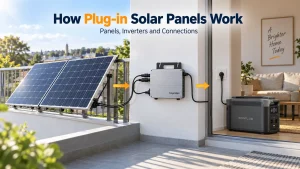
Plug-in solar can be safe in the UK only when the product, plug, microinverter, socket assumptions, household wiring, mounting method, user instructions, and current guidance are properly matched. Retailers should not describe plug-in solar as a normal household appliance or claim that every home can use it without checks.
For retailers and kit brands, the safer message is not “plug it in anywhere.” It is: plug-in solar needs clear product boundaries, suitable electrical assumptions, careful mounting guidance, and documentation that tells users when extra review may be needed.
Why the Safety Question Matters Now
Plug-in solar is getting more attention in the UK because it could make small-scale solar easier for flats, renters, small homes, gardens, and balconies. That is the opportunity.
The risk is that the product can be oversimplified.
A solar panel on a balcony looks simple. A plug-in product also sounds familiar because people already plug in heaters, kettles, chargers, and garden tools. But plug-in solar is different. It is not only consuming electricity from the home. It may generate electricity and feed it into a household circuit.
That changes the safety conversation.
For retailers, the question is not only whether customers want the product. The question is whether the product is clearly explained, correctly packaged, and supported with the right warnings before it reaches the customer.
Plug-in Solar Is Not Just Another Appliance
This is the first point retailers should make clear.
A normal appliance takes electricity from the socket. A plug-in solar product may send electricity toward the home circuit through a microinverter or similar conversion device. That means the product has to be considered as a small generation system, not just an outdoor accessory.
This does not mean plug-in solar is automatically unsafe. It means the safety depends on the full system:
- the solar panel;
- the microinverter;
- the plug and socket arrangement;
- the circuit condition;
- protective devices;
- mounting method;
- weather exposure;
- user instructions.
A good retail page should help customers understand this difference before purchase.
The Main Safety Question: What Exactly Is Being Sold?
Many safety problems start with unclear product scope.
One product may be a portable solar panel for charging a power station. Another may be a balcony solar kit connected through a microinverter. Another may include battery storage. These are not the same product category.
Retailers should define the product in plain language:
- Is it a plug-in solar product?
- Is it a portable solar product?
- Does it connect to a household circuit?
- Does it include a microinverter?
- Does it include a battery?
- Is it intended for a balcony, garden, wall, shed, or temporary outdoor setup?
- Is it sold as DIY equipment?
If the page does not answer these questions, the buyer may assume the wrong use case.
This is especially important for battery claims. GOV.UK’s plug-in solar consultation outcome states that the Interim Product Specification applies specifically to plug-in solar products and does not extend to plug-in batteries. That means battery storage should not be folded into plug-in solar claims without separate review.
Plug, Socket and Microinverter: The Part Retailers Cannot Oversimplify
The solar panel is often the most visible part of the kit, but it is not the only safety-critical part.
The plug, socket, microinverter, cable route, output limit, and protection behavior all matter. A panel may be well made, but the complete device still needs to be suitable for the intended UK use case.
Retailers should avoid phrases like “safe for any socket.” That statement is too broad.
For kit brands, this also affects product development. The microinverter documentation, plug arrangement, cable length, connection sequence, disconnection instruction, and weather exposure limits should be part of the retail package.
Older Homes, RCDs and Wiring: Why “Plug and Play” Needs Limits
The IET has warned that households should check electrical safety before using plug-in solar products. The concern is not only the solar kit. It is also the condition of the home.
Some UK homes may have older wiring, older protective devices, previous DIY electrical changes, or circuits that were not designed with plug-in generation in mind. In those cases, “plug and play” can become misleading if it sounds like no checks are ever needed.
A responsible product page should explain that some buyers may need to check:
- household wiring condition;
- socket circuit suitability;
- RCD protection;
- overload risk;
- safe disconnection;
- whether a qualified electrician should review the setup.
This does not make the product harder to sell. It makes the product easier to trust.
Batteries Create a Separate Question
Battery storage is attractive. Many UK users want to store solar power for evening use, especially if they live in flats or use electricity when the sun is not strong.
But plug-in solar and plug-in batteries should not be marketed as one automatically covered product category.
GOV.UK’s consultation outcome makes an important distinction: the IPS applies to plug-in solar products and does not extend to plug-in batteries. For retailers, this means battery wording needs extra care.
| Risky Wording | Safer Wording |
|---|---|
| Plug-in solar with battery is covered | Battery storage should be reviewed separately. |
| Works with any battery | Battery compatibility depends on system design and applicable rules. |
| DIY battery storage included | Battery installation and connection requirements should be confirmed before sale. |
| Add a battery anytime | Storage configuration should be checked against product instructions and current guidance. |
If a retailer wants to sell solar plus storage, the product page should clearly separate the solar generation claim from the battery claim.
Balcony, Garden, Wall or Shed: Safety Changes by Installation Location
The UK plug-in solar opportunity is closely connected to homes without traditional rooftop solar access. That includes flats, rented homes, gardens, sheds, balconies, and small outdoor spaces.
Each location changes the risk profile.
| Location | Safety Question |
|---|---|
| Balcony | Can the structure handle panel weight, wind load, fixing method, and falling-object risk? |
| Garden | Are cables protected from water, damage, trip risk, children, pets, and lawn equipment? |
| Wall | Is the fixing method suitable, and is permission needed for external changes? |
| Shed | Can the roof support the panel, and is the cable entry weatherproof? |
| Temporary setup | Can the panel stay stable in wind, rain, and user movement? |
This is why “no-drill” should not be treated as “no safety check.”
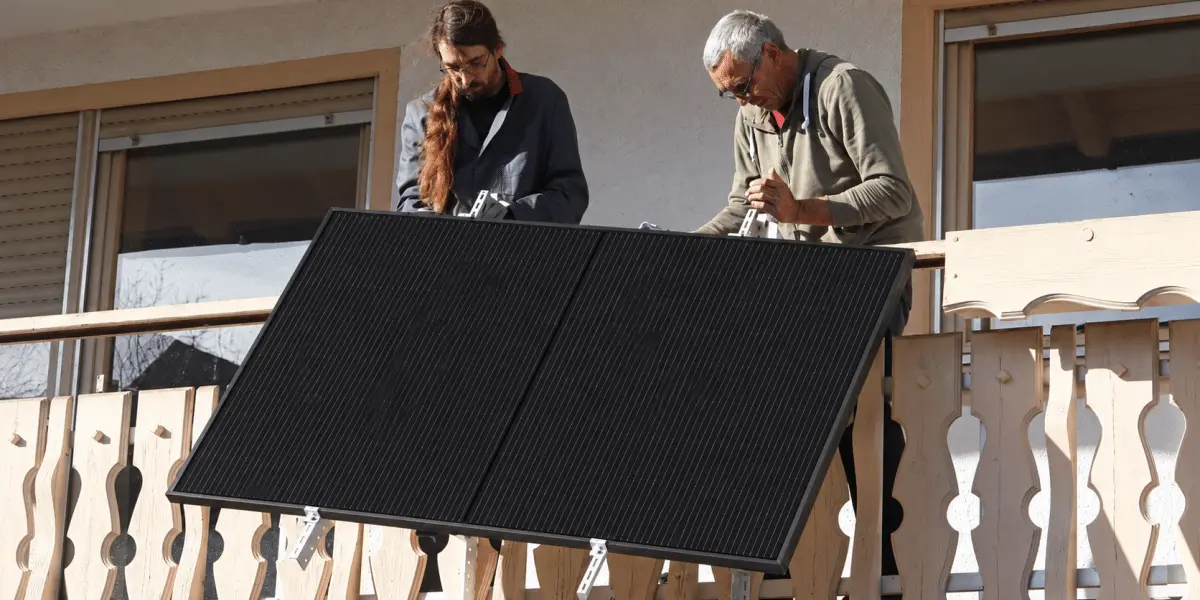
A removable mounting method may reduce building modification risk, but it still needs clear instructions, load limits, cable routing, and weather guidance.
How Retailers Should Write Safer Product Pages
The product page is part of the safety system. If the page overpromises, users may install the kit in the wrong place or connect it in the wrong way.
A better product page should make the product easy to understand without making broad promises.
| Do Not Say | Say Instead |
|---|---|
| Legal everywhere in the UK | Check current UK guidance and product-specific requirements. |
| No electrician ever needed | Some homes or configurations may need qualified electrical review. |
| Safe for every socket | Socket and wiring suitability should be confirmed. |
| Works with any battery | Battery compatibility and rules should be reviewed separately. |
| Guaranteed savings | Savings depend on sunlight, usage, tariff, system size, and self-consumption. |
| No grid or DNO process | Grid connection or notification requirements should be checked. |
This kind of wording may look less aggressive than typical retail copy. But for a new electrical product category, it is more credible.
What Kit Brands Should Prepare Before Retail Launch
For kit brands, safety is not only a compliance topic. It is a product-readiness topic.
Before launching a UK plug-in solar kit, the brand should prepare:
- product scope;
- intended use;
- included and excluded components;
- plug and socket guidance;
- microinverter information;
- mounting instructions;
- weather exposure limits;
- battery boundary wording;
- warning labels;
- packaging notes;
- after-sales FAQ;
- warranty boundary;
- qualified electrician review note where needed.
If the user has to guess how the product should be installed, the retail package is not ready.
Where Sungold Fits in the Product Design
Sungold should not be positioned as the final authority for UK electrical approval, product certification, or local installation permission. Those decisions must be confirmed by the retailer, product brand, test body, electrician, or relevant authority.
Where Sungold can support is the solar module side.
For UK plug-in solar kit brands, distributors, and OEM/ODM buyers, panel design affects the whole product package: weight, size, voltage, cable length, connector type, mounting method, appearance, packaging, and user instructions.
Relevant Sungold product paths include:
- Balcony Solar Panels
- PA621 Lightweight Solar Panels
- PA219 Flexible Solar Panels
- Custom Solar Panel Solutions
For a retailer or kit brand, the RFQ should not only ask for wattage. It should include the target use case, product scope, mounting method, cable route, voltage requirement, connector preference, packaging needs, target market, and documentation requirements.
Related paths: PA621 Lightweight Panels | PA219 Flexible Panels | Custom Solar Panel Solutions
FAQ
Plug-in solar can be safe when the product, plug, microinverter, socket assumptions, household wiring, mounting method, and user instructions are properly matched. Retailers should avoid saying that every home can use plug-in solar without checks.
No. A normal appliance consumes electricity from the socket. A plug-in solar product may generate electricity and feed it into a household circuit. That makes product design, socket suitability, protective devices, and user instructions more important.
Battery storage may be part of a wider solar product concept, but battery claims should be reviewed separately. GOV.UK states that the IPS applies to plug-in solar products and does not extend to plug-in batteries.
Retailers should explain product scope, intended use, plug and socket assumptions, microinverter information, mounting method, battery boundary, weather exposure limits, warranty boundary, and when a qualified electrical review may be needed.
Final Thoughts
Safety is not a barrier to the UK plug-in solar market. It is what will decide whether the category becomes credible.
The strongest retail products will not be the ones that say “plug it in anywhere.” They will be the ones that clearly explain what the product is, what it is not, where it can be used, what the buyer must check, and when extra review may be needed.
For Sungold’s B2B customers, the practical takeaway is simple: safer UK plug-in solar kits start with clear product boundaries, reliable module design, cautious safety wording, and documentation that helps users make the right decision before purchase.