 EN
EN
 Deutsch
 Italiano
 Español
 Français
 日本語
日本語
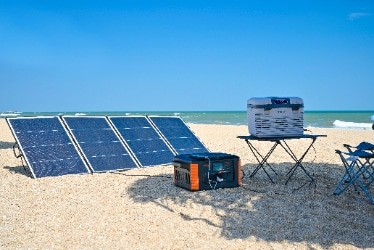
A 400W solar panel can support small off-grid loads, battery charging, RV power, marine accessories, and portable power systems, but it does not run appliances directly by itself. Real output depends on sunlight, temperature, shading, mounting angle, cable loss, controller limits, battery condition, and inverter capacity.
For planning, a 400W panel may produce roughly 1.2-2.0kWh per day in many usable conditions when calculated with 3-5 peak sun hours and practical system losses. Use this as a sizing estimate, not a guaranteed output.
A 400W solar panel sounds simple on paper. The label says 400 watts, so many buyers ask the next question: what can it run?
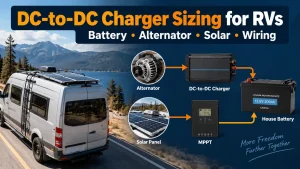
The practical answer is more specific. A solar panel produces DC power when sunlight is available. In most real systems, that power first goes through a charge controller, charges a battery, and then supports AC or DC loads through an inverter or DC distribution circuit. The panel is the energy input. The battery, controller, inverter, cable design, and appliance load decide what the system can actually run.
This is why a 400W panel can be useful for RVs, boats, cabins, balcony backup kits, and portable power systems, but it should not be described as a standalone appliance power source. Buyers should size the whole system, not only the panel.
What Can a 400W Solar Panel Run?
A 400W solar panel can help run low- to medium-power devices when it is paired with the right battery and inverter. Typical examples include LED lights, phones, laptops, routers, fans, water pumps, small DC fridges, and some short-runtime kitchen or tool loads.
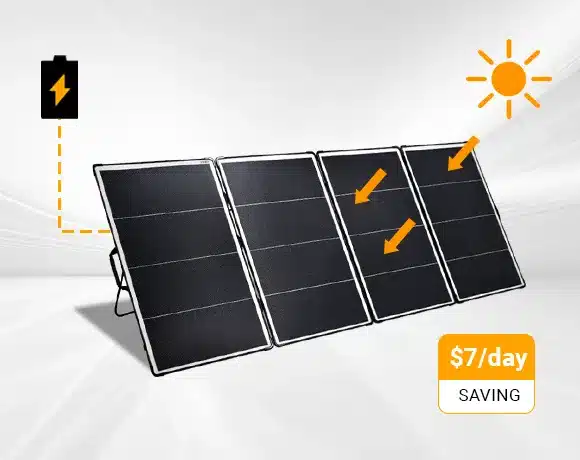
The important word is help. A 400W panel may charge the battery during the day, while the battery and inverter handle the load when the device turns on, runs at night, or needs a startup surge.
.jpg)
-1.jpg)
| Load Type | Typical Planning Question | 400W Solar Panel Fit | What Still Needs Checking |
|---|---|---|---|
| LED lights, phones, routers | Can a small solar setup cover basic daily use? | Usually a good fit when battery storage is included. | Daily runtime, battery size, DC or AC output. |
| Laptops, cameras, small electronics | Can it support mobile work or outdoor charging? | Often suitable for RV, marine, field, and portable use. | Charging hours, inverter loss, USB-C or AC adapter needs. |
| Fans and small DC pumps | Can it support daytime ventilation or water movement? | Possible if running time and startup load are controlled. | Motor surge, wiring, battery voltage, controller size. |
| Small refrigerator or cooler | Can a 400W panel run a fridge? | Possible in some systems, but not guaranteed. | Compressor surge, duty cycle, ambient temperature, battery reserve. |
| Microwave, kettle, hot plate, power tools | Can it run high-power loads? | Only for short use if the inverter and battery can support the surge. | Continuous inverter rating, surge rating, battery discharge limit. |
If a device draws more power than the inverter can deliver, a larger solar panel alone will not solve the problem. For that situation, the more relevant guide is the relationship between solar input, battery reserve, and inverter output. Sungold has a related article on what happens when a solar generator exceeds its inverter limit.
Rated Watts vs Daily Energy
The 400W label is a rated power value. It is normally measured under standard test conditions, which are used to compare panels in a controlled way. Real installations are different. The panel angle changes. Clouds pass. The surface gets hot. Cable length and controller behavior matter.
For buyers, daily energy is usually more useful than peak watts.
For a 400W panel, a simple planning range looks like this:
| Planning Condition | Simple Calculation | Estimated Daily Energy |
|---|---|---|
| 3 peak sun hours, 75% practical factor | 400W x 3 x 0.75 | About 900Wh |
| 4 peak sun hours, 80% practical factor | 400W x 4 x 0.80 | About 1,280Wh |
| 5 peak sun hours, 85% practical factor | 400W x 5 x 0.85 | About 1,700Wh |
This range is more useful than saying a 400W panel will always make 400W. For a deeper explanation of why real output is lower than the nameplate rating, see Sungold's guide on why solar panels produce less power than their rated wattage.
Can a 400W Solar Panel Run a Refrigerator?
A 400W panel may support a refrigerator in a properly sized system, but the answer depends on the refrigerator's daily energy use and startup surge. A small efficient DC fridge in an RV is very different from a household refrigerator running through an inverter in hot weather.
There are three checks:
- Daily energy: how many watt-hours the refrigerator uses in 24 hours.
- Startup surge: how much power the compressor needs when it starts.
- Battery reserve: how long the system must run when sunlight is weak or unavailable.
If the refrigerator needs 700Wh per day and the 400W panel produces about 1,200-1,600Wh on a good day, the solar input may be enough for that single load in favorable conditions. But if the same system also runs lights, fans, a water pump, a router, and charging devices, the margin becomes smaller.
Can a 400W Solar Panel Charge a 12V Battery?
Yes, a 400W solar panel can charge a 12V battery system when used with a suitable charge controller. The controller must accept the panel's voltage and current range, and the battery must be compatible with the charging profile.
A practical calculation starts with battery energy:
For example, a 12V 100Ah battery has about 1,200Wh of nominal energy. If the system only needs to replace 50% of that battery, the charging target is about 600Wh before losses. A 400W panel can often make that target realistic during a useful solar day, but actual charging time depends on sunlight, controller efficiency, battery chemistry, state of charge, temperature, and current limits.
For a broader sizing method, the related solar backup sizing guide explains how to match solar input, battery reserve, and daily loads before choosing a final kit size.
Why a 400W Panel May Not Show 400W in Real Use
A common user complaint is that a 400W panel only shows 250W, 300W, or another lower number on a power station or charge controller display. That does not automatically mean the panel is defective.
Several things can reduce the number shown on the display:
- Clouds, haze, low sun angle, or winter sunlight.
- High cell temperature, which can reduce PV output.
- Partial shade from roof racks, trees, ropes, antennas, or nearby objects.
- Controller input limits or battery charging current limits.
- Battery already near full, causing the controller to reduce charging current.
- Cable voltage drop, connector resistance, or poor layout.
- Measurement location: panel-side output and battery-side charging power are not the same reading.
This is why system brands and distributors should test the panel with a known load, correct wiring, a compatible controller, and a repeatable sunlight condition before judging the product.
400W Solar Panel Use by Application
The best use case for a 400W panel changes by application. A van roof, yacht deck, balcony frame, and portable power station all create different limits.
| Application | Why 400W May Be Useful | Design Risk | Buyer Check |
|---|---|---|---|
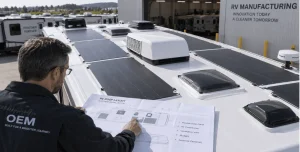
| RV and camper vans | Supports charging for lights, pumps, fans, routers, laptops, and small refrigeration. | Roof space, shade from accessories, vibration, cable routing. | Confirm roof layout, controller input, battery bank, and mounting method. |
| Marine and yacht systems | Helps maintain battery charge for electronics and low-voltage accessories. | Salt air, curved surfaces, deck traffic, connector exposure. | Review surface material, cable exit, sealing, and installation location. |
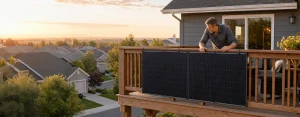
| Balcony or plug-in kits | May fit smaller residential solar packages where space is limited. | Local electrical rules, mounting safety, plug format, microinverter matching. | Do not assume every home or balcony is suitable without market-specific review. |
| Portable power stations | Can reduce recharge time compared with smaller panels. | Input voltage/current limits, connector compatibility, folding panel angle. | Check the power station's maximum PV input before pairing. |
| Small off-grid sites | Useful for monitoring, lighting, communications, and moderate battery charging. | Seasonal sunlight, theft risk, weather exposure, maintenance access. | Calculate daily loads and specify battery reserve days. |
What Buyers Should Check Before Choosing a 400W Solar Panel
For a small personal setup, buyers often start with appliance runtime. For B2B buyers, the questions should be wider. A distributor, system brand, RV kit developer, or project buyer needs a repeatable product path.
- Panel dimensions and weight for the available mounting area.
- Open-circuit voltage, operating voltage, current, and controller input range.
- Battery voltage, battery chemistry, BMS limits, and charging current.
- Inverter continuous rating and surge rating.
- Cable length, connector type, rear-exit or side-exit cable requirements.
- Thermal environment, shading pattern, vibration, and moisture exposure.
- Documentation needs, including datasheet, user instructions, and market-specific certification scope.
If the project is part of an RV, marine, portable, balcony, or off-grid product package, the panel should be selected as one part of the system. Buyers can review Sungold's 400 watt solar panel page for product-level direction, or discuss system-fit requirements through the relevant off-grid or custom solar project path.
How Sungold Can Support 400W Solar Panel Projects
For buyers comparing 400W solar panels, the next step is not only asking what the panel can run. The better question is whether the panel format, voltage range, mounting method, cable design, and documentation fit the target application.
Sungold can support project review for off-grid kits, RV power packages, marine applications, portable solar pairing, and custom solar panel requirements. For system-level projects, buyers should provide the intended battery voltage, controller or power station input range, installation surface, cable route, target market, and expected daily load profile.
FAQ
A 400W solar panel can help run small electronics, lighting, fans, routers, small pumps, and some refrigeration loads when paired with the right battery, controller, and inverter. It should be sized by daily watt-hour demand, not only appliance wattage.
A practical estimate is often around 1.2-2.0kWh per day under useful sunlight, depending on peak sun hours, temperature, shading, angle, and system losses. Poor weather or partial shade can reduce this significantly.
It may support a refrigerator in a properly designed battery system, but it depends on the refrigerator's daily energy use, compressor surge, ambient temperature, battery reserve, and inverter rating. A 400W panel alone should not be treated as a guarantee.
Yes, if the panel is connected through a compatible charge controller and the battery charging profile is correct. Buyers should confirm controller PV input voltage, current, battery chemistry, cable size, and protection devices.
Real-world output is often lower than rated output because of sunlight level, temperature, angle, shading, cable loss, controller limits, and battery charging behavior. The display on a battery or power station may show battery-side charging power, not raw panel output.
Final Thoughts
A 400W solar panel is a useful size for many portable, RV, marine, balcony, and off-grid applications. But it is not a complete power system by itself. The real question is not only what a 400W panel can run. It is whether the panel, battery, controller, inverter, wiring, and installation environment are matched well enough for the load you expect.
For B2B buyers, that difference matters. A good 400W solar package should be easy to explain, easy to install correctly, and realistic about its limits. That is what helps reduce returns, support questions, and mismatched product expectations after delivery.
Source notes: Output and system-loss explanations were cross-checked against NREL PVWatts documentation and public solar guidance explaining standard test conditions, weather, orientation, shading, and system-factor effects on real PV output.
References: NREL PVWatts Calculator; PVWatts System Design Help; Energy.gov.au Solar Panels Guide.