




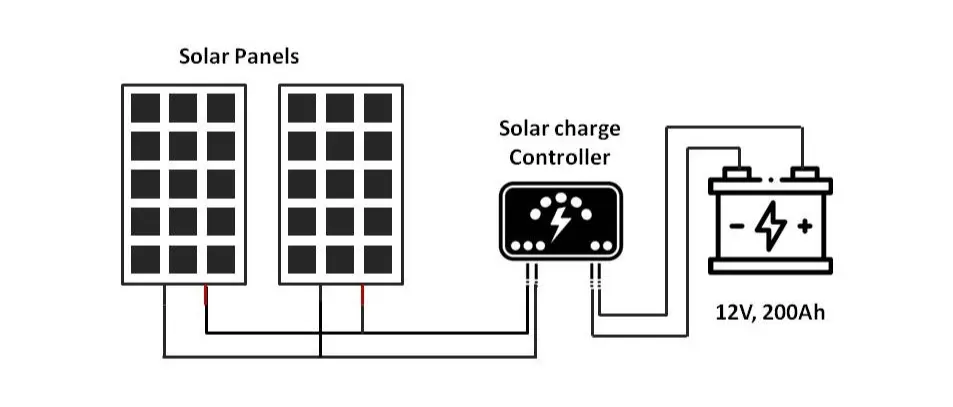
A 200W solar panel can charge a 12V battery, but the real charging time depends on battery capacity, depth of discharge, sunlight, controller efficiency, cable loss, temperature, and battery chemistry.
- For a 12V 100Ah battery, a 200W panel may replace about 50% of the battery in one strong sunny day, but a full recharge from a deep discharge often takes longer.
- A practical daily estimate is usually based on peak sun hours, not clock hours.
- Panel wattage is only one part of the system. Charge controller limits, cable size, and battery acceptance rate can slow the real charging result.
The question sounds simple: how long to charge a 12V battery with a 200W solar panel? The useful answer is not one fixed number. A 200W panel can make enough energy for small 12V batteries, RV batteries, marine batteries, and off-grid backup use, but the charging time changes quickly once sunlight, wiring, battery type, and controller settings are included.
For buyers planning an RV, marine, portable power, or small off-grid system, it is safer to treat the number as a sizing estimate. A solar panel does not push 200W into the battery all day. It reaches rated output only under test conditions, and the battery may not accept maximum charge current through the whole charging cycle.
Quick Formula for Charging a 12V Battery with a 200W Solar Panel
Use this simple planning formula before choosing the panel, controller, and battery bank:
Practical solar charging power = Panel watts x system efficiency
Estimated charging hours = Battery energy to replace / practical solar charging power
For a 12V 100Ah battery, the full nominal energy is about 1,200Wh:
If you need to replace 50% of that battery, the energy target is about 600Wh. A 200W panel may deliver closer to 150W-170W of usable charging power during good sun after normal system losses. At that rate, replacing 600Wh may take roughly 3.5-4.5 peak-sun hours. In real daily use, that may mean most of a sunny day, depending on location and mounting angle.
Estimated Charging Time for Common 12V Battery Sizes
The table below is a planning guide, not a guaranteed charging result. It assumes a 200W solar panel, useful sun, a correctly selected charge controller, and normal system losses.
| 12V Battery Size | Approx. Full Energy | Energy to Replace at 50% Discharge | Estimated Time with 200W Panel |
|---|---|---|---|
| 12V 50Ah | About 600Wh | About 300Wh | About 2-2.5 peak-sun hours |
| 12V 75Ah | About 900Wh | About 450Wh | About 2.5-3.5 peak-sun hours |
| 12V 100Ah | About 1,200Wh | About 600Wh | About 3.5-4.5 peak-sun hours |
| 12V 200Ah | About 2,400Wh | About 1,200Wh | About 7-8 peak-sun hours |
If the battery is deeply discharged, shaded, cold, hot, old, or connected through undersized wiring, the actual charging time can be longer. This is why a buyer should not judge the system only by the front label on the solar panel.
Why a 200W Solar Panel Does Not Charge at 200W All Day
A 200W rating is measured under standard test conditions. Field output is affected by solar irradiance, panel temperature, mounting angle, shading, soiling, cable resistance, connector loss, and controller conversion. NREL's PVWatts model treats losses such as soiling, shading, mismatch, wiring, connections, and availability as real system factors, which is a useful reminder for small 12V systems as well.
If your 200W panel only sends 120W-170W into the controller during real use, that does not automatically mean the panel is faulty. The first check should be the measurement point: panel output, controller output, or battery charging input. These are not always the same number. This also connects with a common buyer question covered in our guide on why solar panels produce less power than their rated wattage.
Panel Output vs Battery Charging Power
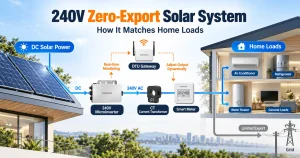
Panel output and battery charging power are often confused. A solar panel produces voltage and current at the PV side. The charge controller then converts or regulates that energy for the battery. A battery near full charge may accept less current than a lower battery. A controller may also limit current if it is undersized or if battery voltage settings are not correct.
| Measurement Point | What It Tells You | Why It May Look Lower |
|---|---|---|
| Solar panel output | PV-side voltage and current | Clouds, heat, angle, shade, dirt, or panel mismatch |
| Controller output | Charging power sent toward the battery | Controller conversion loss, current limit, or voltage setting |
| Battery input | Actual charging behavior of the battery | Battery state of charge, battery age, BMS, temperature, or absorption stage |
For formula checks, the related electrical conversion is simple: watts equal volts times amps. If you need to explain the PV current side to a buyer or dealer, the solar panel amps to watts guide is a useful supporting reference.
How Many Batteries Can a 200W Solar Panel Support?
A single 200W panel is usually better matched with one modest 12V battery, not a large battery bank that needs fast daily recovery. For example, one 12V 100Ah battery can be a reasonable planning match for light daily loads. A 12V 200Ah battery can still be charged by a 200W panel, but recovery will be slower unless the daily load is small or charging time is not urgent.
How Many 200W Panels Do You Need for a 12V 200Ah Battery?
A 12V 200Ah battery has about 2,400Wh of nominal energy. If the system needs to replace roughly half of that capacity, the target is about 1,200Wh. One 200W panel may need more than one good day in many real installations. Two 200W panels can make the daily recharge target more realistic if the controller, wiring, roof area, and battery charging limits are designed correctly.
For larger RV, marine, or off-grid kits, the discussion should move from "one panel or two panels" to the whole system: daily load, battery reserve, controller input range, cable route, fuse protection, and mounting space. This is where a system-level page such as off-grid solar kits is a better next step than a single-panel estimate.
Can You Charge a 12V Battery Directly from a Solar Panel?
No, not for normal system design. A 12V battery should be charged through a suitable charge controller. The controller regulates voltage and current and helps prevent overcharge. The right controller also depends on panel Voc, battery voltage, charge current, temperature range, and battery chemistry.
For small kits, buyers often focus on panel watts and forget the controller. That is a mistake. A mismatched controller can waste energy or create a battery protection issue. The correct controller selection should be confirmed against the controller datasheet and the battery manufacturer's charging requirements.
What Can a 200W Solar Panel Charge?
A 200W solar panel is useful for charging small and medium 12V battery systems. It can support applications such as LED lighting, phone charging, small DC appliances, communication devices, portable power stations, RV accessory batteries, marine service batteries, and light off-grid loads.
It is not a good idea to promise that a 200W panel can run a refrigerator, pump, or inverter load without checking the load profile. A refrigerator may have a low average running load but a higher startup surge. An inverter adds its own losses. A cloudy day can cut solar harvest. For real system planning, calculate daily watt-hours first, then size the panel and battery together.
What Size Solar Panel Do You Need for a Leisure Battery?
For a leisure battery, the right panel size depends on how much energy the user consumes each day. A weekend camper using lights and phone charging may be fine with a smaller panel. A van, boat, or mobile workstation using refrigeration, fans, routers, or DC tools may need more panel area and more battery reserve.
The better workflow is:
- List each load and its daily runtime.
- Convert the daily use into watt-hours.
- Choose battery capacity for overnight reserve.
- Choose solar panel wattage to replace daily energy use.
- Confirm the charge controller, cable size, connector, and mounting area.
Why Wiring and Controller Selection Matter
A 200W panel can still perform poorly if the cable run is too long, the cable is too thin, connectors are weak, or the controller is not suitable. Voltage drop matters more in low-voltage systems because the current is higher. In 12V systems, small wiring mistakes can turn into visible charging loss.
If the installation uses a long cable run from the roof to the battery compartment, the buyer should check cable gauge, fuse placement, connector rating, and route protection. Our 12V solar cable size guide covers this part in more detail.
When a 200W Panel Is Enough - and When It Is Not
| Use Case | 200W Panel Fit | What to Check Before Buying |
|---|---|---|
| Small 12V battery maintenance | Usually suitable | Controller settings, standby load, battery type |
| RV accessory battery | Suitable for light to moderate loads | Daily Wh use, roof shade, cable distance, battery reserve |
| Marine service battery | Possible, but environment matters | Salt exposure, mounting surface, cable routing, controller protection |
| 12V 200Ah battery bank | May be slow as a single panel | Recharge window, number of panels, controller input capacity |
| Inverter loads or refrigeration | Needs careful load calculation | Startup surge, daily runtime, inverter loss, cloudy-day reserve |
What B2B Buyers Should Confirm Before Ordering
For distributors, kit brands, and project buyers, the important question is not only whether a 200W panel can charge a 12V battery. The real question is whether the complete kit is matched for the application.
- Battery chemistry and usable depth of discharge
- Daily load profile in watt-hours
- Expected peak sun hours in the target market
- Panel voltage, current, and Voc compatibility with the charge controller
- Controller current rating and battery charging profile
- Cable length, gauge, fuse, and connector rating
- Mounting surface, vibration, salt mist, shade, or high-temperature exposure
- Documentation needed for distributors, installers, or end users
Sungold can support solar panel selection for RV, marine, off-grid, and custom solar kit projects. For quotation or product matching, the final battery, controller, installation, and compliance details should be confirmed by the buyer's system designer or local installer.
FAQ
For a 12V 100Ah battery, replacing about 50% capacity may take roughly 3.5-4.5 peak-sun hours under good conditions. A full recharge from deep discharge can take longer, often more than one practical day depending on sunlight and system losses.
Yes, a 200W panel can charge a 12V 100Ah battery when used with a suitable charge controller. The real recharge time depends on battery state of charge, sunlight, controller efficiency, and wiring losses.
As a simple estimate, 200W divided by a 12V battery charging voltage suggests a theoretical current in the low-to-mid teens. Actual current can be lower because the battery may charge above 12V, and the controller, sunlight, temperature, and cable losses affect the result.
You need a suitable charge controller. MPPT controllers are often preferred when the panel voltage is higher than battery voltage or when better energy harvest is needed, but the final choice should match the panel Voc, battery voltage, current rating, and battery charging profile.
It depends on the refrigerator's daily watt-hour use, startup surge, inverter loss, battery reserve, and sunlight. A 200W panel may help recharge a battery used by a small efficient fridge, but it should not be treated as a guaranteed refrigerator power source without a load calculation.
Final Thoughts
A 200W solar panel is a practical size for many 12V battery charging applications, but the charging result is controlled by the full system. Start with daily energy use, battery capacity, and peak sun hours. Then check the charge controller, wiring, mounting condition, and battery charging limits. That gives buyers a more reliable answer than panel wattage alone.
Source Notes: Solar output and loss-factor logic should be checked against system modeling references such as NREL PVWatts API documentation and NREL SAM PVWatts help. Battery charging limits, DoD, and controller settings should be confirmed against the specific battery and controller datasheets.