




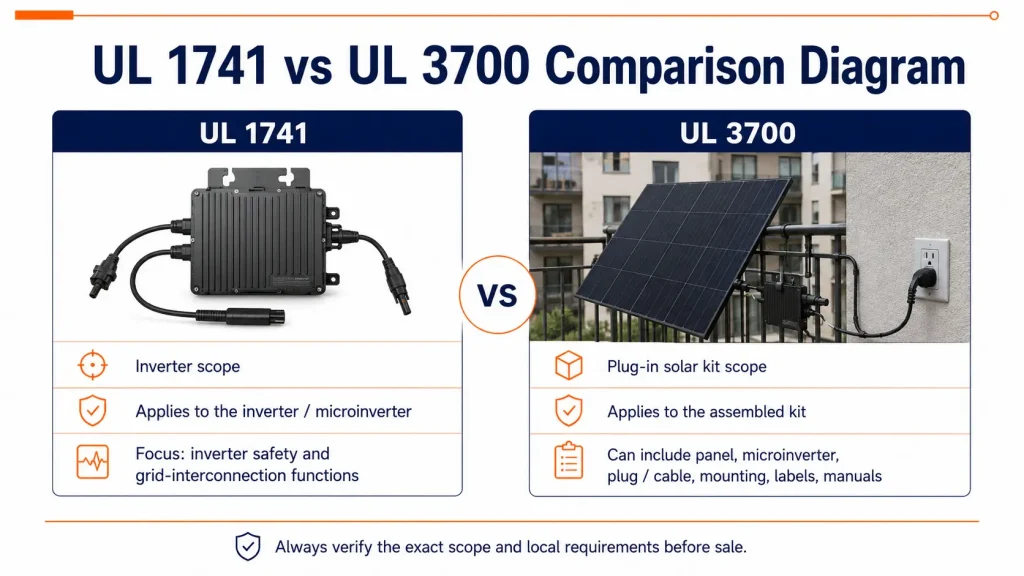
- UL 1741 mainly applies to inverters, converters, controllers, and interconnection equipment used with distributed energy resources.
- UL 3700 was created for interactive plug-in PV equipment and systems, including safety risks specific to balcony and outlet-connected solar.
- A UL 1741-listed microinverter does not automatically make the full kit UL 3700 certified.
- Distributors should verify the exact model numbers, certification scope, labels, cable and plug design, manuals, and local connection pathway.
- The safest sales copy is specific: say what is certified, what is included, and what still depends on local rules.
Plug-in solar kits have a simple pitch: panels, a microinverter, a plug, and a way for more people to use solar without a traditional rooftop installation. That simplicity is exactly why distributors need to look closely at certification language.
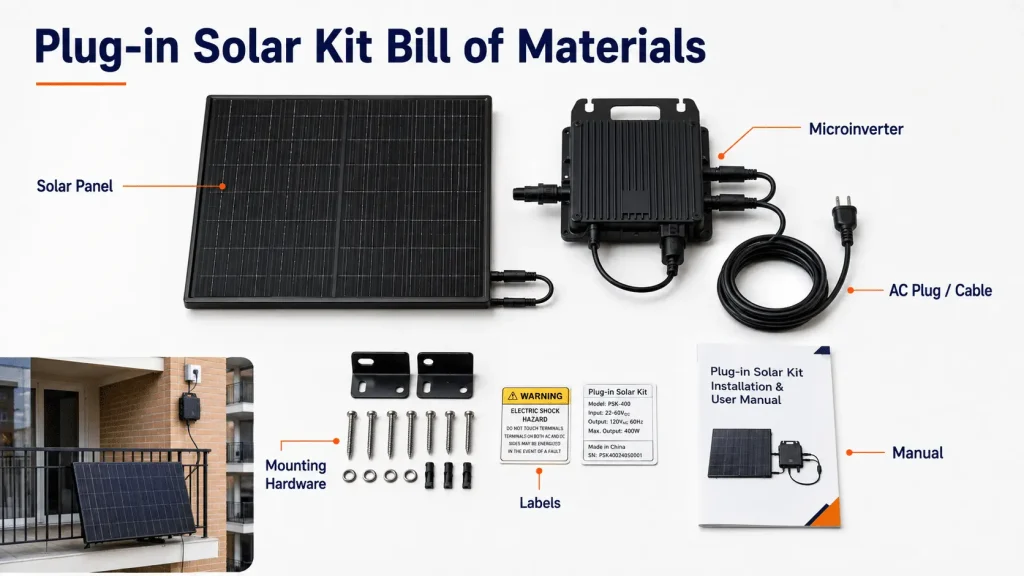
A solar panel can be a component. A microinverter can be a component. A plug-in solar kit is different. It is a package that a customer may connect to a household circuit, often outdoors, sometimes on a balcony, and often without the same professional design review used for rooftop solar.
That is where UL 1741 and UL 3700 get mixed up. Both matter. They just answer different questions.
The Short Answer
UL 1741 tells you something important about the inverter. UL 3700 tells you to look at the plug-in solar system as a system.
UL 1741 is primarily an inverter and interconnection-equipment standard. UL 3700 is focused on interactive plug-in photovoltaic equipment and systems.
For a distributor, the practical rule is simple: do not treat a UL 1741-listed microinverter as proof that the entire plug-in solar kit has been evaluated as a complete plug-in product.
| Standard | What it mainly answers | What distributors should do |
|---|---|---|
| UL 1741 | Has the inverter or interconnection equipment been evaluated for its intended distributed-energy role? | Verify the exact microinverter model, UL file or certification record, electrical ratings, and model match. |
| UL 3700 | Has the plug-in PV equipment or system been evaluated for outlet-connected plug-in solar risks? | Ask whether the complete kit, subassembly, or exact configuration has UL 3700 coverage. |
Our Take
UL 1741 is still one of the first things a distributor should ask about, because the microinverter is central to grid-interactive safety. But for plug-in solar, it is not enough to stop there.
The kit also needs the right plug, cable, labels, installation instructions, mounting limits, weather-use assumptions, and local connection pathway. If those pieces are unclear, the product may be hard to sell responsibly even when the inverter itself looks strong on paper.
So the best distributor question is not, “Is the inverter UL listed?” It is:
What UL 1741 Covers
UL 1741 is the established U.S. standard for inverters, converters, charge controllers, and interconnection system equipment used with distributed energy resources. In plug-in solar, it usually shows up in the microinverter conversation.
That matters because a microinverter must convert DC power from the solar panel into AC power and interact safely with the electrical system. A distributor should confirm that the inverter model supplied in the kit matches the model shown in the certification record.
What UL 1741 is good for
- Checking the inverter or interconnection equipment scope.
- Confirming the exact inverter model used in the kit.
- Reviewing grid-interactive safety claims tied to the inverter.
- Supporting utility, AHJ, installer, or retail compliance conversations.
Where UL 1741 stops
UL 1741 does not automatically evaluate every panel, cable, plug, bracket, label, warning, manual, or user installation condition in the kit. That is the gap distributors need to watch.
What UL 3700 Adds
UL 3700 is focused on interactive plug-in photovoltaic equipment and systems. UL Solutions launched a dedicated plug-in solar testing and certification program based on UL 3700 in January 2026, describing it as a framework for construction, performance, and labeling criteria tailored to plug-in solar systems.
This is important because plug-in solar creates safety questions that do not look exactly like traditional rooftop solar:
- What happens when a customer handles the plug?
- How is backfeeding risk addressed?
- What happens if the product is used outdoors?
- Can the kit be connected only under specific receptacle or circuit conditions?
- Do the labels and manuals clearly explain what users must not do?
These are not abstract questions. They shape whether a distributor can sell the kit with clear instructions, defend the product page, train customer service, and avoid turning every order into a support case.
UL 1741 vs UL 3700: Side-by-Side
| Factor | UL 1741 | UL 3700 |
|---|---|---|
| Best understood as | An inverter and interconnection-equipment standard. | A plug-in PV equipment and system evaluation framework. |
| Most useful when | You are checking the microinverter used in a kit. | You are checking whether the kit has been evaluated for plug-in solar use. |
| Common mistake | Calling the whole kit certified because the inverter is listed. | Claiming UL 3700 status without checking the exact configuration and scope. |
| Distributor risk | Component-level evidence gets overstated in product copy. | System-level evidence is assumed but not documented. |
| Best practice | Verify the inverter model and certification record. | Verify whether the full kit, subassembly, or exact SKU is covered. |
What Distributors Should Verify
A good plug-in solar supplier should be able to answer these questions without turning the conversation into a guessing game.
1. The exact certified item
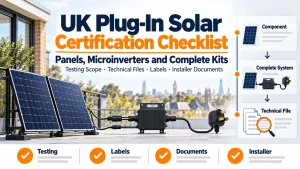
Ask whether the certificate covers the inverter, a subassembly, or the full kit. Then check the model number. A certificate for a similar model is not the same as a certificate for the product you are selling.
2. The bill of materials
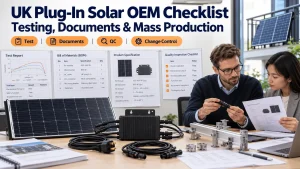
Request the panel model, microinverter model, plug, cable, connector, mounting hardware, labels, and manual version. If any part changes, ask whether the certification or evaluation still applies.
3. The plug and cable design
For plug-in solar, the connection method is not a small detail. The plug, cable rating, strain relief, outdoor-use assumptions, and disconnection behavior all affect how the kit should be sold and used.
4. The installation conditions
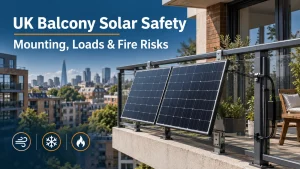
A balcony kit may be used on railings, walls, patios, flat roofs, or temporary frames. The manual should say which installations are supported and which are not. If the mounting method is outside the assessed configuration, that needs to be clear.
5. The user warnings
Strong documentation should explain unsuitable outlets, extension cords, adapters, damaged receptacles, water exposure, cable routing, landlord or HOA limits, and when professional review may be needed.
6. The local pathway
Certification does not replace state law, utility rules, electrical code, AHJ interpretation, lease terms, or HOA restrictions. A distributor should keep those issues out of blanket national claims.
Safer Product Page Wording
The goal is not to weaken the product. The goal is to make the claim accurate enough that a buyer, installer, inspector, or retail partner can understand it.
| Risky wording | Better wording |
|---|---|
| UL certified plug-in solar kit | Includes a UL 1741-listed microinverter. Complete-kit certification status should be verified for the specific configuration. |
| UL 1741 means the whole system is safe | UL 1741 addresses the inverter or interconnection equipment scope. The complete plug-in kit should be reviewed separately. |
| Legal in the U.S. | Use depends on state law, utility rules, electrical code, AHJ requirements, and property permissions. |
| No approval needed | Notification, approval, and installation requirements vary by location and product design. |
| Works with any outlet | Use only with outlets and circuits that match the manufacturer’s instructions and local requirements. |
Best Fit: When a Plug-in Solar Kit Is Ready for a Distributor
A plug-in solar kit is closer to distributor-ready when the supplier can provide a clean documentation package:
- exact model list for every major component;
- UL 1741 documentation for the microinverter, where applicable;
- clear UL 3700 status for the kit, subassembly, or target configuration;
- panel, inverter, cable, plug, and mounting specifications;
- installation manual and user manual;
- warning labels and packaging copy;
- SKU-level change-control process;
- market notes for utility, AHJ, renter, and HOA review.
If those items are missing, the product may still be in development, but it is not yet a clean channel product. That does not mean the idea is weak. It means the distributor should treat it as a qualification project, not a finished retail listing.
For broader document review, buyers can also compare this checklist with Sungold’s guide to certification documents and test reports. The same principle applies: the document should match the exact model, construction, and use case being sold.
Where Sungold Fits
Sungold Solar can support solar panel selection and OEM/ODM module planning for plug-in solar kit projects. But the panel is only one part of the full package. A serious plug-in solar program also needs inverter matching, cable routing, plug strategy, mounting design, manuals, labels, and market-specific compliance review.
For small-space solar package planning, distributors can start with Sungold’s balcony solar panel solutions. For private-label or application-specific projects, the better route is often a custom solar panel solution where size, cable layout, connector path, appearance, and packaging requirements can be reviewed together.
For distributors, the better request is not just “send a 400W panel” or “send an 800W kit.” It is:
That kind of request gives the manufacturer enough context to recommend a practical product path and helps the distributor avoid claims that outrun the evidence. If you are comparing several suppliers, use a structured process like this guide to compare solar panel quotes so certification scope, documentation, packaging, and component substitutions are reviewed before price.
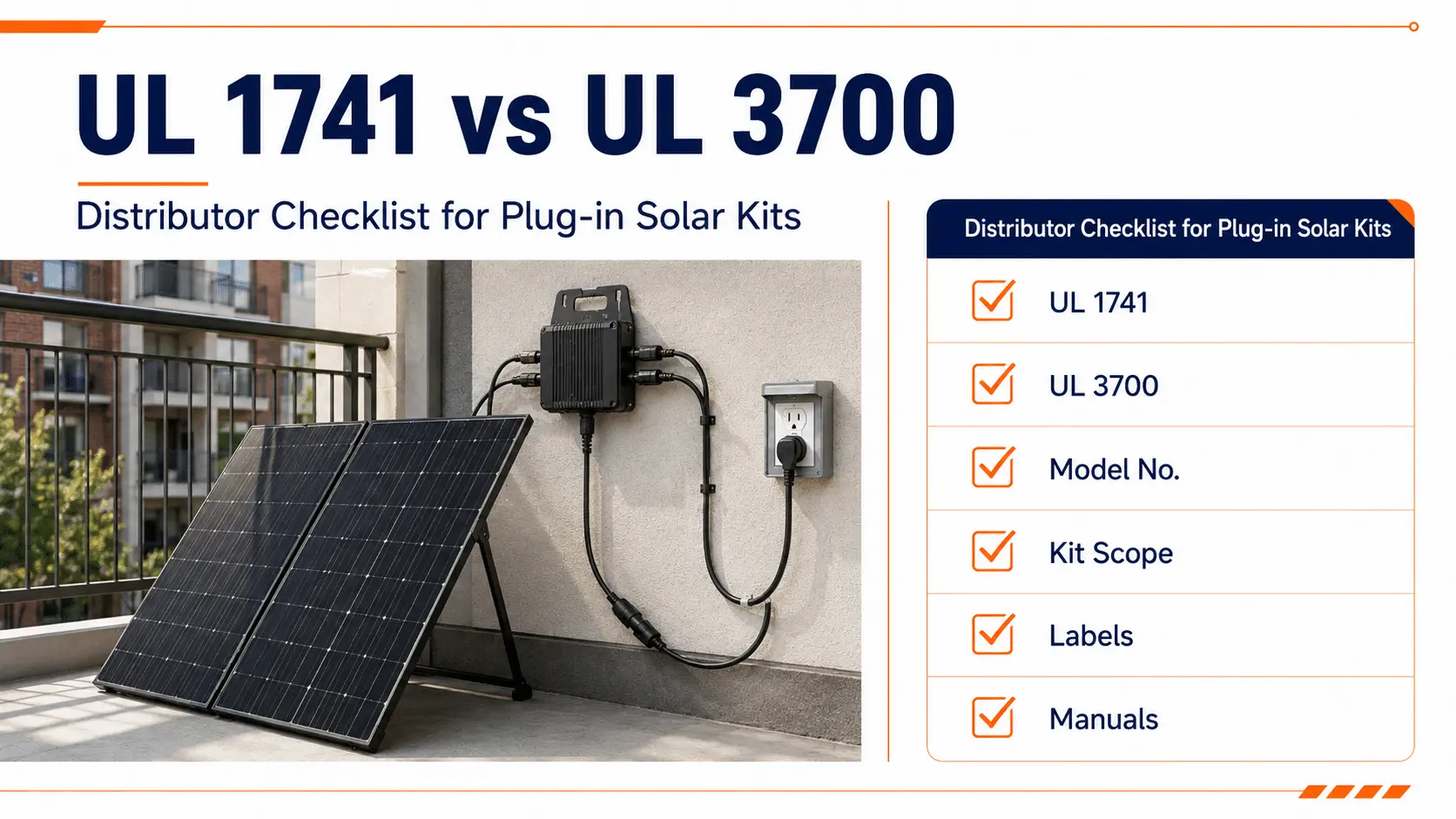
Distributor Checklist
- Confirm the exact panel, microinverter, plug, cable, connector, and mounting models.
- Verify the microinverter’s UL 1741 status for the exact model supplied.
- Ask whether the complete kit, subassembly, or specific SKU has UL 3700 coverage.
- Check whether the shipped parts match the evaluated configuration.
- Review all warnings about outlets, extension cords, adapters, outdoor use, mounting, and cable routing.
- Confirm label language and label placement before production.
- Prepare a pre-installation checklist for utility, code, landlord, HOA, and building conditions.
- Avoid “legal everywhere” or “no approval needed” claims unless supported for the exact location and product.
- Set a change-control rule for any component replacement.
- Keep certificates, datasheets, manuals, and SKU records together.
FAQ
Does UL 1741 mean a plug-in solar kit is UL 3700 certified?
No. UL 1741 and UL 3700 have different scopes. A UL 1741-listed microinverter is important, but it does not automatically certify the complete plug-in solar kit under UL 3700.
Can a distributor say the kit is UL certified if only the inverter has UL 1741?
That wording is risky. Say exactly what is certified: for example, “includes a UL 1741-listed microinverter.” Then describe the complete-kit certification status separately.
Is UL 3700 the same as legal approval?
No. UL 3700 can support product safety evaluation, but use still depends on state law, utility rules, electrical code, AHJ interpretation, property permissions, and the product instructions.
What is the biggest sourcing risk?
Component substitution. If the supplier changes the inverter, panel, plug, cable, connector, or bracket, the original evaluation may no longer describe the product you are selling.
What should be included in a bulk-order RFQ?
Ask for the bill of materials, exact model numbers, certification records, datasheets, manuals, labels, packaging copy, installation limits, and change-control process.
Sources and Verification Notes
This article is based on public UL information available at the time of writing. Certification status can change by model, configuration, and supplier. Always verify the exact product record before publishing sales claims.