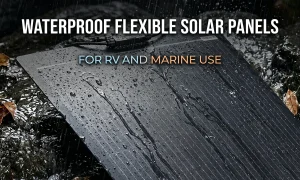





The right choice depends on roof shape, available area, heat exposure, cable routing, battery voltage, controller limits, and maintenance access.
For OEM and distributor projects, confirm dimensions, junction box position, cable length, connector type, mounting method, and packaging before quotation.
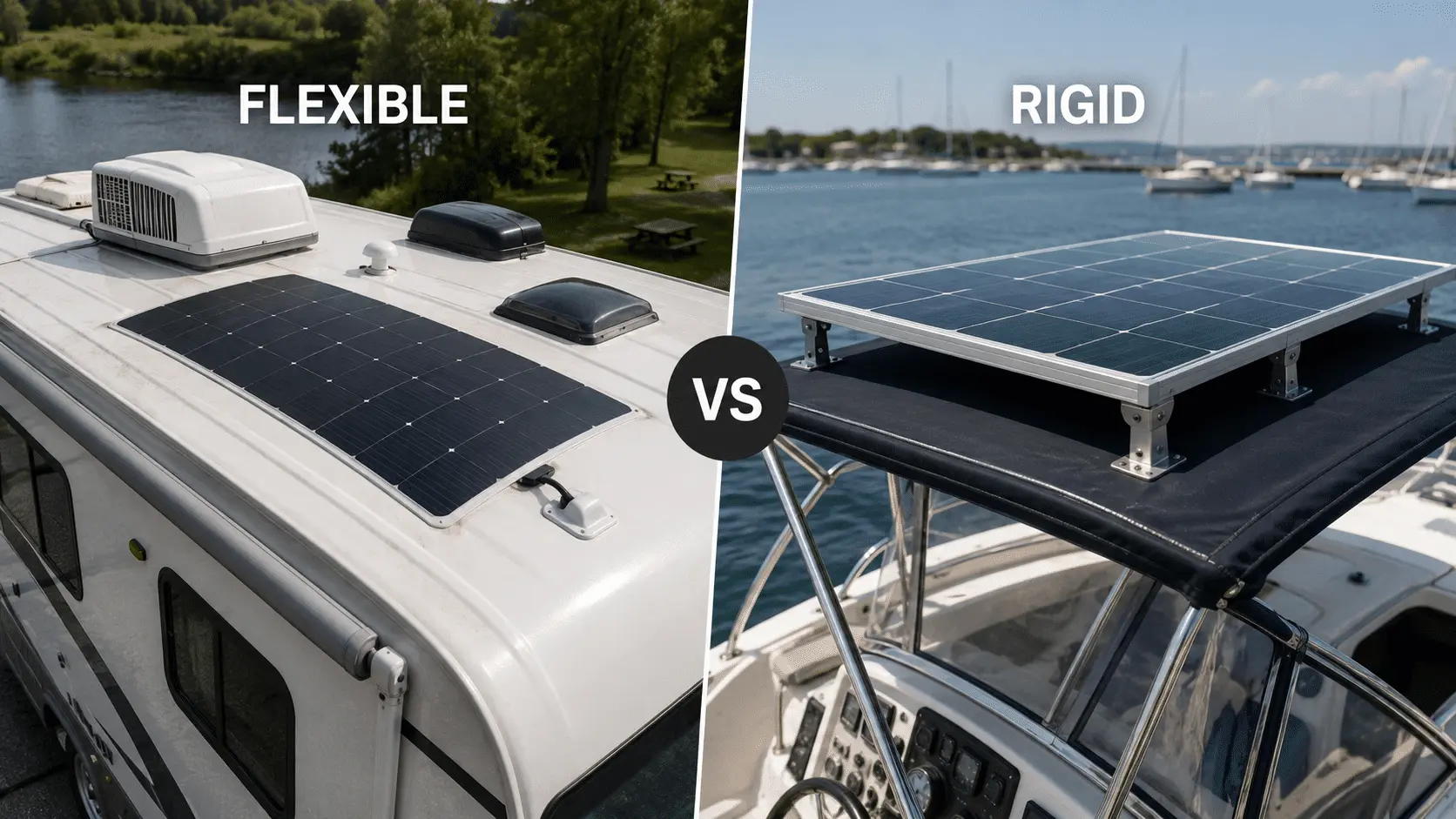
When buyers compare flexible solar panels vs rigid solar panels for an RV or boat, the practical question is which option will fit the installation and remain serviceable after delivery.
Flexible panels can suit curved, lightweight, or space-limited surfaces. Rigid panels can be easier to ventilate, inspect, and replace when a suitable rack or frame is available. The decision depends on the complete installation, not only panel wattage.
Flexible Solar Panels vs Rigid Solar Panels for RV and Marine Applications
| Decision Factor | Flexible Solar Panels | Rigid Solar Panels |
|---|---|---|
| Roof shape | Suitable for curved or uneven surfaces | Better for flat surfaces with mounting rails |
| Added structure | Can support a low-profile layout | Normally needs brackets, rails, or a frame |
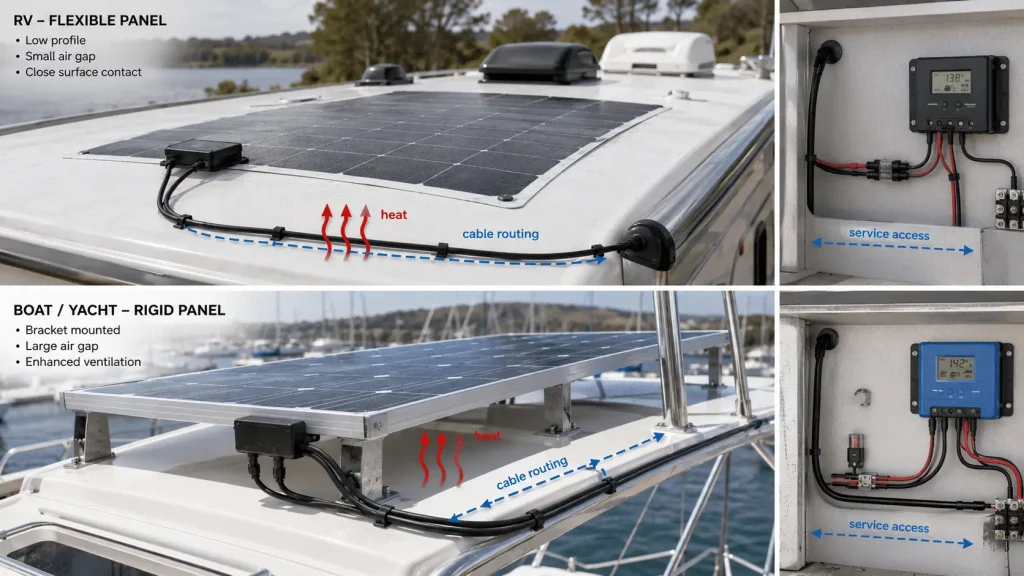
| Airflow | Requires careful heat management | Raised mounting usually allows more airflow |
| Maintenance | Removal can be more involved if bonded | Usually easier to inspect or replace when rack-mounted |
| Marine layout | Useful for limited or irregular deck areas | Suitable for fixed marine structures with space |
| Main RFQ concern | Mounting method, heat, cable exit, and service access | Rack design, structure, clearance, and wind exposure |
There is no universal winner in the flexible solar panels vs rigid solar panels comparison. The correct option is the one that matches the physical installation and the maintenance plan.
1. When Flexible Solar Panels Make More Sense
Flexible solar panels make more sense when the surface is curved, lightweight, or difficult to use with standard brackets.
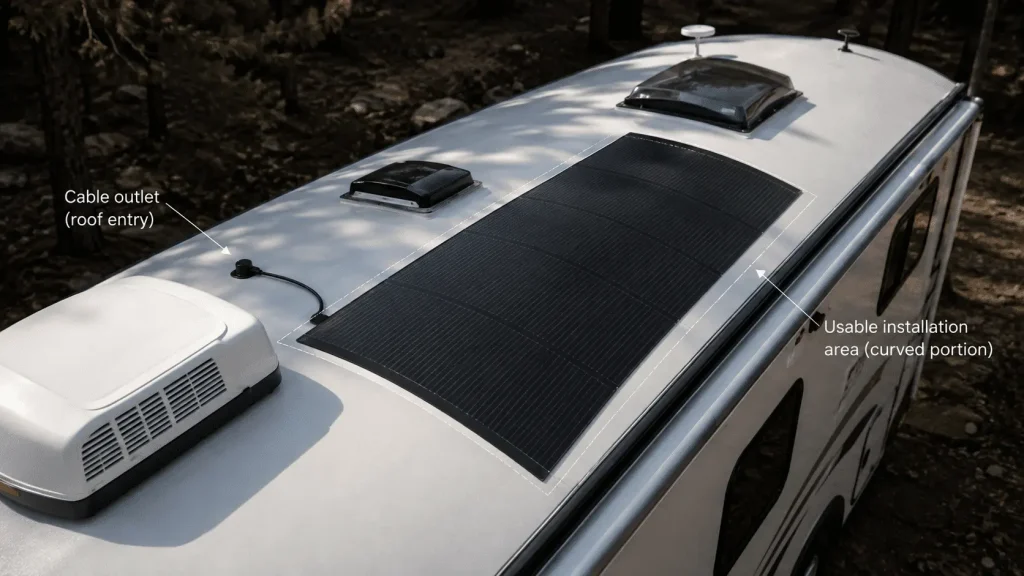
On an RV, the usable roof area may be interrupted by vents, air conditioners, skylights, and roof accessories. A low-profile panel can help when the buyer wants to work around these obstacles without adding a large mounting structure.
Marine projects can have similar constraints. A yacht or small boat may have limited deck space, irregular surfaces, and equipment that must remain accessible. In these cases, the panel layout may matter more than choosing the highest nominal wattage.
Flexible panels are worth considering when the project needs custom dimensions, reduced structural load, or a layout around roof and deck equipment. They still require a planned fixing method, cable exit, drainage path, cleaning routine, and service approach.
2. When Rigid Solar Panels Are the Better Choice
Rigid solar panels are often the better choice when the installation has enough space for a rack or frame and long-term access is important.
A raised structure can make it easier to inspect the panel, cables, connectors, and roof surface. If a panel needs replacement later, a rack-mounted design may also be less difficult to remove than a fully bonded panel.
Rigid panels may be more suitable for flat RV roofs, marine installations with a stable frame, fixed off-grid systems, and projects where inspection and replacement must be straightforward.
The tradeoff is additional hardware and structure. Brackets, rails, fasteners, roof penetrations, height, clearance, appearance, and wind exposure should be reviewed before ordering.
3. Flexible Solar Panel Installation and Heat Management
Installation method is one of the most important differences between flexible and rigid solar panels.
A rigid panel is usually raised above the surface, while a flexible panel may sit closer to the roof or deck. When airflow below the panel is limited, the mounting method and operating environment need closer review. Direct bonding should not be assumed suitable for every roof material, climate, or service plan.
Before selecting the mounting method, confirm:
- Whether the surface is flat, curved, textured, or uneven
- Whether it accepts the proposed adhesive or fixing method
- Whether the panel must be removable for service
- Where the cable will exit and how the entry point will be sealed
- Whether water can drain around the panel
- Whether nearby equipment creates partial shade
- Whether the panel will be exposed to foot traffic or objects
A layout drawing should show panel dimensions, cable exit position, junction box location, fixing area, and clearance around the panel.
4. Electrical Matching for RV and Marine Solar Systems
The mechanical choice is only half of the decision. Flexible solar panels vs rigid solar panels must also match the electrical system.
- Battery system voltage
- Charge controller input voltage and current limits
- Series or parallel connection plan
- Cable length, cable size, connector type, and polarity
- Power station or inverter input limits
- Shading conditions across the array
A connector that physically fits does not prove electrical compatibility. Check voltage, current, polarity, and controller limits before confirming the final configuration.
For portable power stations, verify the accepted PV voltage range and current limit before selecting or combining panels. See Sungold’s guide on solar panel compatibility with power stations for a practical starting point.
For RV and marine systems, cable routing also matters. A procurement drawing should identify cable length, connector type, exit direction, and whether custom wiring is required.
5. How to Choose Flexible or Rigid Solar Panels
Choose flexible panels when the surface is curved or irregular, added roof weight must be controlled, a low-profile design is important, or the available space requires custom dimensions.
Choose rigid panels when the surface is flat and structurally suitable, a rack or frame is available, ventilation below the panel matters, or inspection and replacement must be straightforward.
For a distributor or installer, include the after-sales process in the decision. Ask how the panel will be removed, how the cable will be serviced, and what happens if the customer changes the roof layout later.
6. Custom Flexible Solar Panels for RV and Marine Layouts
Custom flexible solar panels can be useful when standard dimensions do not match the available surface.
Customization may involve panel length and width, output voltage, cable length and exit position, junction box location, connector selection, mounting requirements, packaging, and labeling.
The rear junction box should not interfere with roof ribs, deck hardware, hinges, drainage channels, or the planned cable route.
For an RV or marine RFQ, send the supplier a marked-up roof or deck drawing with usable area, obstructions, cable entry, controller location, and clearance requirements.
Sungold’s custom solar panel solution may be relevant for projects that require application-specific dimensions or wiring. Final feasibility depends on the submitted layout and technical requirements.
7. RFQ Checklist for Flexible and Rigid Solar Panels
A complete RFQ helps suppliers quote the correct configuration.
- Application: RV, yacht, boat, trailer, cabin, or off-grid system
- Installation surface: flat, curved, textured, or framed
- Available area, maximum dimensions, and required total wattage
- Battery voltage and charge controller or power station model
- Series or parallel connection plan
- Cable length, cable exit direction, connector type, and polarity
- Junction box position and mounting method
- Exposure to heat, saltwater, vibration, or frequent cleaning
- Removability, packaging, labeling, sample, quantity, and delivery requirements
Request a sample drawing before confirming the order. It can reveal problems with cable routing, junction box clearance, and installation access early.
8. FAQ About Flexible Solar Panels vs Rigid Solar Panels
Are flexible solar panels better than rigid panels for an RV roof?
They can be a better fit when the roof is curved, weight-sensitive, or crowded with vents and other equipment. Rigid panels may be preferable when the roof is flat and easier ventilation, inspection, and replacement are priorities.
Are flexible solar panels suitable for marine applications?
They can be suitable for limited or irregular marine surfaces, but saltwater exposure, vibration, cleaning, cable sealing, heat, and walking requirements should be confirmed for the specific project.
What information should I provide before choosing flexible or rigid solar panels?
Provide the usable dimensions, surface shape, application, battery voltage, controller or power station model, cable requirements, connector type, mounting method, and expected environmental exposure. A roof or deck drawing is especially helpful.
9. Final Thoughts
Flexible solar panels vs rigid solar panels is not simply a comparison between lightweight and durable products. It is a system and installation decision.
Flexible panels are often more useful for curved, low-profile, and space-constrained RV or marine layouts. Rigid panels are often easier to ventilate, inspect, and replace when a stable mounting structure is available.
For B2B buyers, confirm dimensions, junction box position, cable routing, electrical matching, mounting method, and maintenance access before requesting a final quotation. This gives the supplier enough detail to recommend a workable configuration instead of quoting a panel based only on wattage.