 EN
EN
 Deutsch
 Italiano
 Español
 Français
 日本語
日本語
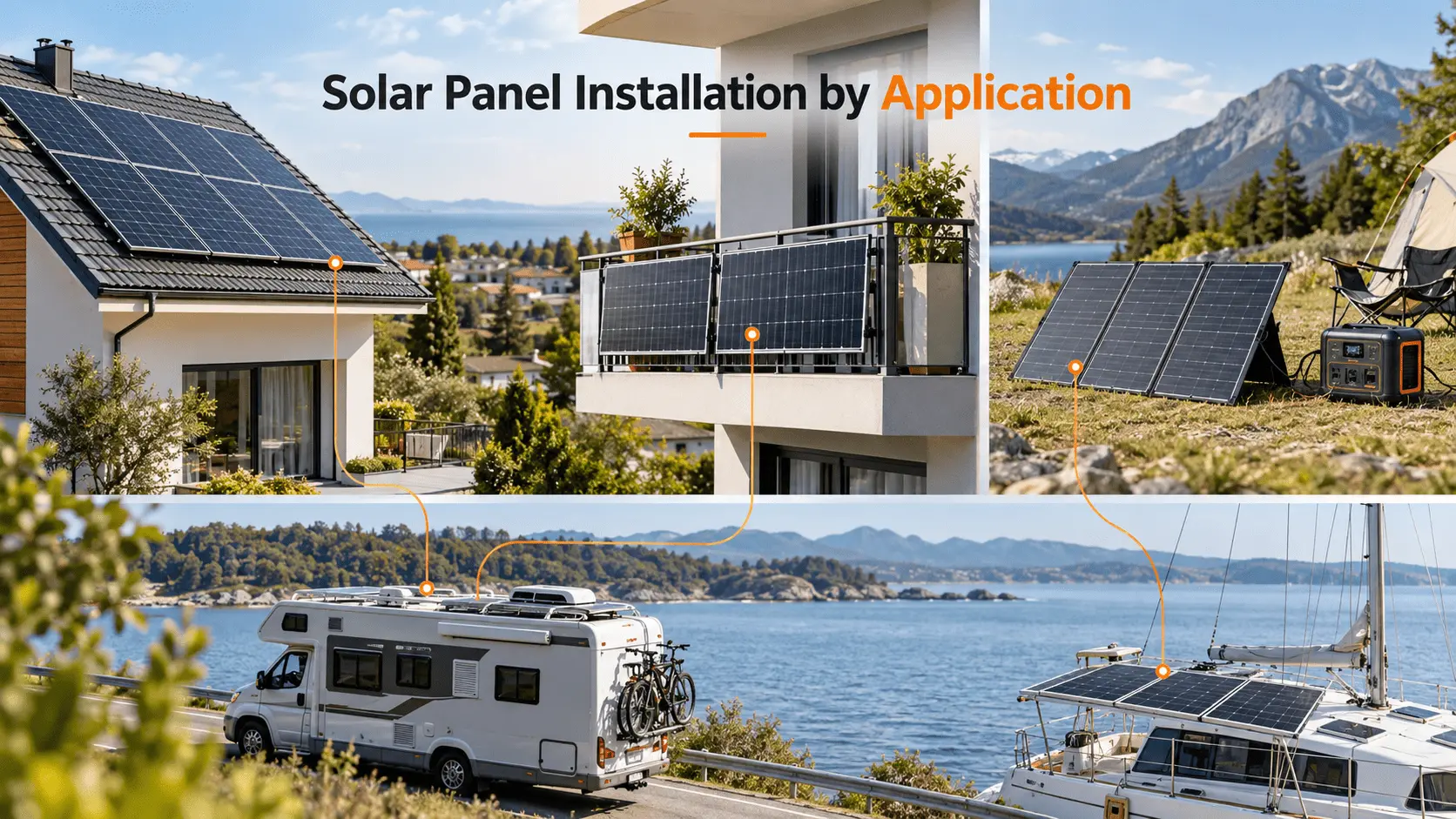
Solar panel installation depends on the system type, location, electrical path, and local requirements. A rooftop grid-tied system, an off-grid battery setup, a portable power station, and a balcony solar kit use different equipment and follow different installation boundaries.
The most reliable approach is to choose the system architecture before choosing the solar panel. Start with the location, the loads you want to power, the electrical path, and the applicable requirements. Then select the panel, inverter, battery, controller, cable, and mounting method as one system.
Key Takeaways
- Rooftop, off-grid, portable, balcony, and plug-in solar systems are not interchangeable.
- Choose the system architecture before choosing the panel.
- Panel voltage, current, connector, cable size, and mounting method must match the receiving system.
- A portable solar panel connected to a power station is different from a grid-interactive plug-in solar system.
- Small system size does not automatically remove property, electrical, or local approval requirements.
- Roof work, electrical-panel connections, fixed AC wiring, and grid interconnection usually require qualified support.
Solar Panel Installation Types Compared
| Installation type | Typical use | Main equipment | First check |
|---|---|---|---|
| Rooftop grid-tied | Whole-home daytime energy | Panels, inverter, mounting, protection equipment | Roof condition, permits, utility requirements |
| Off-grid | Cabin, shed, workshop, or backup loads | Panels, charge controller, battery, inverter | Energy use and battery sizing |
| Portable solar | Power station and temporary use | Panel, power station, cable, support | PV input compatibility |
| Balcony solar | Apartment and limited-space use | Panel, inverter, mounting, cable | Property and local requirements |
| RV or marine | Mobile and outdoor systems | Flexible or rigid panels, controller, battery, cable | Space, environment, voltage, and cable distance |
These systems may use similar solar panels, but the electrical path and installation risks can be very different.
Choose the System Before Choosing the Panel
Choose the system architecture before choosing the solar panel. Before requesting a quotation or selecting a product, answer five questions:
- What do you want to power?
- Where will the panel be installed?
- Will the system be fixed or moved regularly?
- Will solar energy go to a battery, power station, inverter, or household circuit?
- What property, utility, and local requirements apply?
A common purchasing mistake is to start with panel wattage. A buyer may request a 200W or 400W panel without confirming the voltage, size, connector, mounting method, or receiving equipment.
For B2B projects, define the application before the supplier prepares the final quotation. The same rated output may require different dimensions, cable exits, connectors, materials, and packaging depending on the project.
What to Check Before Solar Panel Installation
Energy use
List the appliances or devices you want to operate and estimate their daily energy use in watt-hours. A monitoring system, power station, RV battery, and whole-home system will have very different energy requirements.
Available space
Measure the usable length and width and record panel orientation, shade from buildings or railings, roof or balcony condition, wind exposure, and the distance to the controller, inverter, or battery.
Electrical path
Identify where the solar energy will go: a portable power station, a charge controller and battery, a microinverter, a household electrical system, or an RV or marine battery bank.
Permission and compliance
Depending on the application, check building and electrical requirements, utility interconnection rules, landlord or property-manager permission, HOA or condominium restrictions, roof access, and local inspection requirements.
Do not assume that a small system is automatically exempt from local requirements.
What Equipment Is Needed?
A typical solar installation may include solar panels, mounting hardware, DC cables, connectors, an inverter or microinverter, a charge controller, a battery, disconnects, overcurrent protection, grounding equipment, monitoring equipment, labels, and installation instructions.
The exact equipment depends on the system type. An off-grid battery system needs a different component set from a portable panel connected to a power station.
Before connecting anything, compare panel voltage and current with the inverter or charge controller specifications. Also confirm battery voltage, usable capacity, maximum solar input, connector type, polarity, wire size, and protective devices. A connector that fits physically does not prove electrical compatibility.
How to Install Solar Panels by Application
Rooftop solar
A rooftop system normally requires a roof assessment, structural mounting, protected cable routing, electrical equipment, inspection, and utility procedures. The main risks include roof damage, water intrusion, working at height, incorrect attachment, cable exposure, and incomplete utility approval.
Roof-mounted solar is not usually a simple DIY project. Structural concerns, roof penetration, electrical-panel work, and grid interconnection should be reviewed by qualified professionals.
Off-grid solar
An off-grid system normally connects the panels to a charge controller, battery, and inverter. The system must be sized around daily energy use, peak loads, battery capacity, solar input, inverter output, cable distance, and seasonal sunlight.
An off-grid system can support selected loads, but the battery and inverter determine what can operate at a given time. Panel wattage alone does not define usable output.
Portable solar panels
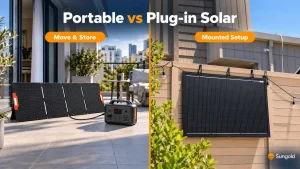
Portable panels may work well with compatible power stations when the PV voltage, current, power, connector, and polarity are within the station’s limits. They still require stable placement and protected cable routing.
Check maximum PV input voltage, operating voltage range, maximum input current, charging power, connector type, polarity, cable length, and outdoor handling conditions. See Solar Panel Compatibility with Power Stations for the matching process.
Balcony solar
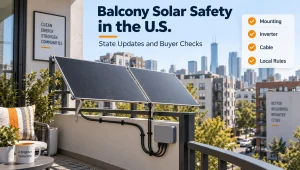
Balcony solar requires attention to property permission, railing or wall attachment, wind exposure, panel weight, fall risk, cable routing, drainage, emergency exits, and local electrical requirements.
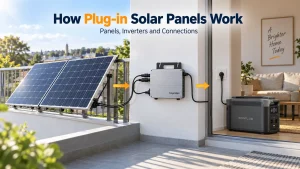
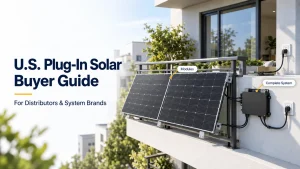
A portable panel connected to a power station is different from a plug-in photovoltaic system connected through an inverter to a household circuit. For U.S. state updates and safety checks, see How Safe Is Balcony Solar? Apartment buyers can also review the Apartment Solar Installation Guide.
RV and marine solar
RV and marine installations often have limited surface area and longer cable runs. Flexible panels may be useful where weight, curvature, or low-profile installation matters. Rigid panels may be better where airflow, service access, and mechanical support are priorities.
Review available mounting surface, battery voltage, controller input range, cable length, voltage drop, moisture and salt exposure, connector protection, and maintenance access. See the Wire Sizing Guide for RV, Marine and Off-Grid Systems.
How Many Solar Panels Do You Need?
A basic starting point is:
Estimated panel capacity = daily energy use ÷ usable peak-sun hours
This is only an initial estimate. Actual output can be reduced by shade, panel temperature, installation angle, cable losses, inverter losses, battery charging losses, weather, and limited deployment time.
Balcony and portable systems usually offset part of a user’s electricity demand rather than powering an entire home. A battery can shift solar energy to later use, but it also adds cost, weight, and installation requirements.
Common Solar Panel Installation Mistakes
- Choosing panels before defining the system.
- Ignoring shade, wind, roof condition, or balcony loading.
- Combining components because the connectors appear to fit.
- Using the wrong wire size.
- Routing cables near sharp edges or standing water.
- Improvising mounting hardware.
- Assuming a small system needs no local review.
- Treating portable solar as the same as grid-connected plug-in solar.
- Assuming a battery automatically provides backup power.
For a supplier quotation, provide the application, available size, target output, system voltage, receiving equipment, cable length, connector, quantity, and target market.
When Should You Call a Professional?
Qualified support is recommended for roof work at height, structural attachment, electrical-panel connections, fixed AC wiring, grid interconnection, complex battery systems, unknown local requirements, or any installation where a panel or bracket could fall.
A user may be able to place a portable panel or connect a compatible power station according to the product manual. This does not authorize modifications to building wiring or grid connections.
FAQ About Solar Panel Installation
Can I install solar panels myself?
You may be able to handle parts of a small portable or off-grid setup if you understand the equipment and follow the product manual. Rooftop work, grid-tied connections, fixed AC wiring, electrical-panel connections, and structural mounting may require permits or qualified support.
Can I install solar panels on my balcony?
Possibly. The answer depends on property permission, local requirements, mounting conditions, equipment design, and the connection method. Confirm these conditions before buying the panels.
Can I plug a regular solar panel into a wall outlet?
No. A regular solar panel produces DC electricity and should not be connected directly to a household outlet. A plug-in solar system must use an appropriate inverter, connection method, and applicable protection requirements.
Final Thoughts
The correct way to plan solar panel installation is to match the system to the location, the loads, and the electrical path.
Rooftop systems suit larger residential energy goals. Off-grid systems can support cabins, sheds, workshops, and backup loads. Portable panels work with compatible power stations. Balcony and plug-in solar can fit smaller spaces, but they require careful review of mounting, electrical connection, property permission, and local requirements.
For distributors, the approved sample should match the bulk-production configuration, including panel dimensions, cable exit, connector, labels, and packaging. Choose the system architecture first, match every component before wiring, and request professional support whenever the installation involves structural or electrical risk.