 EN
EN
 Deutsch
 Italiano
 Español
 Français
 日本語
日本語
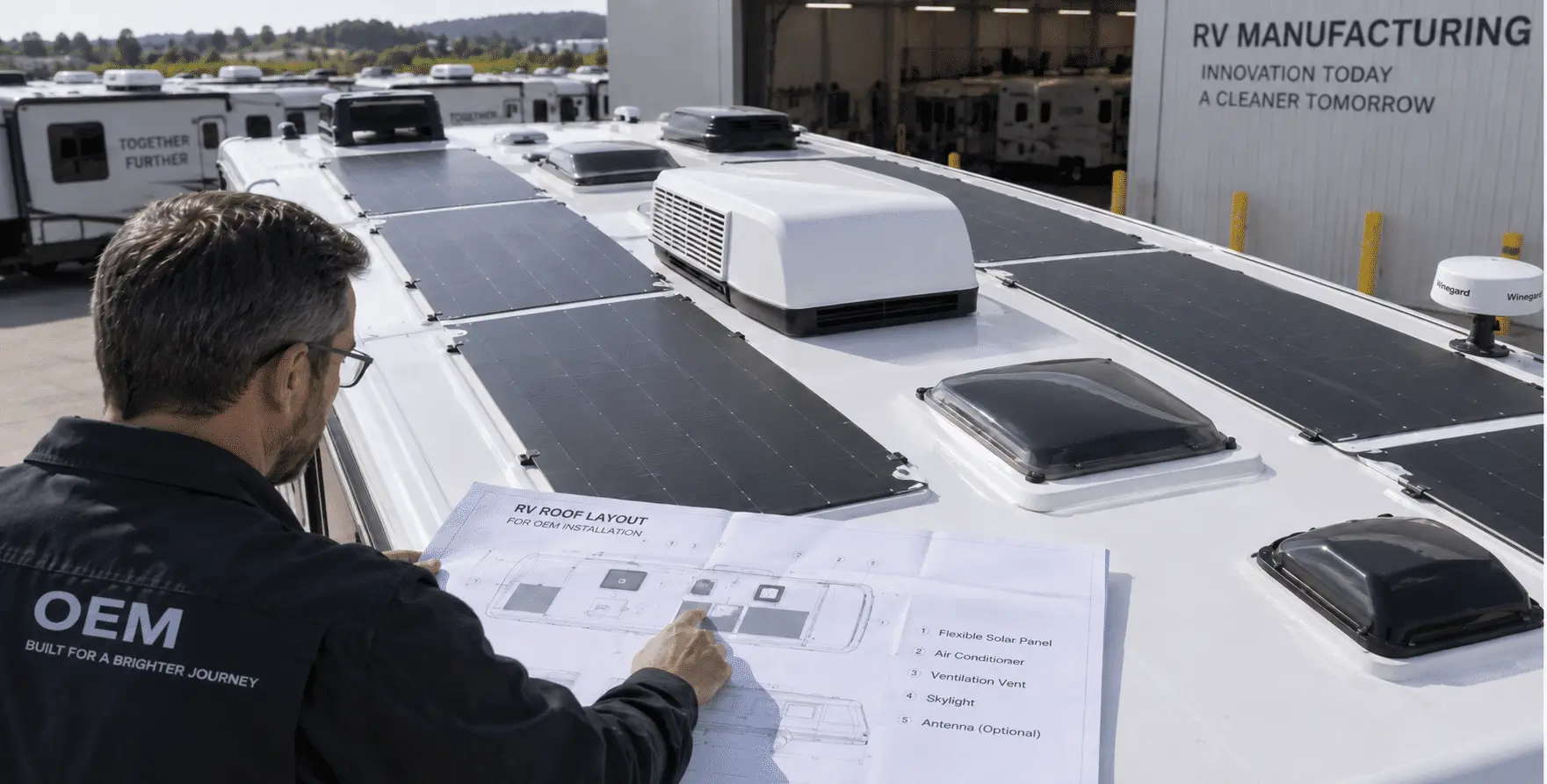
For RV manufacturers, choosing flexible solar panels is not only a wattage decision. Roof layout, panel position, cable routing, and the electrical connection all affect the project design.
Review the sample against the vehicle roof before approving the design. The sample lead time for this project is 15 calendar days. It is separate from the buyer’s review time and the mass-production lead time.
What RV Manufacturers Should Check When Specifying Flexible Solar Panels
Start with the roof, not the product list. Mark the usable panel area on the roof drawing. Note air conditioners, vents, skylights, antennas, roof racks, and service access points. Include the roof material and shape.
These details affect the panel layout, junction-box position, and cable route. If the program includes several RV models, check each roof separately. One design may not fit every variant.
What Information Should an RV Solar RFQ Include?
Share the installation and system details before requesting a sample.
| Project detail | Information to provide |
|---|---|
| Vehicle and roof | Roof drawing, dimensions, and model variants |
| Installation area | Usable panel zones and nearby obstructions |
| Roof surface | Material, shape, and known mounting constraints |
| Electrical system | Controller or system details and connection point |
| Cable route | Entry point, route, and preferred cable exit |
| Connector | Required type and mating component, if specified |
| Sample plan | Quantity, review owner, and target schedule |
| Sales market | Country or region, if labels or documents need review |
Use the product page to compare standard model specifications. Use the RFQ to explain how the panel needs to fit and connect in the vehicle.
How Installation Details Affect Flexible Solar Panel Design
Panel dimensions are only part of the installation plan. The junction box, cable exit, and connector position need to work with the roof layout.
A cable exit at the front may not reach a system connection at the rear. A junction box may also conflict with a roof feature or planned cable route. Record these details on the project drawing.
If the mounting method has not been reviewed for the roof surface, leave it for technical confirmation. Do not assume one fixing method suits every vehicle. For a broader product comparison, see Sungold’s guide to flexible vs. rigid solar panels for RV and marine applications.
How to Review an RV Solar Sample
Use the sample to check details that a datasheet cannot confirm.
- Does it fit the intended roof area?
- Are roof openings and service points still accessible?
- Can the cable reach the planned entry point?
- Does the connector match the confirmed system interface?
- Has the proposed mounting approach been reviewed for the roof surface?
- Are requested changes recorded against a drawing or sample revision?
A sample that looks right on a workbench may still need adjustment on the vehicle. Where practical, review it in the intended installation position.
What Does the 15-Day Sample Lead Time Mean?
The sample lead time for this project is 15 calendar days. Confirm the start date with the supplier before setting the project schedule.
A typical sequence is: project requirements confirmed, sample details approved, sample preparation, sample ready, installation review, and feedback.
The 15 days refer to the sample lead time. They are not the buyer’s review period or the mass-production lead time. Confirm separately whether shipping is included in the schedule.
What to Confirm Before Mass Production
Once the sample is approved, keep a clear production reference. Record the approved drawing and revision, panel dimensions, junction-box position, cable exit, and connector.
Include any agreed labels, packaging, or model identification. If a project detail changes later, review it before applying the original sample approval to the revised design.
This matters when a program covers several RV models. A different roof layout or cable entry may require a design change. For projects that need an application-specific configuration, see Sungold’s custom solar panel solution.
Common RV Solar Specification Mistakes
- Choosing by wattage before checking the usable roof area.
- Assuming one layout fits every RV model.
- Deciding cable and junction-box positions too late.
- Assuming panel flexibility means it fits every curved surface.
- Approving a sample without checking its intended installation position.
- Changing a drawing or connector without updating the revision record.
RV Flexible Solar Panel RFQ Checklist
- Roof drawing with dimensions and obstructions
- Intended panel layout and installation area
- Roof surface and shape details
- Electrical system or controller information
- Cable route, exit position, and connector requirements
- Sample quantity and review owner
- 15-calendar-day sample lead time and its agreed start date
- Differences between vehicle variants
- Required labels, packaging, or market documentation
FAQs About Flexible Solar Panels for RV Manufacturers
Can one panel design fit several RV models?
It may, but check the usable roof area, obstructions, and cable route for each model. Similar vehicle dimensions do not guarantee an identical installation.
What should we provide before requesting a sample?
Provide the roof drawing, installation area, roof surface, system connection point, cable route, and connector requirement. This gives the project team the information needed to review fit and connections.
Is the 15-day sample lead time measured in calendar days?
Yes. It is 15 calendar days. Confirm the start date and whether shipping is included in the schedule. It is separate from the mass-production lead time.
Final Thoughts
For RV manufacturers, specify a flexible solar panel around the vehicle roof and installation plan. Review the sample in context, record the approved design, and agree on the schedule before production planning begins.