 EN
EN
 Deutsch
 Italiano
 Español
 Français
 日本語
日本語
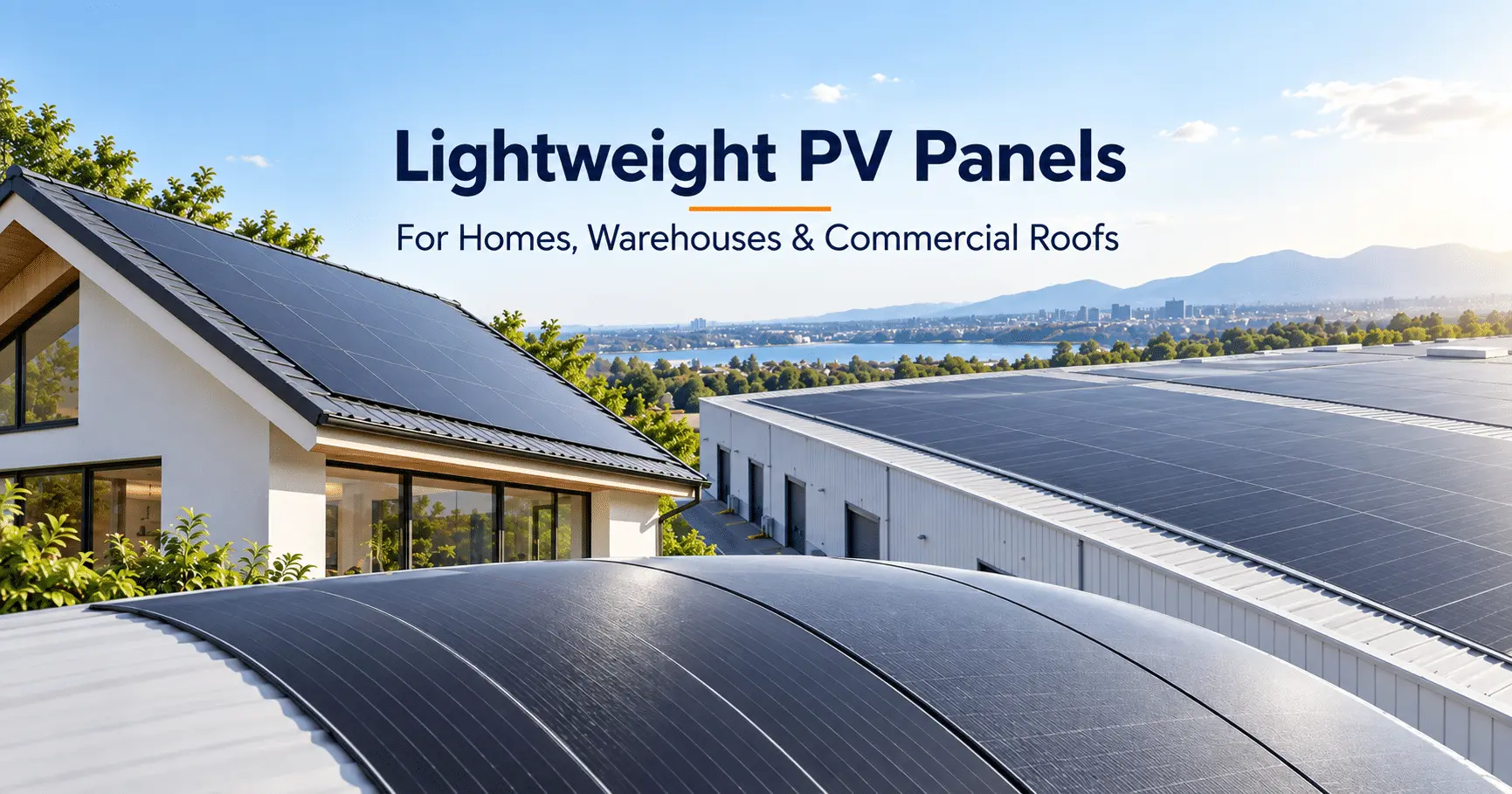
- Lightweight PV panels can help when roof loading, access, handling, or roof geometry limits a conventional framed installation.
- They may suit homes, metal roofs, low-slope roofs, warehouses, and commercial buildings, but the roof structure and mounting method still require review.
- Flexible, lightweight rigid, and conventional rigid panels solve different problems. The correct choice depends on roof type, weight allowance, heat management, weather exposure, and service access.
- For distributors and system brands, the panel specification should be matched with the mounting method, electrical equipment, documentation, and local compliance requirements.
Lightweight PV panels make more roof projects possible when a conventional framed system is too heavy, difficult to handle, or poorly matched to the roof. The real test is whether the complete installation fits the roof, electrical system, and project requirements.
For a building owner, installer, distributor, or OEM/ODM buyer, the decision starts with the roof rather than the catalogue. The points below show how to compare lightweight solar panels for homes, warehouses, and commercial buildings.
Why Lightweight Solar Panels Matter for Modern Roofs
Roof weight affects more than the panel itself. It influences handling during installation, supporting structure, mounting hardware, access requirements, and long-term maintenance.
A roof may have enough area for solar but still require a different design because of its age, material, slope, access limitations, or distributed load requirements. A lightweight design can reduce one constraint, but it does not remove the need to review the roof and installation method.
| Roof condition | Why lightweight PV may be considered | What still needs confirmation |
|---|---|---|
| Older residential roof | Lower mass may help with a load-sensitive retrofit. | Roof condition, structure, waterproofing, and local requirements. |
| Metal or low-slope roof | Handling and mounting access may be difficult. | Attachment method, drainage, wind exposure, and cable routing. |
| Warehouse or commercial roof | Easier panel movement may support repeatable installation. | Roof zones, maintenance paths, structural review, and documentation. |
| Curved or irregular surface | A flexible format may fit a surface that cannot accept a conventional frame. | Bend limits, surface preparation, heat, cable exits, and replacement access. |
What Are Lightweight PV Panels?
Lightweight PV panels are solar modules designed to reduce handling or roof-loading constraints compared with a conventional heavy framed module. The category can include flexible laminates, lightweight semi-rigid modules, and other application-specific constructions.
“Lightweight” does not describe only the cell technology. It can also result from the module structure, front and back materials, frame design, mounting approach, and cable configuration. Buyers should compare the complete module and installation system rather than a single material in isolation.
- What is the complete module weight and size?
- How is the module supported or attached?
- Will the roof experience heat, vibration, wind, snow, or frequent maintenance access?
- How will the panel be replaced later?
- Does the electrical specification match the inverter, controller, battery, or other equipment?
Lightweight Solar Panels for Homes
For homes, lightweight solar panels are worth considering when the roof is older, difficult to access, visually sensitive, or not well suited to a conventional framed installation. They can also help installers work around roof windows, vents, skylights, and other fixed features.
A residential roof assessment should answer three questions: Can the roof support the proposed installation? Can the panel be attached without creating a waterproofing problem? Can the system be serviced later?
Lightweight does not automatically mean suitable for every residential roof. Poor surface condition, severe shading, difficult cable access, or high wind exposure may require a different design even when the panel itself is light.
Lightweight PV Panels for Warehouses and Commercial Buildings
Warehouses and commercial buildings create a different set of design priorities. The roof may be large, but the project can still be limited by structural zones, skylights, HVAC equipment, drainage, maintenance routes, and the operating schedule of the building.
For a commercial roof, choose the panel as part of a repeatable installation plan. The buyer may need a defined module size, cable position, connector, mounting detail, packaging format, and documentation set so multiple roof sections or buildings can be handled consistently.
| Project priority | Panel question | Evidence to request |
|---|---|---|
| Roof loading | What is the complete panel and mounting weight? | Model-specific datasheet and installation configuration. |
| Installation speed | Can the panel be positioned and connected consistently? | Handling instructions, cable layout, and connector details. |
| Maintenance | Can technicians inspect and replace a module? | Service clearance and replacement process. |
| Supply continuity | Can the specification be produced for the project schedule? | Approved model, sample process, and change-control plan. |
Which Roof Types Can Use Lightweight Solar Panels?
Metal roofs
Review the roof profile, attachment method, drainage, thermal movement, and wind exposure together. The panel specification cannot be separated from the metal-roof mounting detail.
Flat and low-slope roofs
Review water drainage, roof membranes, ballast or attachment methods, wind uplift, and service walkways. Panel placement should not block drainage or create avoidable maintenance conflicts.
Curved or irregular roofs
Flexible PV panels can fit surfaces where a rigid frame cannot follow the roof shape. Confirm the permitted bend, surface pressure, cable exit, and thermal conditions before installation.
Older or weight-sensitive roofs
A lightweight module may help reduce the roof-loading challenge, but it is not a substitute for structural review, waterproofing review, or local installation requirements.
Flexible vs. Lightweight Rigid Solar Panels
| Panel format | Potential fit | Main review point | Trade-off |
|---|---|---|---|
| Flexible | Curved, weight-sensitive, or low-profile surfaces. | Bend limit, bonding method, heat path, cable exit, and serviceability. | Installation and replacement can be application-specific. |
| Lightweight rigid or semi-rigid | Flat or gently shaped roofs where low mass and defined support matter. | Support points, backing design, and wind exposure. | May require a project-specific mounting solution. |
| Conventional rigid | Open roofs with compatible structure and established hardware. | Complete system weight, roof loading, access, and attachment. | More mass and visible hardware may be acceptable. |
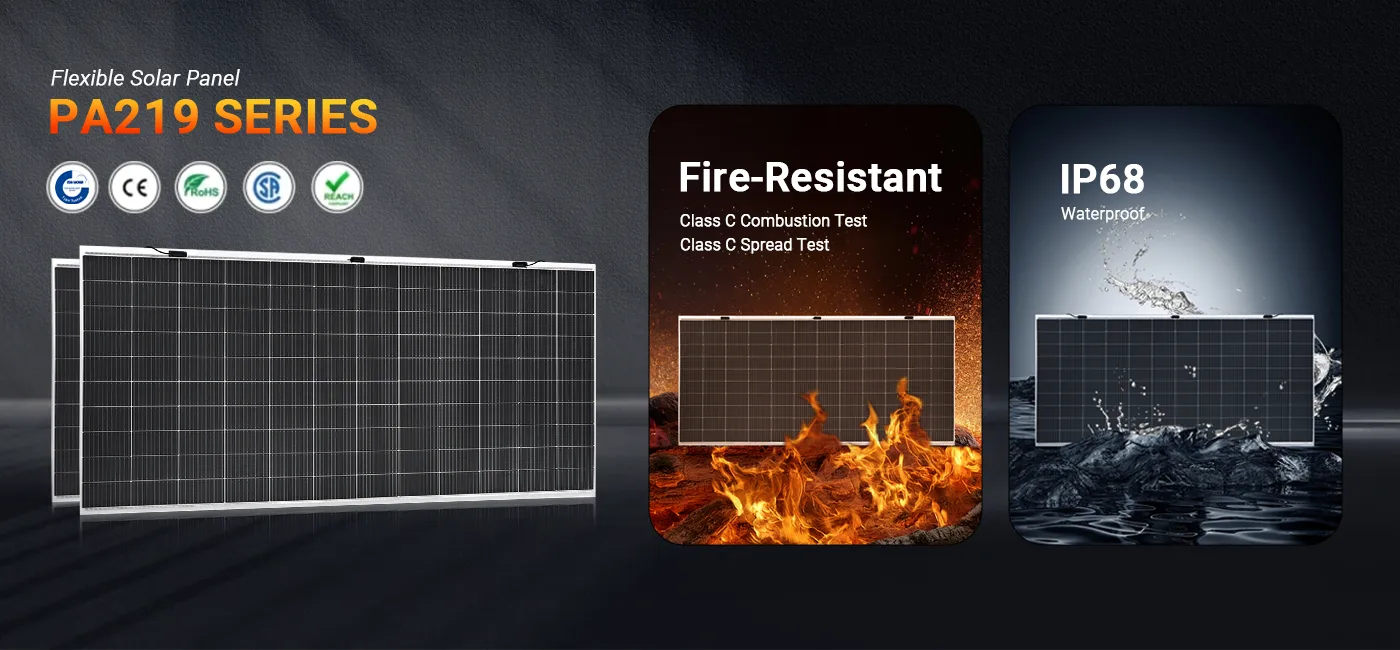
When weight is a central constraint, buyers can review Sungold’s PA219 flexible solar panel information. Final model and installation suitability should be confirmed against the specific roof and project requirements.
How to Choose the Right Lightweight PV Panel
- Roof drawing: Include usable dimensions, obstructions, access paths, drainage, and no-go areas.
- Mechanical conditions: Confirm roof material, attachment method, wind and snow exposure, vibration, and temperature range.
- Electrical target: Confirm power range, system voltage, operating voltage, current, cable length, connector type, and controller or inverter requirements.
- Installation plan: Define bonding, fastening, support, cable routing, inspection, and replacement access.
- Documentation: Request the model datasheet, installation instructions, test documentation, packaging details, and applicable compliance scope.
Installation and Roof Compatibility Considerations
For commercial projects, the installation plan should explain how technicians will access the roof, protect the surface, inspect connectors, manage spare modules, and replace a panel without unnecessary downtime.
Performance, Durability, and Documentation
Low weight is useful only when it remains compatible with the environmental and operating conditions of the roof. Review how the selected model is evaluated for outdoor exposure, mechanical loading, moisture, heat, electrical safety, and the intended installation environment.
Do not compare products using a single headline claim such as “lightest” or “most durable.” Ask for model-specific documentation and confirm which tests, certifications, and installation conditions apply to the exact product being quoted.
Cost, Energy Savings, and Payback
`n
For general photovoltaic system design context, the U.S. Department of Energy solar PV guide explains the main elements that affect a rooftop solar system.
Lightweight PV panels may change installation labor, roof preparation, handling, and mounting requirements, but the financial result depends on the complete system and local energy context.
A useful estimate needs roof orientation, shading, expected output, on-site energy use, electricity rate, installation cost, maintenance assumptions, and applicable incentives. A lightweight panel can be commercially attractive when it makes a difficult roof installable, but the decision should use the complete project cost.
For Distributors, Contractors, and Solar Kit Brands
Buyers who resell or integrate lightweight PV panels need more than a product image and wattage number. When requesting a quote, provide the application, target roof type, required dimensions and power, system voltage, roof material, mounting method, environmental conditions, cable and connector requirements, quantity, target market, and documentation needs.
Sungold Solar supports B2B discussions for lightweight, flexible, rigid, portable, and custom module applications. For a project-specific review, use the lightweight roof solar solutions page and send the roof drawing and electrical requirements before requesting a final recommendation.
FAQ: Lightweight PV Panels for Roofs
Are lightweight solar panels suitable for every roof?
No. They can be considered for many roof types, but suitability depends on roof structure, surface condition, attachment method, weather exposure, electrical design, and local requirements.
Are lightweight PV panels suitable for warehouses?
They fit when the module, mounting method, roof structure, access paths, drainage, and project documentation are reviewed together.
Are flexible solar panels the same as lightweight solar panels?
No. Flexible panels are designed to follow approved surface curves, while lightweight panels may also include rigid or semi-rigid constructions.
Do lightweight solar panels produce less power?
Weight alone does not determine power output. Compare the complete model specification, dimensions, electrical values, installation conditions, and expected operating environment.
Can lightweight PV panels be customized for a commercial roof project?
Custom review may be possible for dimensions, power range, voltage, cable position, connectors, surface materials, packaging, and documentation, subject to technical and production review.
What information should I provide before requesting a quote?
Provide the roof drawing, application, required size and power, system voltage, roof material, mounting method, environmental conditions, cable and connector requirements, quantity, target market, and documentation needs.
Final Thoughts
Lightweight PV panels can open more roof applications, especially where weight, access, geometry, or installation handling limits a conventional solar design. The best choice is not simply the lightest module. It is the module and mounting system that fit the roof, electrical architecture, environmental conditions, maintenance plan, and project economics.
For homes, warehouses, and commercial buildings, start with the roof drawing and system requirements. Then compare flexible, lightweight rigid, and conventional rigid options using model-specific documentation.